Trump touts steel and aluminum tariffs as shield for American manufacturing
Trump says the White House will wield steel and aluminum tariffs to defend U.S. workers, factories and national security, arguing unfair trade has weakened domestic industry.
WASHINGTON D.C. — Donald Trump said the White House will use steel and aluminum tariffs to protect American workers, factories and national security. Trump argued that unfair trade practices have weakened U.S. manufacturing and said the duties could bring industrial jobs back to America.
Here is the full post on Truth Social: “Trump said the White House will use steel and aluminum tariffs to protect American workers, factories and national security. Trump argued that unfair trade practices have weakened U.S. manufacturing and said the tariffs could bring industrial jobs back to America.” on July 12, 2026 at 10:00 AM ET.
This is the first message released by Trump today. On average, Trump produces roughly 17 posts per day since his inauguration on January 20, 2025.
Trump has anchored his trade agenda in the promise that Meta ls tariffs will revive domestic mills. He has repeatedly framed the steel industry as a national security priority, arguing that a country unable to make its own steel cannot defend itself. The White House has cast the levies as a tool to reverse decades of factory closures (see whitehouse.gov).
The stakes divide cleanly between producers and buyers. Domestic steel and aluminum makers and their workers stand to gain from higher prices and reduced import competition. Manufacturers that consume Meta l — automakers, appliance builders and construction firms — face higher input costs that can flow through to consumers. Trump has said the tradeoff is worth it to rebuild an industrial base he describes as hollowed out.
The president has tied the policy directly to a marquee transaction in the steel sector. Trump delivered remarks from Pittsburgh on a U.S. Steel deal, presenting it as evidence that his approach is drawing investment back to American plants (see youtube.com). The administration has promoted the message under the banner of protecting American steel (see youtube.com).
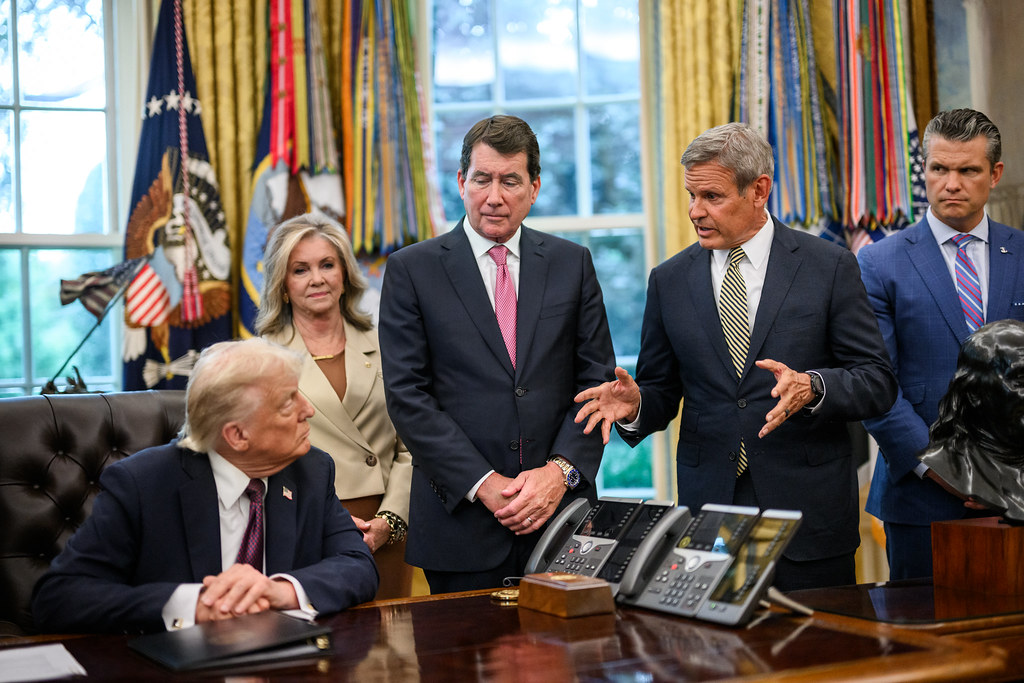
The White House is pictured at WASHINGTON D.C. on 07/12/2026.
Wikimedia Commons / Wikimedia Foundation
© copyright Zenger.News
For the average U.S. reader, tariffs on Meta ls sit upstream of everyday purchases. Higher costs for steel and aluminum can raise prices on cars, canned goods, appliances and homebuilding materials, even as the policy aims to preserve manufacturing jobs in states with mills and smelters.
Has this happened before? This has happened before. Trump imposed tariffs on imported steel and aluminum during his first term, citing national security authority, and the duties reshaped supply chains and prices across manufacturing. The current push extends that framework rather than breaking new ground (see foxbusiness.com).
The next move rests with the White House and the agencies that administer trade measures. A specific date for any new tariff action or formal announcement has not been announced.
Using trade barriers to protect domestic Meta l is a strategy that has surfaced repeatedly in American history. In 1897, the Dingley Tariff raised average duties to roughly 47%, shielding steel and iron producers as the industry expanded. In 1930, the Smoot-Hawley Tariff Act lifted duties on more than 20,000 goods, and trading partners retaliated as global commerce contracted during the Great Depression. Later leaders drew a lesson from that episode: protection can guard producers in the short term while inviting retaliation that reaches far beyond the industry it was meant to save.
In the last 30 days, 5 of 511 Trump posts focused on tariffs.
Source: Zenger real-time database of all Truth Social posts.
Note: Chart generated on July 13, 2026 at 3:48 AM ET
Source: Zenger analysis
Note: Table generated by https://zenger.news on July 13, 2026 at 3:48 AM ET


