Trump touts 3.5% June inflation as sharpest monthly drop in six years
Trump president cites Labor Department data on Truth Social, framing the annual inflation reading as the largest monthly decline in more than six years.
WASHINGTON D.C. — Donald Trump claimed a fresh victory over rising prices, pointing to new federal inflation data.
Here is the full post on truthsocial: “Labor Department reports annual inflation in June was 3.5%, biggest monthly drop in over six years: https://justthenews.com/nation/economy/labor-department-reports-annual-inflation-june-was-35-biggest-monthly-drop-over-six”
The post cited a report attributed to the Labor Department, the federal agency that publishes the Consumer Price Index through its Bureau of Labor Statistics. Trump shared the figures on Truth Social by mentioning the source (see justthenews). The president said annual inflation in June registered 3.5%, and framed the reading as the biggest monthly drop in more than six years.
The Bureau of Labor Statistics serves as the principal fact-finding agency for the federal government in labor economics and statistics. It compiles the Consumer Price Index each month, tracking the average change in prices paid by urban consumers for a basket of goods and services.
Inflation touches nearly every household budget in the country. A cooler reading eases pressure on the prices Americans pay for groceries, rent, gasoline, and other essentials, and it shapes interest rates that determine the cost of mortgages, car loans, and credit cards. When the annual pace slows, wages can stretch further, though already elevated prices do not fall simply because the rate of increase eases.
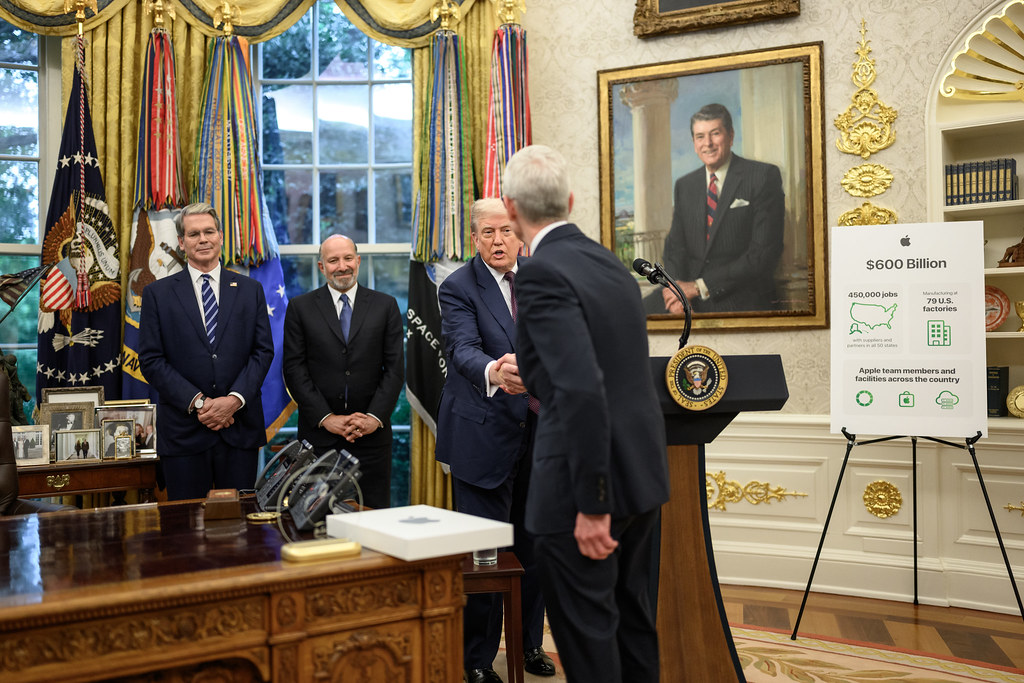
The White House stands in Washington D.C. on 07/14/2026.
Wikimedia Commons / Wikimedia Foundation
© copyright Zenger.News
Who benefits and who loses from a slower inflation reading depends on position. Borrowers and consumers gain when price growth cools, while savers and lenders holding fixed returns can watch the real value of interest change with the trend. A president tends to gain politically when inflation eases on his watch, and the White House has repeatedly tied the direction of prices to its economic agenda.
Has this happened before? Presidents have long claimed credit for favorable inflation data. The Bureau of Labor Statistics has published monthly Consumer Price Index reports for decades, and administrations of both parties have highlighted improving readings to bolster their economic records. Sharp monthly moves in the annual rate often follow periods of volatile energy prices and shifting demand.
The next scheduled decision point rests with the Federal Reserve, the central bank that sets the benchmark interest rate and weighs inflation data closely. The post did not announce a date for the next rate decision tied to this specific reading.
Claims of taming inflation have shaped presidential legacies before, as happened decades ago. In the early 1980s, the Federal Reserve under Chairman Paul Volcker raised interest rates to punishing levels, pushing them above 19% in 1981 to break double-digit inflation that had peaked near 14.8% in March 1980. The campaign triggered a severe recession and sharp unemployment before prices cooled by the mid-1980s. Volcker’s fight ended an era of runaway prices, and it reshaped how every president since has measured success against the inflation rate.
Source: Zenger real-time database of all Truth Social posts.
Note: Chart generated on July 14, 2026 at 10:17 AM ET

