Trump Declares Oil Tanker Seizure in Image Post
Trump posts a digitally composed image asserting U.S. control of an oil tanker, with an Iranian flag shown on the deck.

WASHINGTON D.C. — Donald J. Trump declared U.S. control of an oil tanker in a Truth Social post, sharing a digitally composed image that carried no supporting detail on any vessel, location or date.
The post consisted of a single line of text and an image showing a man resembling Trump aboard a ship’s deck beside a large American flag, with what appears to be an Iranian flag lying nearby. Trump offered no vessel name, no coordinates and no confirmation from any government agency in the post.
“It’s Our Oil Tanker Now!” the caption read, framing the message as an assertion of seizure rather than a documented event.
Here is the full post on truthsocial: “It’s Our Oil Tanker Now!” on July 26, 2026 at 3:31 PM ET.
The image carries hallmarks of synthetic or digitally composited media and does not depict a documented, real-world event. No official maritime or government record accompanied the post to confirm a tanker seizure, and the claim stood on the post alone.
Stakes attach to any assertion of control over an oil tanker, because such vessels move global crude and any interdiction can shift shipping insurance costs, freight rates and regional tensions. Traders, insurers and shipping firms would bear the immediate consequences if a real seizure occurred, while the target nation would lose cargo and revenue.
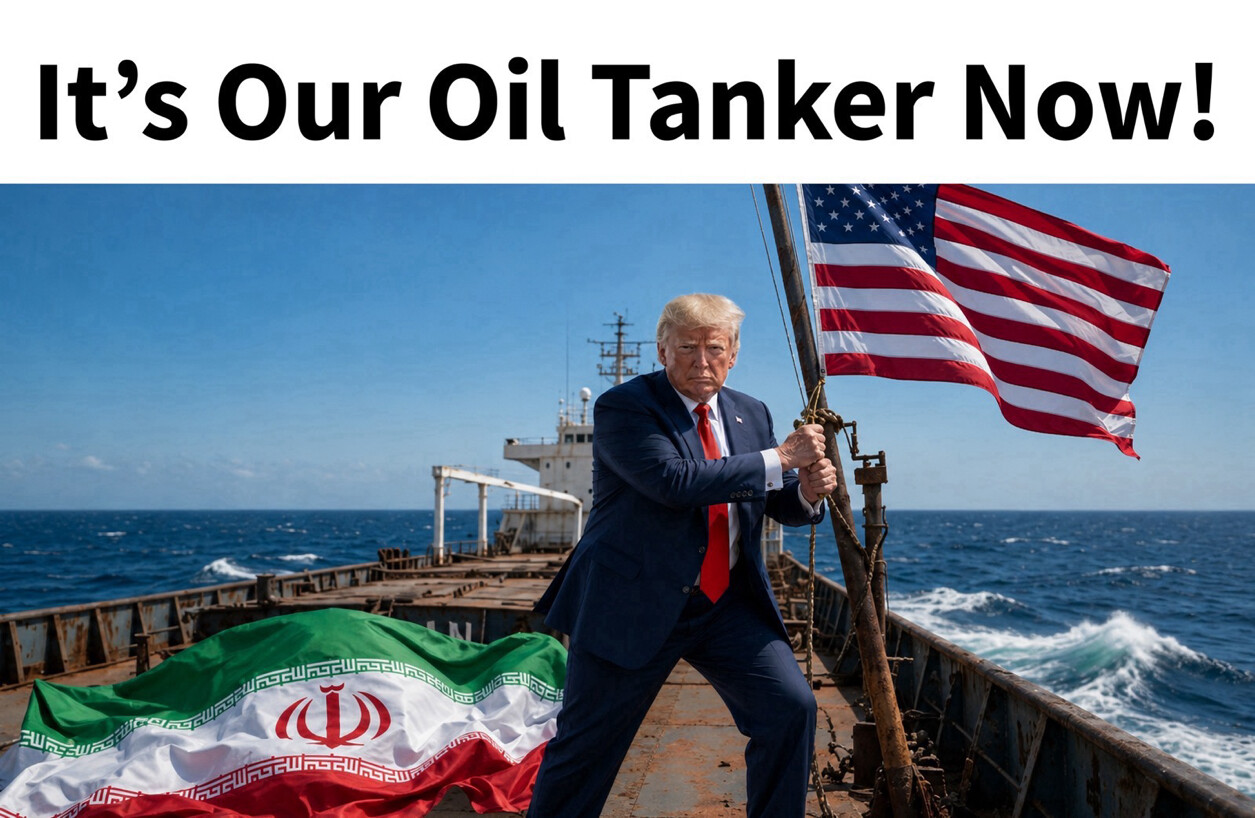

A digitally composed image depicting a man resembling former President Donald J. Trump on a ship's deck with an American flag and an Iranian flag was posted on Truth Social on 07/26/2026.
© copyright Zenger.News
Disputes over tanker traffic have surfaced repeatedly in recent years, often centered on the Strait of Hormuz, the narrow chokepoint through which a large share of seaborne oil passes. Past confrontations have involved detained vessels, released crews and diplomatic exchanges that played out over weeks rather than a single announcement.
For the average U.S. reader, any genuine escalation involving oil tankers can translate into movement at the gas pump, since crude prices respond quickly to threats against shipping lanes. Absent a confirmed event, the post itself does not change fuel costs or supply.
This has happened before in the sense that maritime seizures and counter-seizures have marked tensions between the United States and Iran, with vessels held and later released after negotiation. What sets this post apart is its presentation as a finished claim through a manipulated image rather than an official statement.
No agency has announced a decision or a review tied to the post, and a date for any official confirmation or response has not been announced. The next word on any real vessel action would come from maritime authorities or federal officials rather than from the post.
Tanker standoffs have shaped Persian Gulf history well beyond this exchange, as happened before. In 1988, U.S. naval forces struck Iranian platforms and vessels during Operation Praying Mantis, sinking or damaging several ships in a single day of fighting. The clash ranked among the largest surface engagements the U.S. Navy had fought since World War II, and it reshaped how both sides approached the waterway for years afterward.
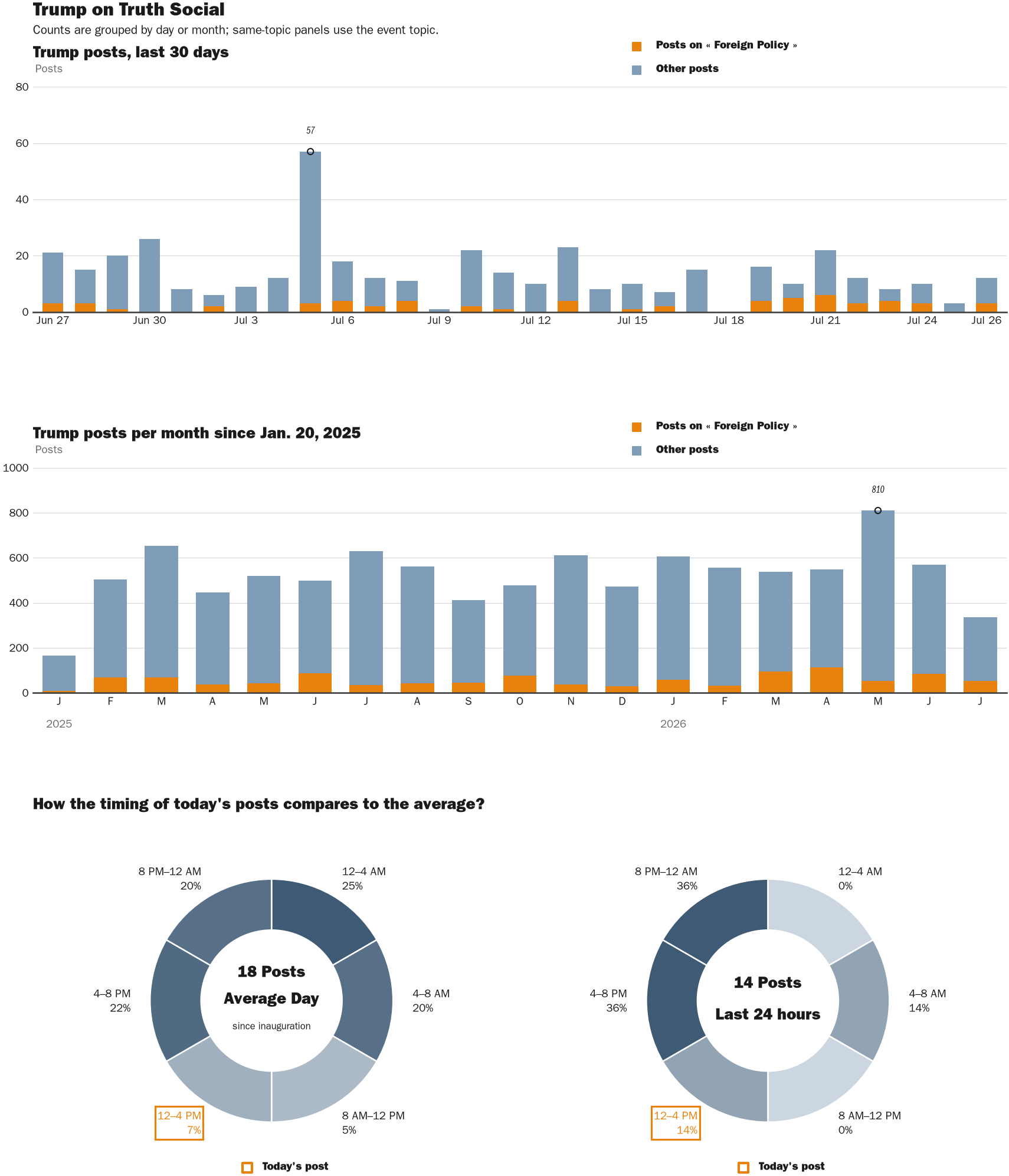
NewsFindr Chart Maker
Photo by Zenger real-time database of all Truth Social posts.
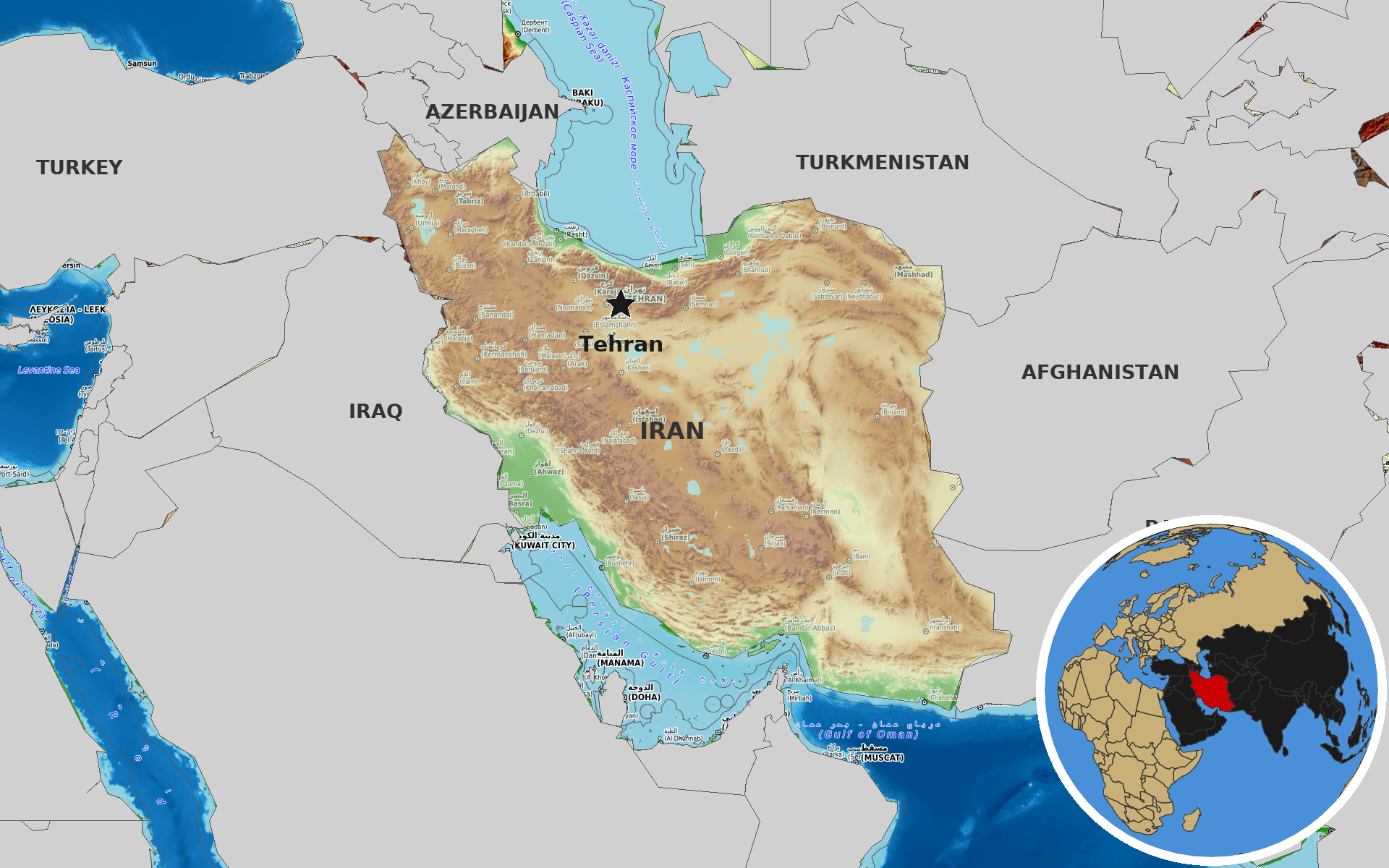
OpenTopoMap / Natural Earth – Iran
Photo by OpenTopoMap / Natural Earth – Iran