Trump Presses Thune to Kill Senate Filibuster to Pass Save America Act
Trump demands the Senate stay in session until it terminates the filibuster and passes his agenda, the budget and a debt ceiling fix.

WASHINGTON D.C. — Donald J. Trump demanded that the U.S. Senate remain in session until it terminates the legislative filibuster, a move he argued would let Republicans pass his agenda without Democratic votes.
The president directed his call at John Thune, the South Dakota Republican who serves as Senate majority leader, urging him to block any recess until lawmakers act. Trump tied the demand to a slate of priorities that includes his Save America Act, the federal budget and a looming debt ceiling deadline.
Here is the full post on truthsocial: “John Thune should not allow the United States Senate to “leave town” until it passes The Save America Act or, far better still, TERMINATES THE FILIBUSTER, where Republicans can then quickly pass everything they ever dreamed of, including a full and deep throated SAVE AMERICA ACT, the Budget, and the ever looming Debt Ceiling disaster, 1929! The Dumocrats will do it on day one, and can’t believe how lucky they got with this Senate leadership. Remember, stupidity always brings LOSING & DEATH! President DJT” on July 27, 2026 at 9:01 AM ET.
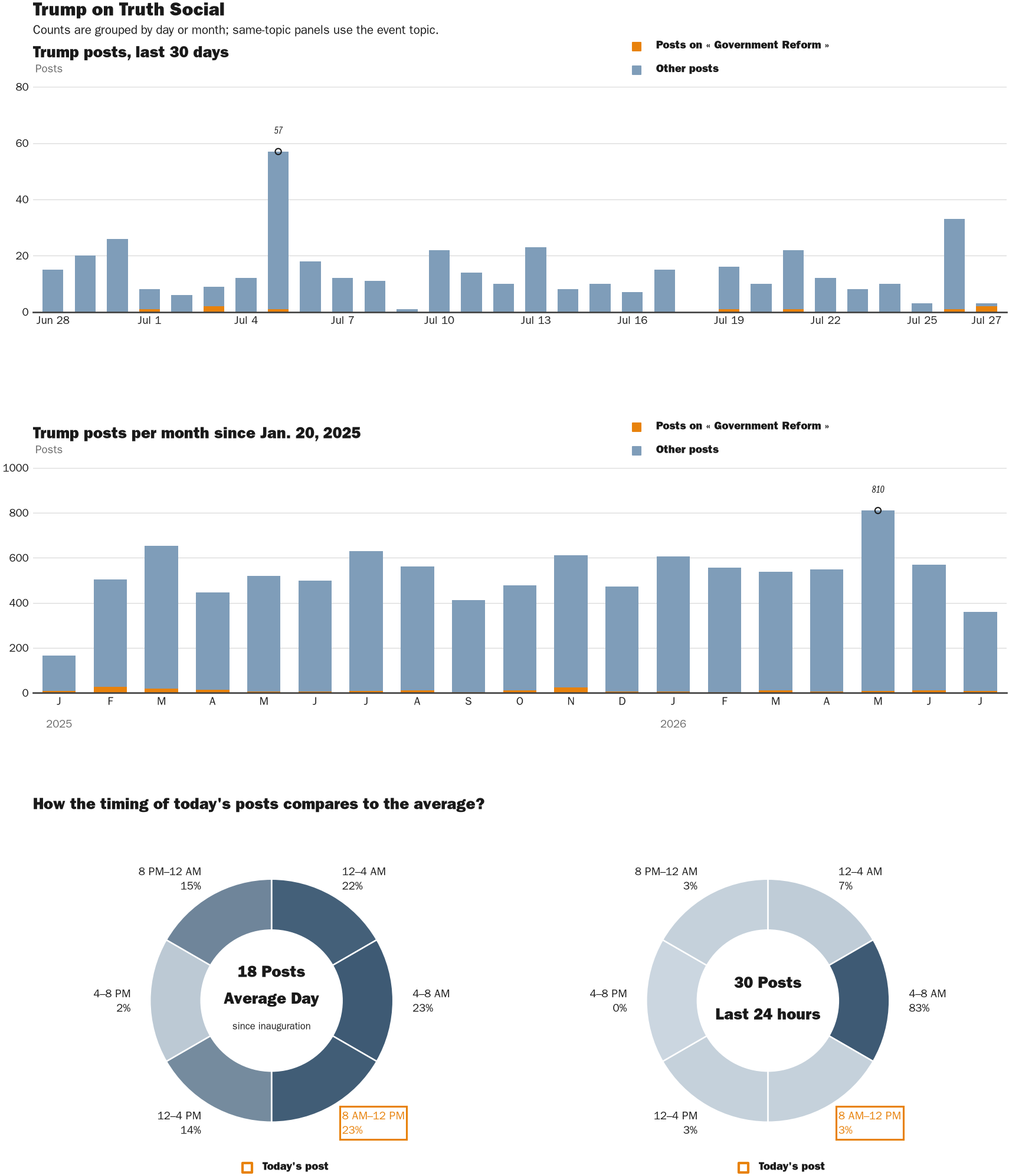
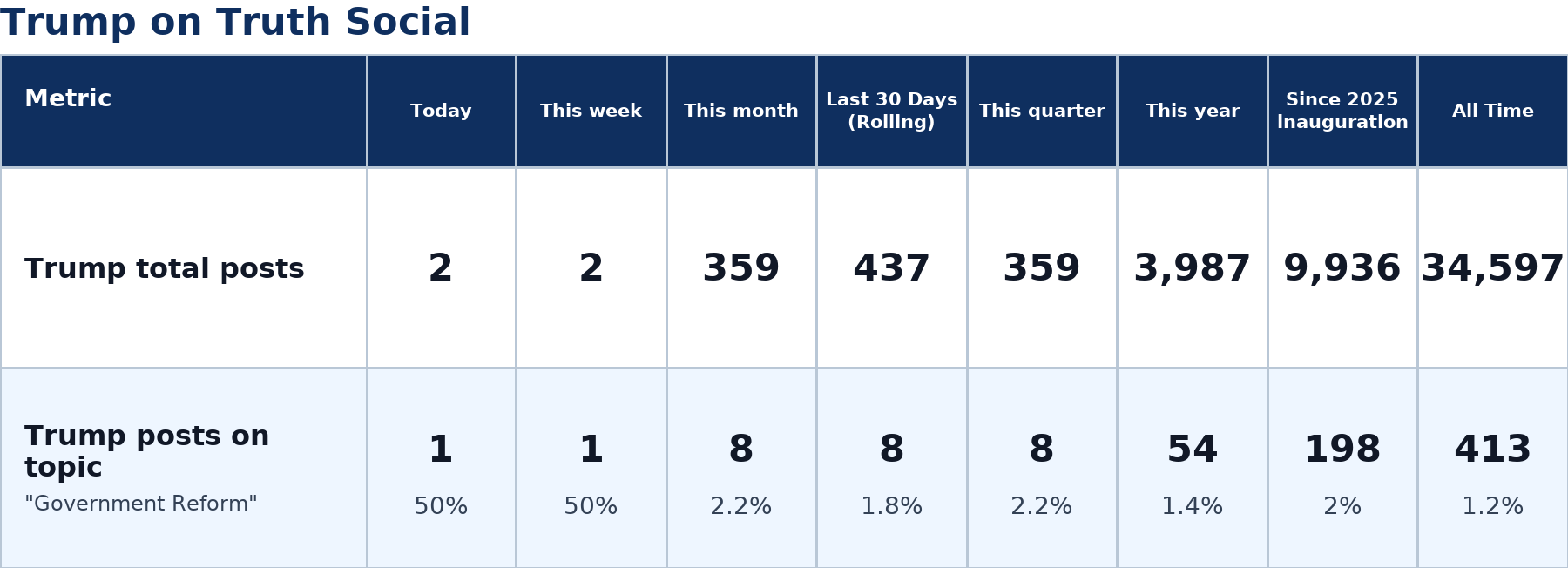
This is the first message released by Trump today. On average, Trump produces roughly 15 posts per day since his inauguration on January 20, 2025.
The move fits a broader pattern in Trump’s recent messaging, with 8 of his 437 posts over the last 30 days focused on Government Reform, according to a Zenger analysis.
The filibuster requires 60 votes to advance most legislation in the 100-seat chamber. Ending it would let a simple majority pass bills, shifting power toward whichever party controls the Senate. Republicans would gain a fast path to enact priorities that now stall without Democratic support, while the minority party would lose its main tool to slow or block legislation.
Trump has pushed to scrap the filibuster before. During his first term, he repeatedly urged Senate Republicans to abolish the 60-vote threshold, and leaders at the time declined, citing the risk that Democrats would use the same power once in the majority. Both parties have carved out exceptions over the years, lowering the threshold for executive and judicial nominations in earlier disputes.
For the average reader, the outcome would decide how quickly major laws move through Washington. A Senate without a filibuster could pass tax, spending and border measures on party-line votes, changing how often federal policy swings with each election.
The decision rests with Thune and the Senate Republican conference, which sets the chamber’s rules. No vote on the filibuster has been scheduled, and leadership has not announced a date for taking up the question.
Disputes over Senate rules have reshaped Washington before. In 2013, Democrats under Majority Leader Harry Reid invoked the so-called nuclear option to end filibusters on most nominations, and in 2017 Republicans extended that change to Supreme Court picks. Each rules change gave the sitting majority a short-term win. Yet each also handed the same weapon to the opposing party once control of the chamber flipped, a pattern that has left leaders in both parties wary of removing the last remaining threshold.

NewsFindr Chart Maker
Photo by Zenger real-time database of all Truth Social posts.
Zenger analysis
Photo by Zenger analysis