DRS Laurel Wins $68.3 Million Navy Deal for Missile Launch Kits
The Largo, Florida, contractor received a firm-fixed-price modification to build Vertical Launching System kits for the U.S. Navy and the Netherlands under the Foreign Military Sales program.

LARGO, FLORIDA — DRS Laurel Technologies Partnership won a $68.3 million Navy modification to build kits for the shipboard missile system that arms U.S. and allied warships, as announced on war.gov.
The firm-fixed-price modification expands a previously awarded contract for the manufacturing, assembling, testing and delivery of Vertical Launching System associated kits. The award combines purchases for the U.S. government, at 87%, and the government of the Netherlands, at 13%, under the Foreign Military Sales Program according to war.gov.
The Vertical Launching System is the standard below-deck launcher for surface combatants, firing air-defense, anti-submarine and strike missiles from armored cells.DRS Laurel Technologies Partnership, based in Largo, Florida, supplies electronic and control equipment tied to that system. The Netherlands operates frigates fitted with the launcher, making it a recurring foreign buyer through the U.S. security assistance channel.
The stakes fall on the Navy’s surface fleet and on an allied partner that relies on American launch technology. The service gains additional launcher kits without a fresh competition, while DRS Laurel Technologies Partnership secures roughly a year of assured production. Dutch taxpayers cover their 13% share, contributing $8.6 million toward equipment their navy will field. The arrangement also keeps a single production line supporting two governments at once.
Funding draws on several accounts obligated at the time of award. Fiscal 2026 procurement, Defense-wide, supplies $41.8 million, or 61%. Shipbuilding and conversion, Navy, adds $17 million, or 25%. Foreign Military Sales funds from the Netherlands provide $8.6 million, other Navy procurement contributes $592,701 and research and development accounts add $327,984. None of the money expires at the end of the current fiscal year according to war.gov.
For the average U.S. reader, the award reflects how defense spending flows into local manufacturing payrolls and how allied nations help fund weapons production. Work performed in Largo supports engineering and assembly jobs in the Tampa Bay area, and the foreign share offsets part of the cost carried by domestic appropriations.
This has happened before. Foreign Military Sales cases routinely fold allied purchases into existing U.S. contracts, spreading unit costs across more buyers. The launcher itself has been sold to numerous partner navies over decades, and modifications to running production contracts are a standard mechanism for adding scope without restarting procurement.
Naval Surface Warfare Center Port Hueneme Division, in Port Hueneme, California, serves as the contracting activity and will oversee performance. Work is expected to be completed by July 2027 according to war.gov. A date for any further modification or follow-on award has not been announced.
Missile launchers have reshaped naval warfare as rival navies raced to arm their fleets. The transition from trainable rail launchers to vertical cells accelerated in the 1980s, letting a single ship hold dozens of ready rounds instead of a handful. Allied navies followed the U.S. lead, retrofitting frigates and destroyers to fire from armored below-deck magazines. That shift multiplied the firepower a single hull could carry and made the launcher one of the most widely exported combat systems of the modern era.
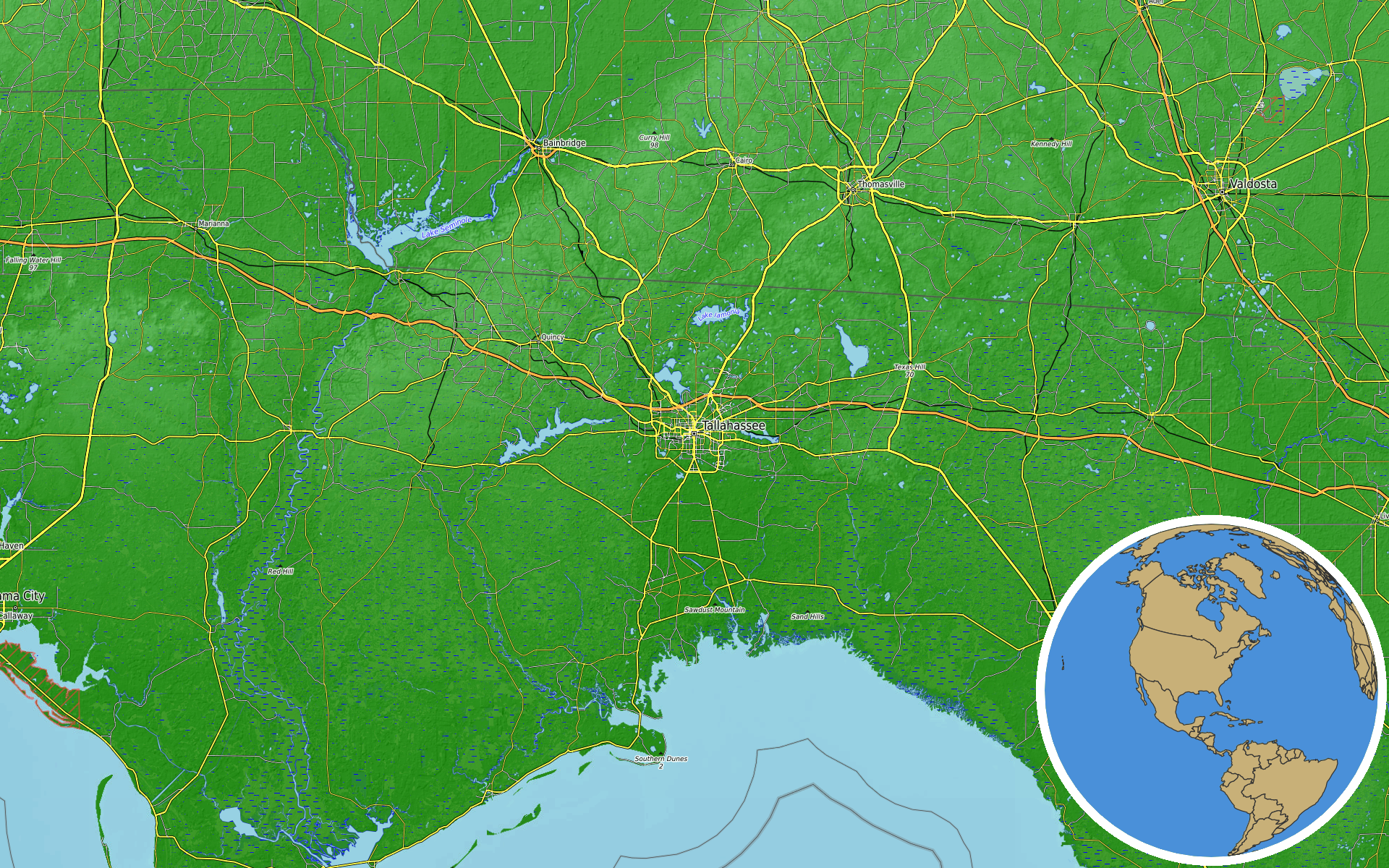

OpenTopoMap / Natural Earth – Largo, Florida