Trump Posts Doctored Image Boasting of More Energy
Trump shares a digitally altered portrait pairing a young military figure with himself, captioned to claim the same man carries even more energy today.

WASHINGTON D.C. — Donald J. Trump posted a digitally altered image on Truth Social boasting that he holds more energy now than in his youth.
The composite portrait pairs a young man in a military dress uniform with medals and a sash beside an older man in a navy suit and red tie who resembles Trump, seated at a round table before a draped backdrop. The younger figure bears hallmarks of synthetic image generation. No documentation supports the claim that the two portraits depict the same person at different ages. A banner across the top carries the caption.
Here is the full post on truthsocial: “Same Guy. Even more energy now!” on August 1, 2026 at 2:19 PM ET.
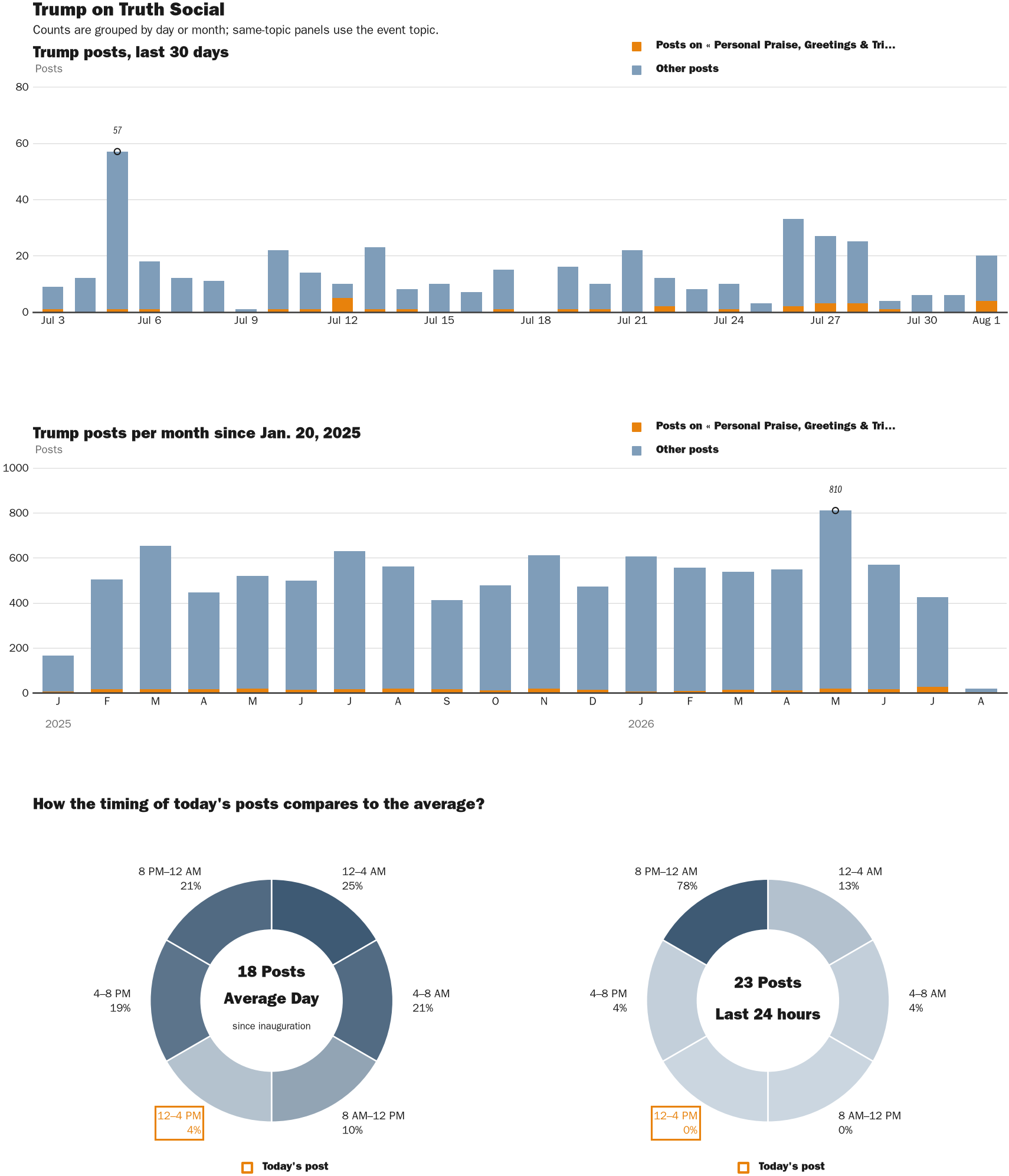
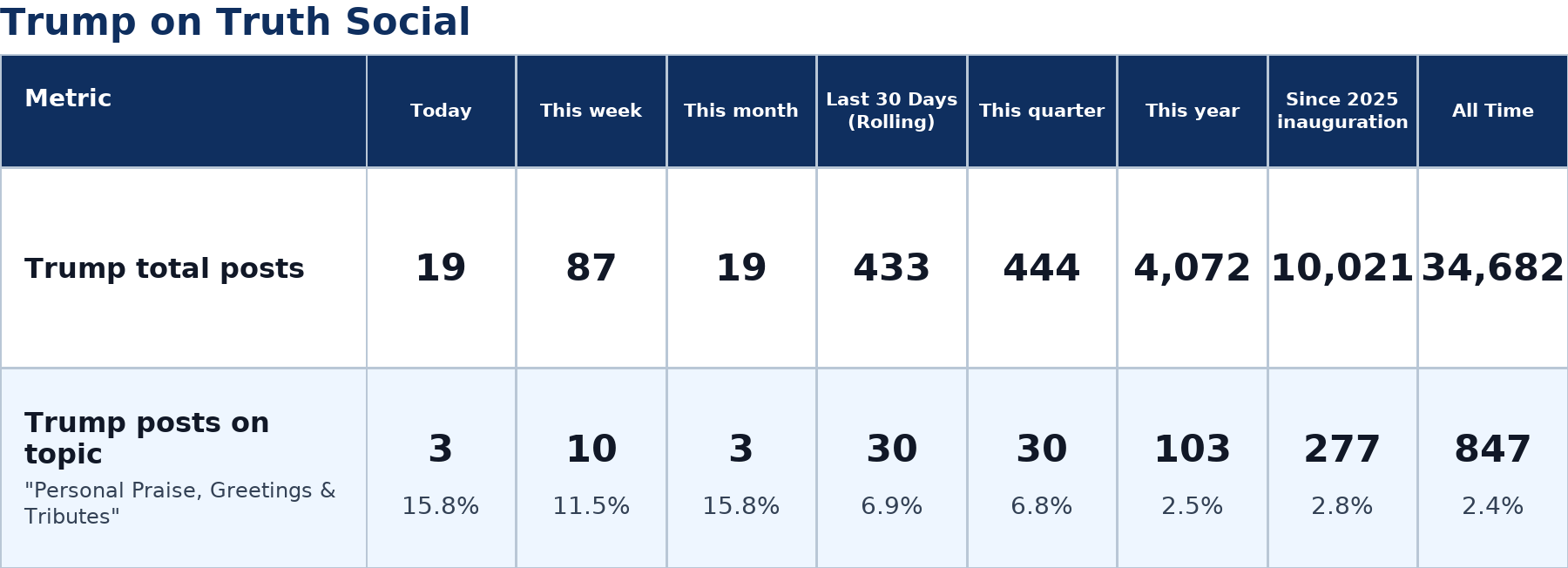
This is Trump’s 19th message released today. On average, Trump produces 18 posts per day since his inauguration on January 20, 2025.
The move fits a broader pattern in Trump’s recent messaging, with 30 of his 433 posts over the last 30 days focused on personal praise, greetings and tributes.
The post falls under the topic of personal praise, greetings and tributes, a category that has recurred across his feed. Self-referential images of this kind often circulate widely among supporters and draw sharp scrutiny from critics who flag the manipulated nature of the visuals. The image itself carries no policy content and makes no verifiable factual claim beyond the caption.
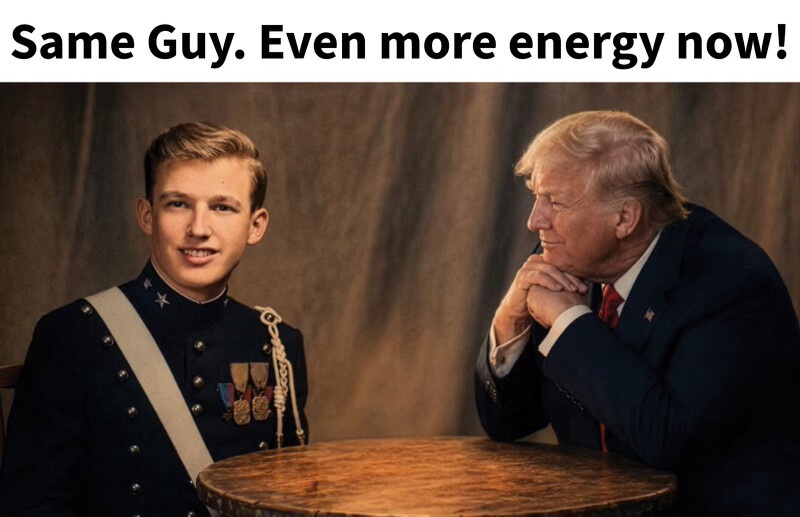

President Donald J. Trump posts a digitally altered image of himself on Truth Social at Washington D.C.
© copyright Zenger.News
Manipulated and synthetic images have become a growing subject of legal and public debate. Publication and further use of a person’s image generally require consent, though exceptions apply for public figures when the use ties to public discussion, according to zuykov.com. Public officials playing a significant role in politics, economics, art or sport fall within those exceptions when the interest is of public importance, according to zuykov.com.
For the average reader, the post offers no direct effect on daily life. It illustrates how political figures now deploy AI-generated imagery as a routine communication tool, a shift that complicates how audiences separate authentic photographs from digital composites.
This is not the first time Trump has shared stylized or altered depictions of himself. His feed has repeatedly featured heroic or idealized imagery, and such posts consistently rank among his most shared content. The pattern reflects a communication style built around self-projection rather than documentary accuracy.
No institution is scheduled to act on the post, and no decision or review tied to it has been announced. The image stands as messaging rather than an action requiring a formal response.
Altered portraits of leaders reach back long before the digital age, as happened before. Soviet authorities famously removed disgraced officials from official photographs during the 1930s, erasing figures such as Nikolai Yezhov from images beside Joseph Stalin, according to britannica.com. Retouchers airbrushed faces out of the historical record to reshape public memory. The practice hardened the cult of personality around Stalin, showing how manipulated images can serve the very leaders who commission them.
Assigned topic: Personal Praise, Greetings & Tributes.
This is Trump’s 19th Truth Social post today, out of 20 total today.
On average, Trump produces 18 posts per day since his inauguration on January 20, 2025.
Trump’s last post was 5 minutes ago.
This post is not part of a thread.
NewsFindr Chart Maker
Photo by Zenger real-time database of all Truth Social posts.
Zenger analysis
Photo by Zenger analysis