Trump Credits His Administration for Chevron’s Rebound, Demands Lower Oil Prices
Trump ties Chevron's success to his policies, cites the company's Venezuela return and presses oil producers to cut retail prices now.

WASHINGTON D.C. — Donald J. Trump credited his administration for the recovery of Chevron Corporation, the second-largest U.S. oil company by market value, and demanded that producers cut retail fuel prices immediately. Trump made the claim on Truth Social, tying the industry’s health to what he called the strength and stability of his government.
The president singled out a television interview given by Chevron Corporation‘s chief executive, saying the executive omitted the role of federal policy in the company’s performance. Trump also pointed to Chevron’s renewed operations in Venezuela as evidence, saying the company had returned larger than before after being forced out.
“Get your consumer (retail!) Oil Prices DOWN, NOW!” Trump said in the post, closing the message with a demand aimed at oil producers broadly.
Here is the full post on truthsocial: “Mike Wirth, Chairman and CEO of Chevron Corporation, just gave, in an interview with the fabulous Maria Bartiromo, all of the reasons that his company is doing so well. The only thing he conveniently forgot to mention is that, without the genius, foresight, strength, and stability, of the TRUMP Administration, the Oil Industry, and our Country itself, would be DEAD! As an example, they threw Mike and Chevron out of Venezuela, but now their back, far bigger and stronger than ever before, expecting to make a fortune! That goes for other Oil Companies as well…and get your consumer (retail!) Oil Prices DOWN, NOW! Thank you for your attention to this matter. President DJT” on August 3, 2026 at 9:50 AM ET.
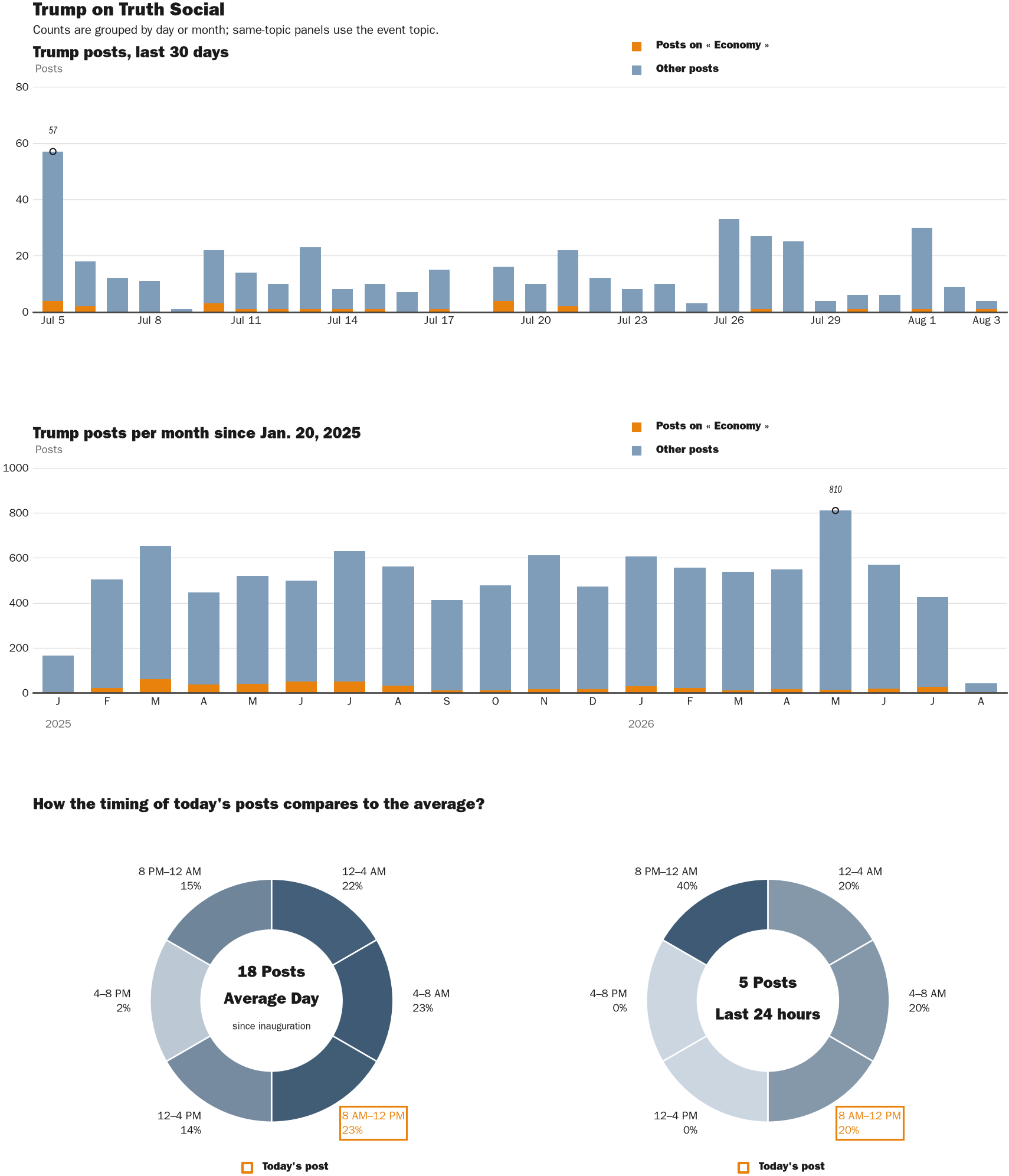
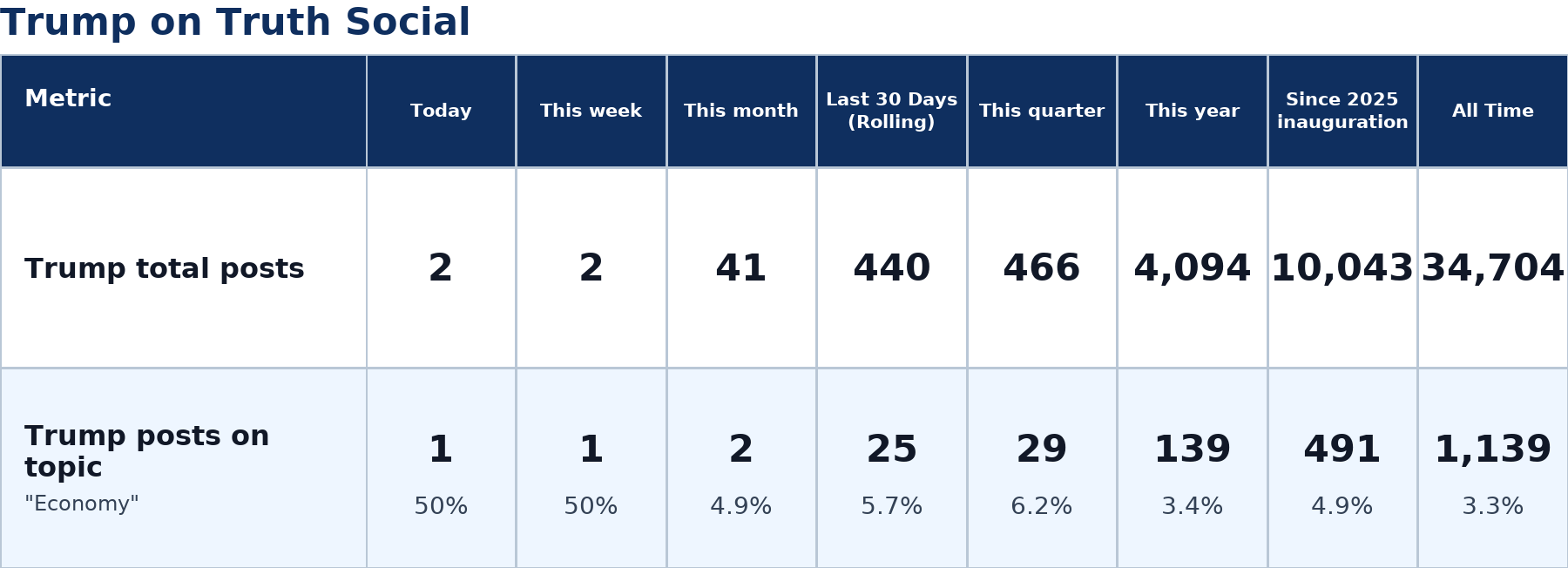
This is Trump’s second message released today, and the last post was 19 minutes ago, and it is not part of a thread. On average, Trump produces 18 posts per day since his inauguration on January 20, 2025. The move fits a broader pattern in Trump’s recent messaging, with 25 of his 440 posts over the last 30 days classified as Economy posts.
The demand puts two competing interests in tension. Oil producers benefit from higher prices at the wellhead, while drivers and the broader economy gain when pump prices fall. A presidential call for lower retail prices asks the industry to trade near-term margin for political goodwill, even as producers cite their own performance as a sign of strength.
Chevron Corporation‘s presence in Venezuela sits at the center of the dispute. The company holds oil-production interests in the country and has operated there under U.S. licenses that Washington has tightened and loosened across recent years, according to chevron.com. Those licenses determine whether the company can lift and export Venezuelan crude, and that decision rests with the U.S. Treasury Department’s Office of Foreign Assets Control, according to home.treasury.gov.
Presidents have long pressed oil markets for relief at the pump. Retail gasoline prices track global crude benchmarks and refining margins more than any single directive, and the federal government does not set retail fuel prices, according to eia.gov. The average price a driver pays reflects crude costs, taxes, distribution and station-level competition.
For the average U.S. reader, the message lands at the gas station. Lower retail prices would ease household budgets, while the underlying crude market responds to supply decisions by producers and to sanctions policy set in Washington. A single post does not move the pump price, but the policy levers behind it can.
This has happened before. Sitting presidents have repeatedly urged producers and OPEC to raise output or lower prices, and the industry has often resisted when margins were at stake. The pattern of a president leaning on oil companies over consumer costs is a recurring feature of U.S. energy politics, according to eia.gov.
The next move rests with oil producers and with the federal regulators who control Venezuela licensing. Any change to Chevron Corporation‘s operating terms would come from the U.S. Treasury Department, according to home.treasury.gov. A specific date for further action has not been announced.
Washington and Caracas have clashed over oil for decades, and this isn’t the first time the two capitals have come to blows over crude. The United States imposed sweeping sanctions on Venezuela’s state oil company in 2019, and Chevron Corporation‘s licenses saw sharp cuts, then a partial restoration in 2022, according to home.treasury.gov. Venezuela once ranked among the largest oil exporters to the United States, and the swings in that trade have shaped the fortunes of every major producer operating in the country.

NewsFindr Chart Maker
Photo by Zenger real-time database of all Truth Social posts.
Zenger analysis
Photo by Zenger analysis