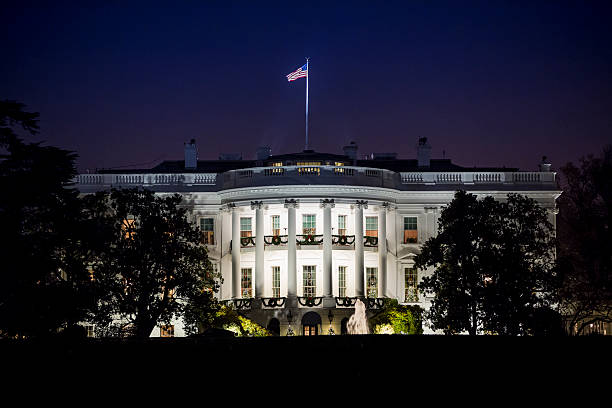
Trump Declares U.S. Navy Controls Strait of Hormuz, Vows Iran Never Gets Nuclear Weapon
Trump accuses Iran of duplicity in nuclear talks, insists the U.S. Navy controls the Strait of Hormuz and warns Tehran faces a deal or total surrender.

WASHINGTON D.C. — Donald J. Trump accused Iran’s leadership of duplicity in nuclear negotiations, declaring that the U.S. Navy already controls the Strait of Hormuz and vowing Tehran will never obtain a nuclear weapon.
Trump wrote that Iranian officials requested talks, then publicly denied any discussions were taking place and claimed they dealt only with Oman. He said nothing passes through to Iran without American consent, framing the standoff as one headed toward a deal or a total surrender.
“IRAN WILL NEVER HAVE A NUCLEAR WEAPON,” Trump wrote, capping a message that cast the confrontation as a decades-old problem of Tehran’s making.
The post raises the stakes over a waterway that carries roughly a fifth of the world’s oil, a chokepoint whose disruption ripples into fuel prices far from the Persian Gulf. For an American reader, the practical concern is the pump. Threats to the Strait of Hormuz historically push crude higher, and sustained tension can lift gasoline costs across the United States.
Here is the full post on truthsocial: “Iranian Leadership is unbelievably duplicitous! They ask for a meeting, some would say “beg,” talks begin, with more scheduled in the immediate future, and they say, openly and proudly, that they’re not having any discussions, that nothing is being talked about, and they’re only dealing with “Oman.” They then go on to give their usual blather in saying, the Strait of Hormuz will be operated powerfully by them, when it is already completely controlled by the United States Navy and our “Blockade” or, as some say, “The United States Wall of Steel!” Nothing gets through to Iran, unless we want it to, and nothing will get through, unless a Deal, or Total Surrender, is accomplished. Whether Iran wants to admit it or not, we are, in fact, talking of a solution to a problem that they have caused, for decades. It is very simple, IRAN WILL NEVER HAVE A NUCLEAR WEAPON! Thank you for your attention to this matter. Trump” on August 3, 2026 at 11:25 AM ET.
This is Trump’s third message released today, and the last post was one hour ago, and it is not part of a thread. On average, Trump produces 18 posts per day since his inauguration on January 20, 2025. The move fits a broader pattern in Trump’s recent messaging, with 60 of his 440 posts over the last 30 days classified as Foreign Policy posts.
The dispute pits Washington against Tehran over both nuclear enrichment and control of a strategic passage. A hard line benefits an administration seeking leverage and Gulf allies wary of Iranian reach. Tehran loses if a naval squeeze constrains its oil exports and its bargaining position, while global consumers absorb the risk of higher energy prices if the standoff escalates.
This has happened before. Tension over the Strait of Hormuz flared repeatedly across recent decades, from the tanker war of the 1980s to seizures of commercial vessels and mutual threats to close the passage. Each episode moved oil markets and drew in naval forces, and each ended without a permanent settlement of the underlying nuclear and maritime disputes.
The next move rests with Iran’s leadership and the negotiators mediating through Oman. No date for a decision or a further round of talks has been announced.
Standoffs in the Persian Gulf run older than the current quarrel, as history shows repeatedly. Portuguese forces seized Hormuz island in 1515 to command the gulf’s trade, holding it for more than a century before a joint English and Persian expedition drove them out in 1622. The Portuguese never regained the passage, a reminder that control of the strait has shifted hands and reshaped the fortunes of the powers that fought for it.
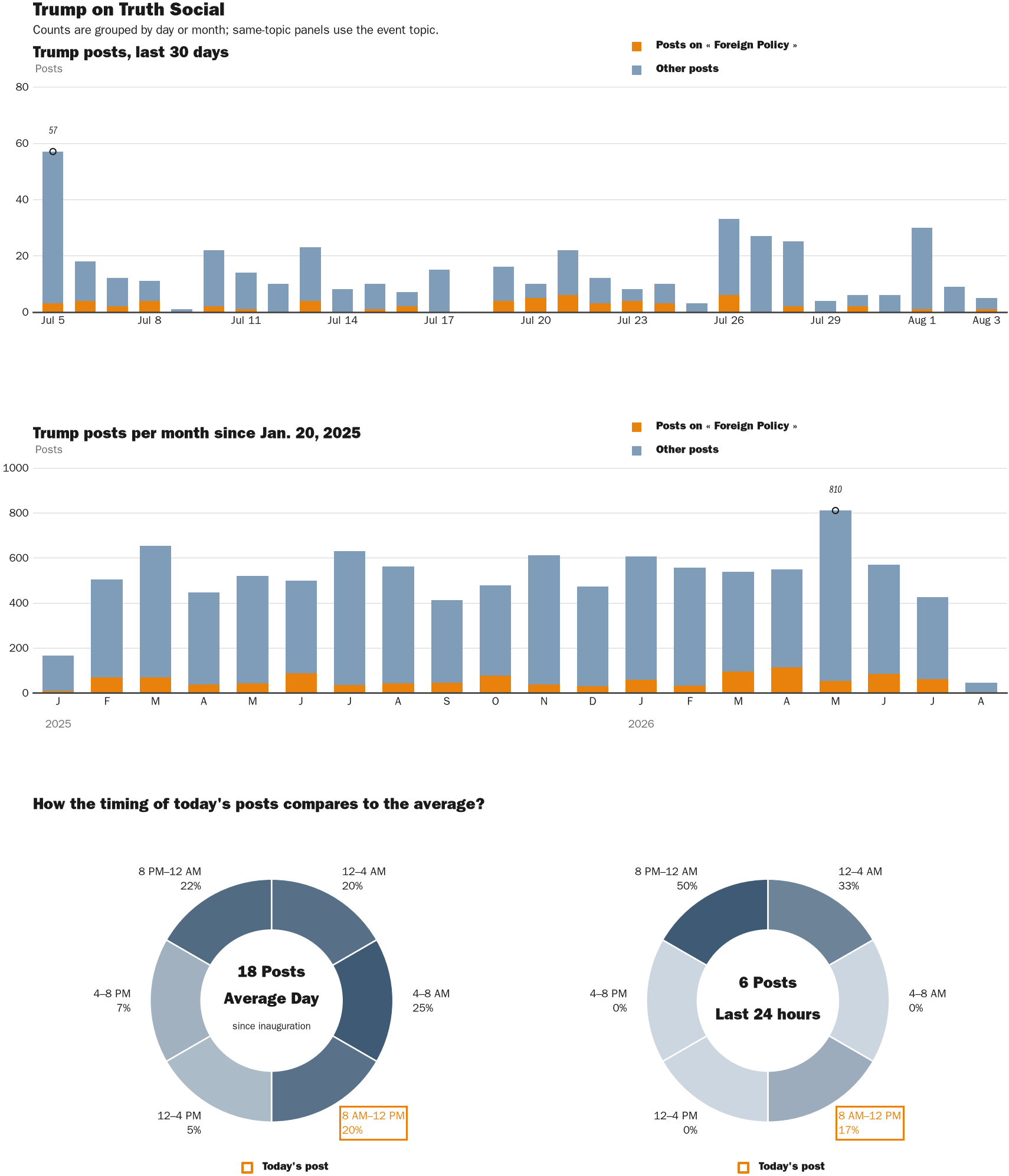

NewsFindr Chart Maker
Photo by Zenger real-time database of all Truth Social posts.
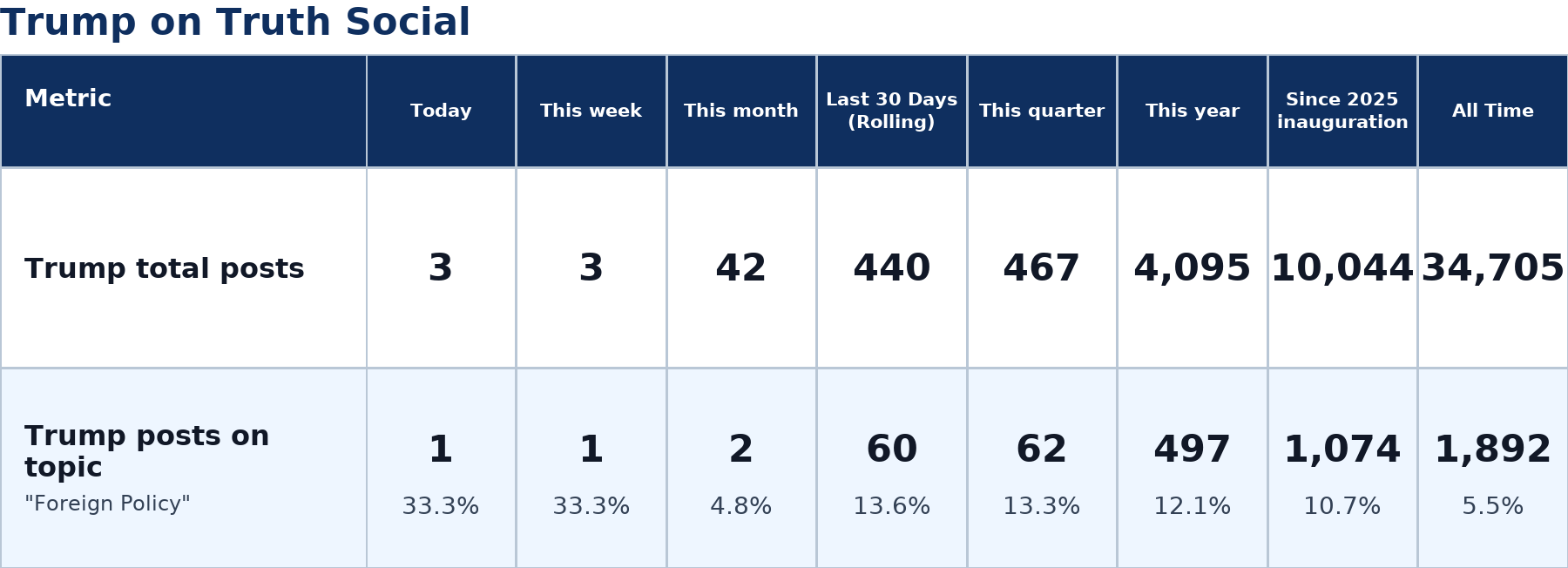
Zenger analysis
Photo by Zenger analysis