Trump Blames Sanctuary Cities as DHS Data Shows Missing Migrant Children Located
Trump cites Department of Homeland Security figures showing an 8.51% rise in located migrant children and a 16.47% drop in those under 18 still missing.

WASHINGTON D.C. — Donald J. Trump accused sanctuary cities of obstructing federal efforts to locate missing migrant children, citing Department of Homeland Security data showing an 8.51% increase in children found.
The figures track a period from February 2026 to July 2026. Located children climbed to 148,322 from 136,450, while those still missing fell to 330,564 from 342,436, according to a chart attributed to the U.S. Department of Homeland Security. The graphic reports a 16.47% drop in children under 18 who remain unaccounted for.
“These are the missing children, and we’re not being helped at all by Sanctuary Cities,” Trump wrote, adding that local governments were working to keep the children lost.
The post ties a recurring immigration grievance to a specific enforcement metric. It frames sanctuary jurisdictions as an obstacle to reuniting or recovering unaccompanied minors who crossed the southern border in recent years.
Here is the full post on truthsocial: “These are the missing children, and we’re not being helped at all by Sanctuary Cities. They’re going out of their way to make sure the children remain missing! Trump” on August 3, 2026 at 4:13 PM ET.
This is Trump’s 11th message released today, and the last post came moments ago, and it is not part of a thread. On average, Trump produces 18 posts per day since his inauguration on January 20, 2025. The move fits a broader pattern in Trump’s recent messaging, with 13 of his 446 posts over the last 30 days classified as immigration posts.
Sanctuary cities are jurisdictions that limit cooperation between local law enforcement and federal immigration authorities. Trump has long argued those policies shield undocumented immigrants and hinder enforcement, a claim local officials in cities such as Chicago, Los Angeles and New York dispute. The stakes fall heavily on unaccompanied minors, whose whereabouts federal agencies track after release from government custody.
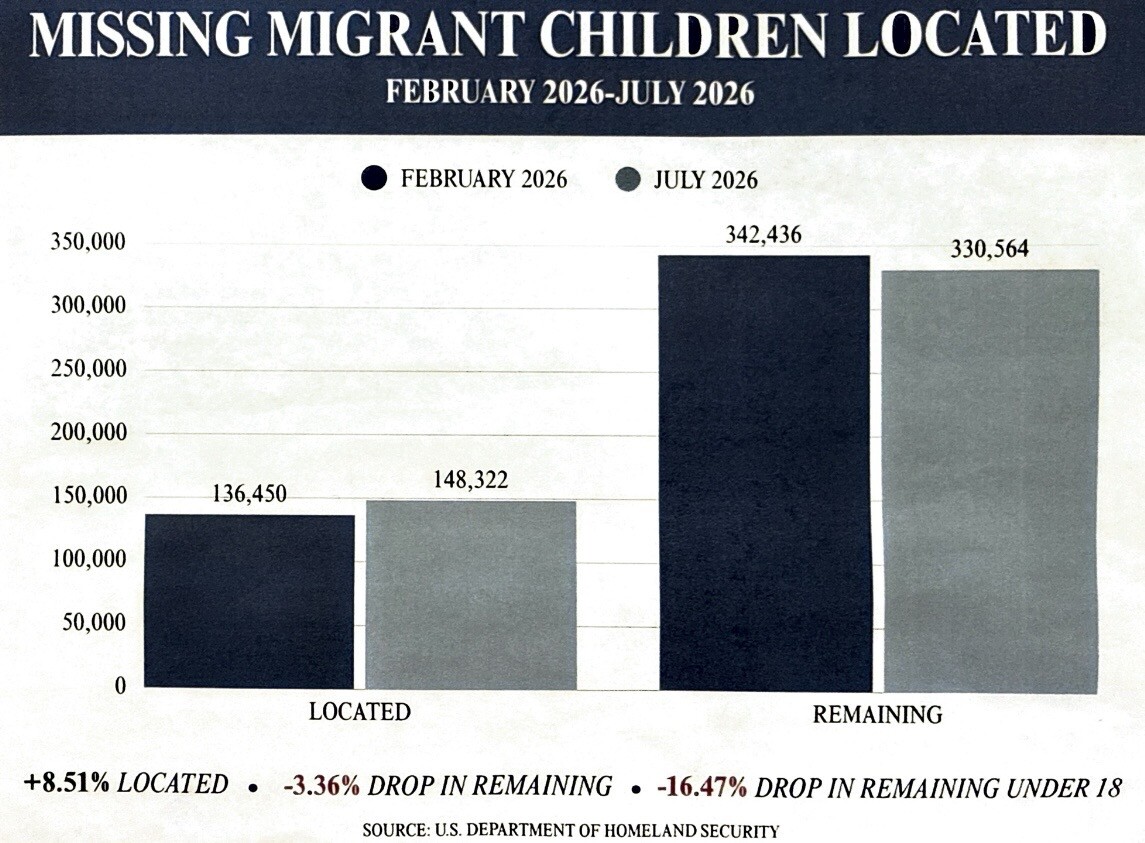

A graphic attributed to the U.S. Department of Homeland Security displays data on missing migrant children at WASHINGTON D.C.
© copyright Zenger.News
The issue of missing migrant children predates the current administration. A 2023 review found that federal agencies had lost immediate contact with tens of thousands of unaccompanied children placed with sponsors, prompting congressional scrutiny of vetting procedures. The Office of Refugee Resettlement and the Department of Homeland Security have since faced repeated audits over how they monitor minors after placement.
For the average US reader, the debate touches on how billions in federal spending on immigration enforcement and child welfare translate into results. It also raises whether local and federal agencies coordinate effectively when a child cannot be found.
This has happened before. Trump has repeatedly used DHS-sourced graphics to argue that his enforcement policies produce measurable gains, and he has singled out sanctuary jurisdictions in prior posts on the same theme. The current post extends that pattern by pairing rhetoric with specific percentage changes.
The next move rests with the Department of Homeland Security and Congress, which could release updated figures or open further oversight of how the government tracks missing minors. A date for any additional data release or hearing has not been announced.
Disputes over how the federal government counts and locates migrant children are not new. In 2018, officials acknowledged they could not account for the status of roughly 1,475 unaccompanied children placed with sponsors, a disclosure that drew hearings on Capitol Hill. Lawmakers at the time demanded tighter tracking, and agencies revised their follow-up procedures. The controversy shadowed the officials who oversaw the program, forcing repeated testimony before congressional committees in the months that followed.
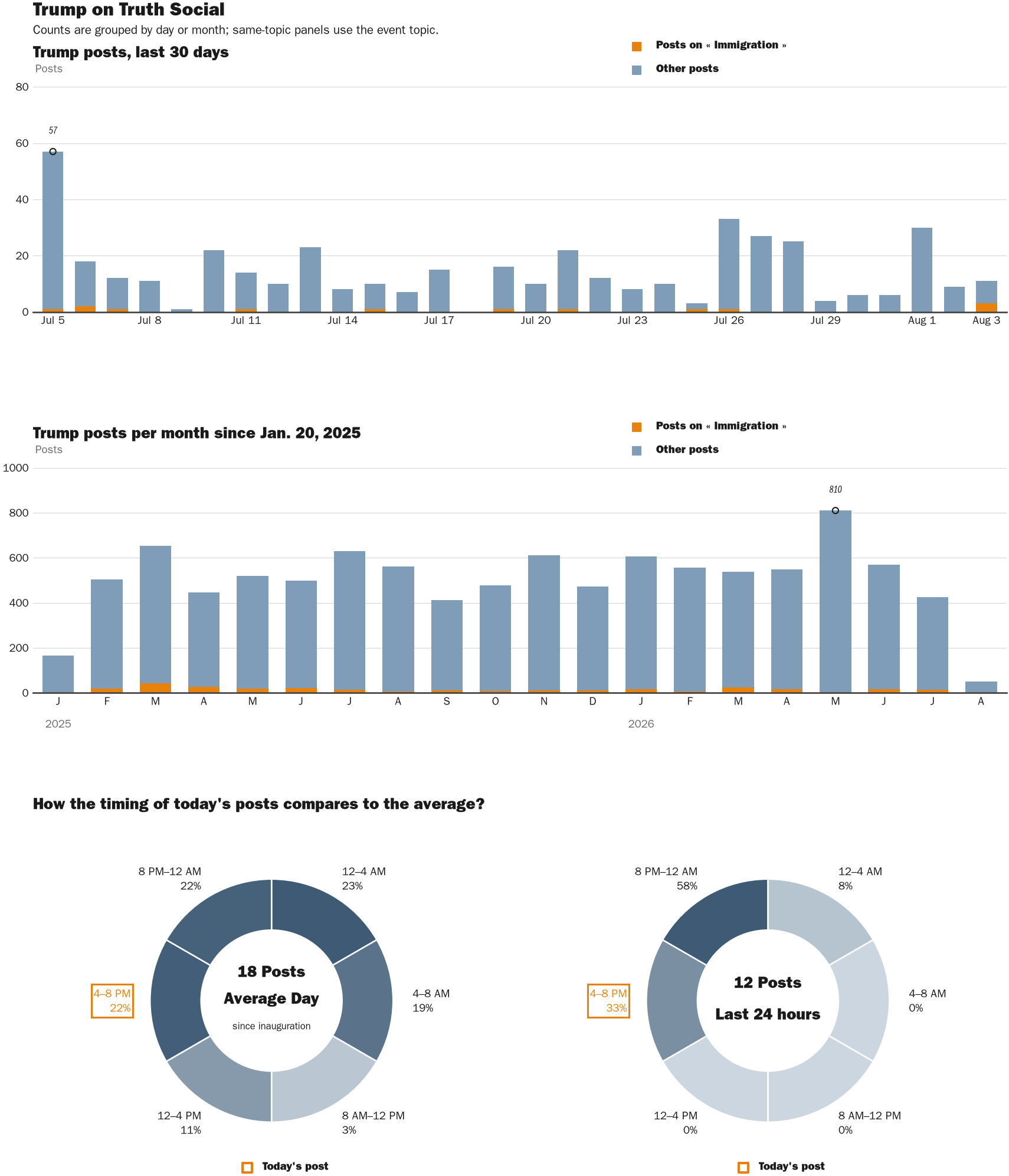
NewsFindr Chart Maker
Photo by Zenger real-time database of all Truth Social posts.
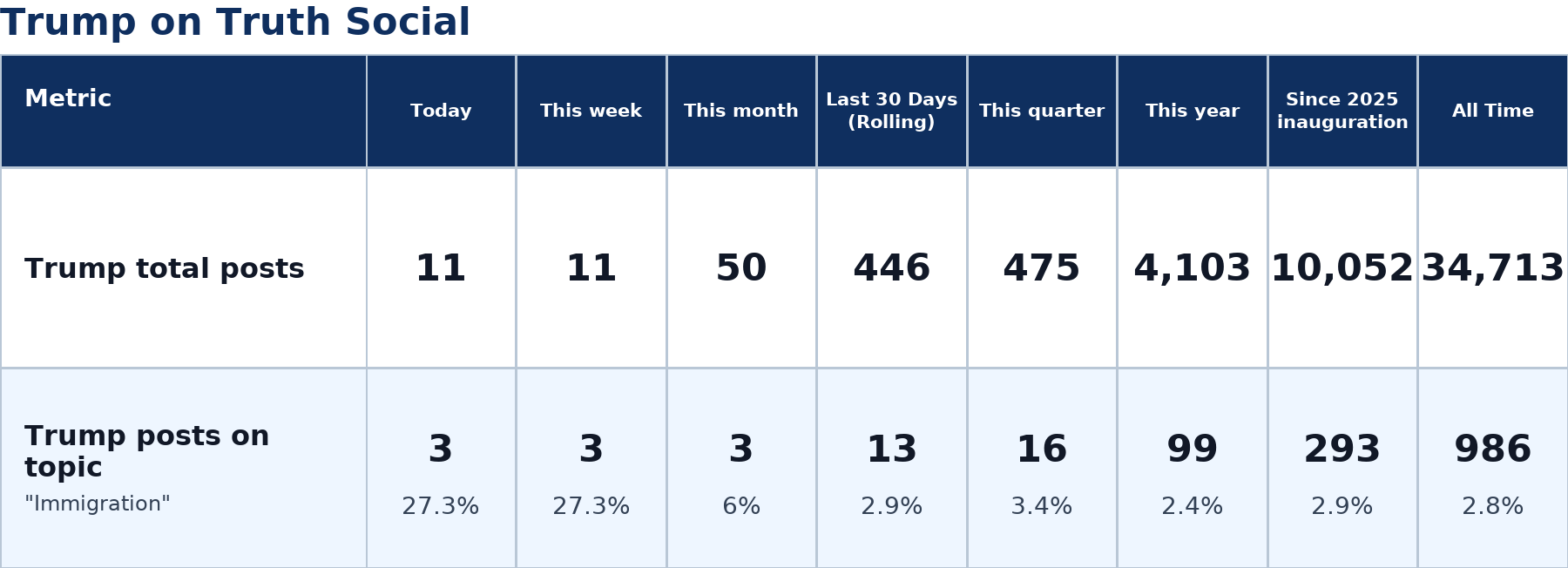
Zenger analysis
Photo by Zenger analysis