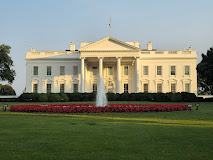
Trump Vows Supreme Court Appeal After Judges Halt White House Ballroom Project
Trump says two appellate judges blocked a security complex at the White House and pledges to take the fight to the Supreme Court, citing Judge Neomi Rao's dissent.

WASHINGTON D.C. — Donald J. Trump vowed to appeal to the U.S. Supreme Court after a federal appellate panel declined to clear the way for a security complex he is building at the White House.
Trump said two appellate judges appointed by former Presidents Barack Obama and Joe Biden voted against the project, which he described as a Military Center vital to the National Security of Washington, D.C. He said the decision has been stayed and does not take effect for a period of time. The president framed the ruling as a threat to the safety of future occupants of the executive mansion.
Here is the full post on truthsocial: “Two Obama and Biden Appellate Court Judges just voted against the desperately needed Military Center, required for the National Security of Washington, D.C., and our Country, itself. Highly Respected Judge, Neomi Rao, stated the following key points, among others, in a strongly worded dissent: “This was a blatant abuse of discretion…To begin with, the district court had no jurisdiction because the TRUST Holdings Inc.has no standing to stop construction at the White House…The balance of equities overwhelmingly favors the government. The district court elevated the aesthetic displeasure of a single passerby over the government’s security interests in the ballroom and the security risks of leaving an open construction site at the President’s home and office…These errors in equitable judgment require vacating the injunction…The district court seized supervision of construction at the White House, and my colleagues affirm this judicial overreach…Because the injunction is beyond the proper province of the federal courts, construction should be allowed to continue.” The decision has been stayed, and does not take effect for a period of time. We will be immediately appealing to the United States Supreme Court. The Military and Secret Service are viewing this horrendous, politically motivated, and unlawful ruling as a National Security threat to our Nation in that the entire Complex is being built for the protection of our Country and, additionally, all future Presidents. The single, integrated project includes Bomb Shelters, State of the Art Hospital and Medical Facilities Corporation, Protective Partitioning,Top Secret Military Facilities,Structures and Equipment, Protective Missile Resistant Steel, Columns, Roofs, and Beams, Drone Proof Ceilings and Roofs, Military Grade Venting, and Bullet,Ballistic, and Blast Proof Glass. It is all tied together as one big, expensive, and very complex unit, which is vital for National Security and Military Operations of the United States of America!The Circuit Court’s decision, which is totally wrong on the vital subject of STANDING, of which the plaintiff has none, severely jeopardizes the lives and welfare of the people who work, and will be working, at the White House — including all future Presidents of the United States, and their families, as well as the lives of all those visiting, such as Heads of State and other Dignitaries, and all Americans who wish to visit the historic, beautiful Executive Mansion.The Circuit Court also refused to acknowledge that the desperately needed, and totally secure Ballroom, which is being built ahead of schedule and under budget, is a Gift from President Trump and Great Patriots of the United States of America. There will be no expense to the American Taxpayer. This unjust decision must be overturned by The Supreme Court in its entirety. Thank you for your attention to this deeply important National Security matter! Trump” on August 7, 2026 at 12:48 PM ET.
This is Trump’s fifth message released today, the last post came one hour earlier, and it is not part of a thread. Trump produces 18 posts per day on average since his inauguration on January 20, 2025. The move fits a broader pattern in Trump’s recent messaging, with 15 of his 439 posts over the last 30 days classified as Legal posts.
Trump quoted a dissent from Judge Neomi Rao, whom he appointed to the U.S. Court of Appeals for the District of Columbia Circuit in 2019. Rao wrote that the district court had no jurisdiction because the plaintiff lacked standing to stop construction. She argued the balance of equities favored the government and that the injunction fell beyond the proper province of the federal courts.
The fight pits the executive branch against a TRUST Holdings Inc.Trust seeking to halt work at the White House. Trump said the security features of the complex include bomb shelters, a medical facility, protective partitioning, missile-resistant steel, drone-proof roofs and blast-proof glass. He said the ballroom is a gift funded privately, with no expense to the American Taxpayer.
The stakes reach beyond one construction site. A completed complex would shield sitting and future presidents, their families and visiting Heads of State, according to Trump. A prolonged injunction would freeze an open construction site that Rao described as a security risk. Trump said the Secret Service and military view the ruling as a National Security threat.
the White House has undergone major additions before. The West Wing rose in 1902 under President Theodore Roosevelt, and the East Wing followed in 1942 under President Franklin D. Roosevelt, according to whitehousehistory.org. Prior expansions moved forward without protracted court battles over standing, making a federal appellate fight over White House construction an unusual turn.
For an average reader, the dispute tests how far courts may reach into decisions about the president’s official residence. A ruling that limits judicial supervision of executive-branch construction would set a precedent affecting future presidents of both parties. The outcome could also shape how private gifts finance federal projects.
Presidents have clashed with courts over executive authority before, though a judicial injunction over White House construction stands apart.The Supreme Court has repeatedly weighed the boundaries between the executive and judicial branches, and standing has anchored many of those rulings, according to supremecourt.gov.
The Supreme Court will decide the next step once Trump files his appeal. A date for that filing or for any decision has not been announced.
Disputes over the powers of the presidency reaching the nation’s highest court have surfaced repeatedly through American history.The Supreme Court ruled in 1952 in Youngstown Sheet & Tub e Co. v. Sawyer that President Harry Truman lacked authority to seize the nation’s steel mills during the Korean War, a 6-3 decision that reb ukedthe White H ouse, according to britannica.com. The court ordered President Richard Nixon in 1974 to surrender the Watergate tapes in an 8-0 ruling, a decision that hastened his resignation weeks later, according to britannica.com. Each case narrowed the reach a president could claim, leaving occupants of the office bound by limits the justices imposed.
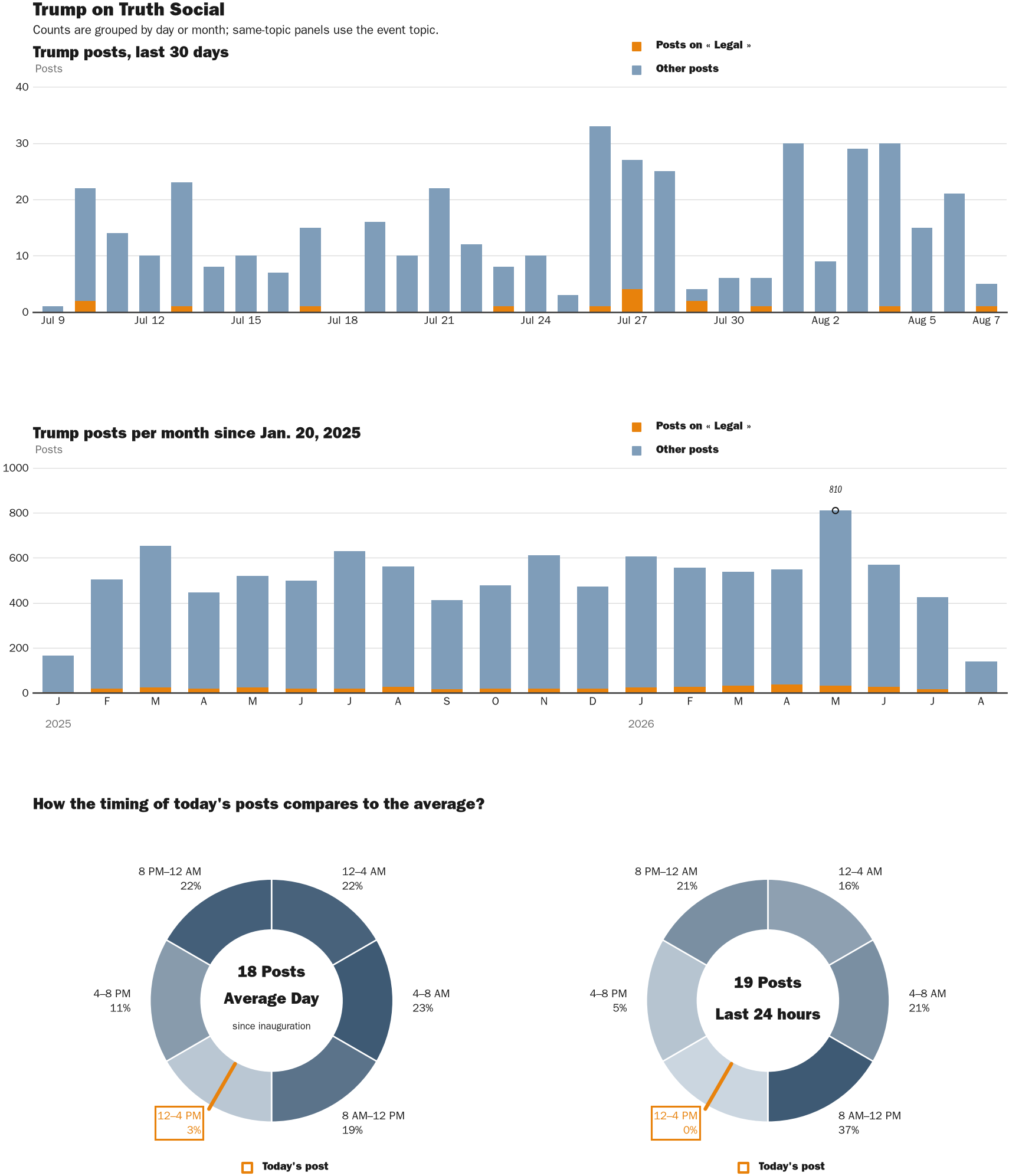

NewsFindr Chart Maker
Photo by Zenger real-time database of all Truth Social posts.
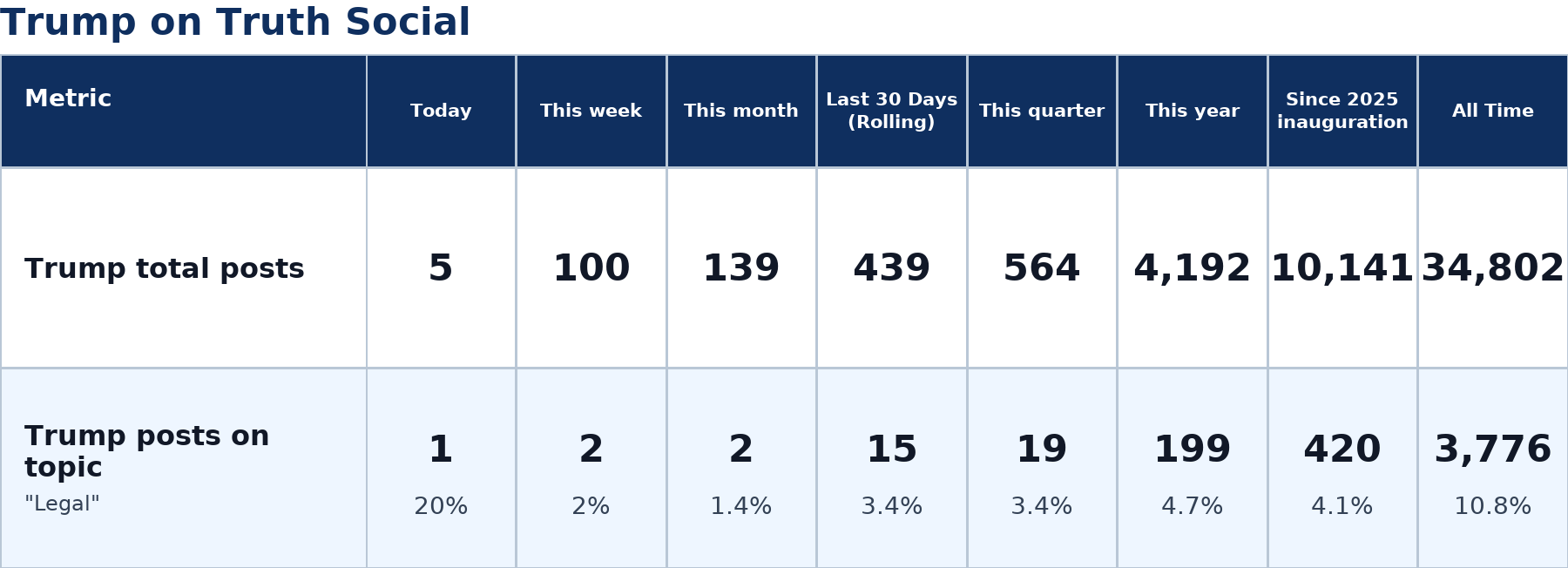
Zenger analysis
Photo by Zenger analysis
Protomaps / Natural Earth – Washington, D.C.