Trump Presses Senate to Pass College Sports Bill Before Recess
Trump urges senators to stay in Washington until they pass the Protect College Sports Act, warning that women's and Olympic programs face cuts and universities risk financial collapse.

WASHINGTON D.C. — Donald J. Trump urged the Senate to remain in Washington until it passes the Protect College Sports Act, a bipartisan bill he said would shield women’s and Olympic athletics from cancellation.
Here is the full post on truthsocial: “THE PROTECT COLLEGE SPORTS ACT is a great Bill, and the Senate will hopefully stay in D.C. until it passes. Without this Bill, millions of young Athletes will be hurt, programs will be canceled, Women’s and Olympic Sports will go away, the fans will be robbed, and Universities will go broke. Nobody has done more to protect Women Athletes than me — and this Bill CLEARLY protects the Laws in 27 States protecting Women’s Sports, and banning Men from Women’s Sports. Anyone who tells you differently is LYING! Stop grandstanding, and try getting this done. Thank you for your attention to this matter! Trump” on August 7, 2026 at 4:52 PM ET.
This is Trump’s seventh message released today, and the last post was four minutes ago, and it is not part of a thread. On average, Trump produces 18 posts per day since his inauguration on January 20, 2025. The move fits a broader pattern in Trump’s recent messaging, with 40 of his 441 posts over the last 30 days classified as Domestic Policy posts.
The bill would set concrete rules on the transfer portal and student-athlete pay, cap transfers to one per athlete without a year on the sideline, and restrict eligibility to five years, according to liberty.edu. Sen. Ted Cruz, a Texas Republican, introduced the measure in May alongside Sen. Maria Cantwell, a Washington Democrat, plus Sen. Eric Schmitt of Missouri and Sen. Chris Coons of Delaware, according to liberty.edu. The legislation would let schools pool media rights and would bar large programs from forming a breakaway super league, according to liberty.edu.
Stakes run in several directions. Supporters say the bill protects smaller athletic departments and women’s teams from budget cuts, while critics of federal intervention argue it caps what athletes can earn. Provisions added in committee would stop major colleges with more than $80 million in athletic revenue from cutting women’s and Olympic teams below their 2024-25 levels, according to liberty.edu.
“There is a real urgency for Congress to act,” Cruz said during a June meeting at Liberty University. “College sports is in complete chaos right now.”
Student-athlete compensation moved to the center of college sports in recent years. The NCAA suspended name, image and likeness rules in 2021, and the $2.8 billion House vs. NCAA settlement in June 2025 let universities pay athletes through direct revenue sharing, according to liberty.edu. More than 290 colleges have endorsed the bill, according to liberty.edu.
For the average reader, the outcome could decide whether a state university keeps its track, tennis or gymnastics program, and whether a family’s tuition dollars subsidize a widening pay race for recruits. Smaller campuses stand to keep teams that larger revenue could otherwise squeeze out.
Congress has attempted college sports fixes before. Lawmakers held repeated hearings after the 2021 NIL shift, yet no comprehensive federal statute passed, leaving courts and the NCAA to set the terms. This bill advanced further than earlier efforts after clearing the Senate Committee on Commerce, Science, and Transportation in June, according to liberty.edu.
The full Senate holds the next decision on the measure, which awaits a floor vote after the committee advanced it, according to senate.gov. A date for that vote has not been announced.
Federal pushes to police college athletics have surfaced before. Congress passed the Sports Agent Responsibility and Trust Act in 2004 to curb improper contact with student-athletes, and Title IX, enacted in 1972, reshaped women’s participation by requiring equal opportunity in federally funded programs. Title IX drove women’s college sports participation from roughly 30,000 athletes before its passage to hundreds of thousands within decades. That shift redefined the recruiting landscape lawmakers now cite as they debate the next round of rules.
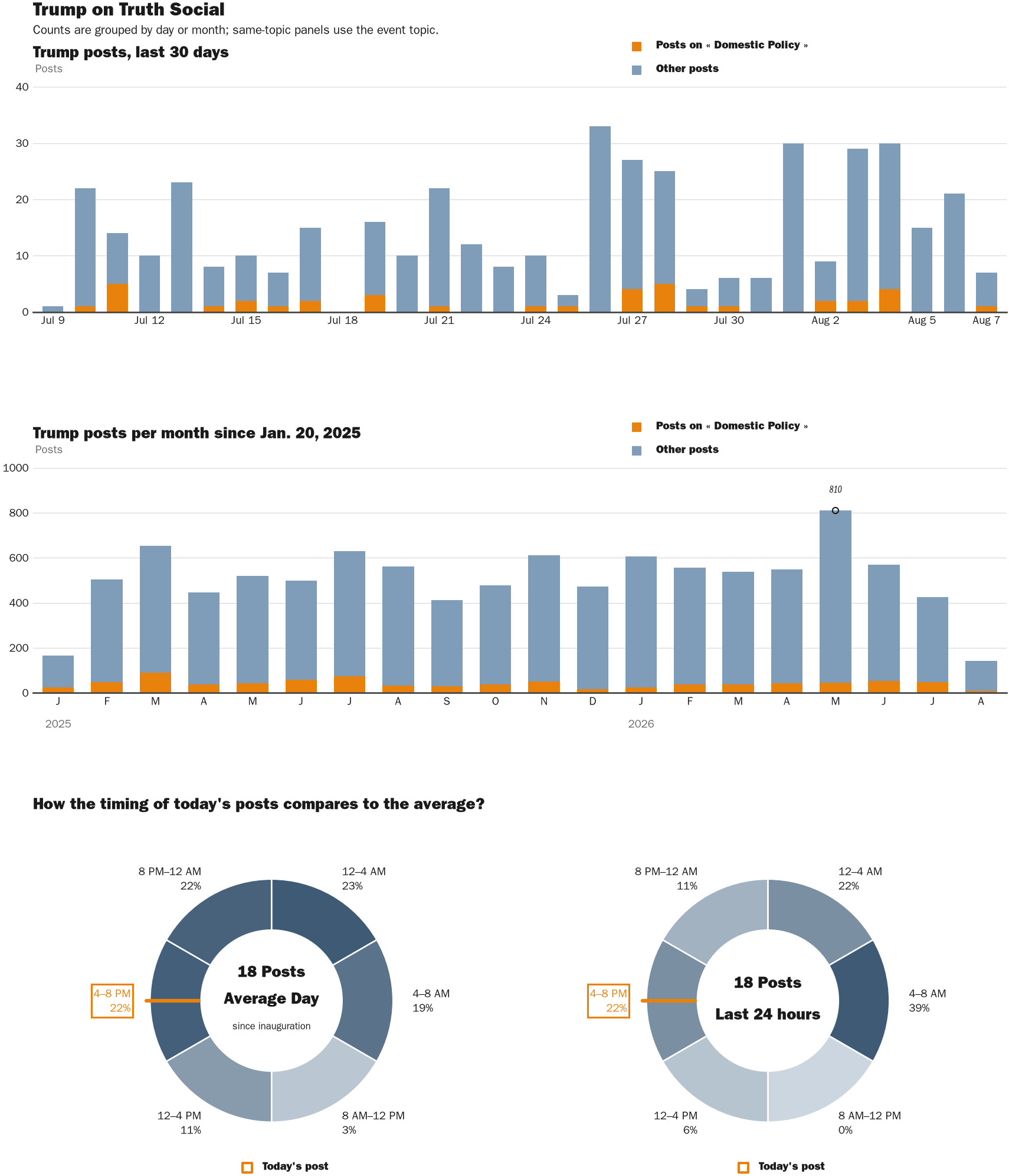

NewsFindr Chart Maker
Photo by Zenger real-time database of all Truth Social posts.
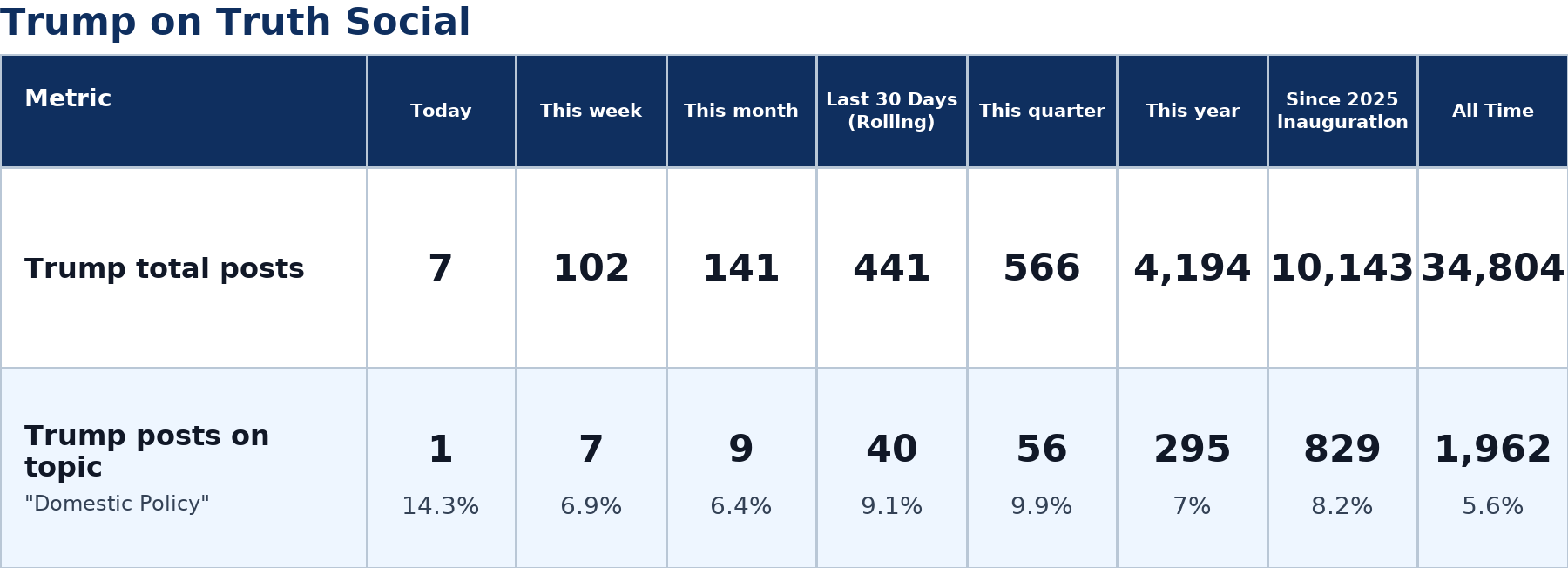
Zenger analysis
Photo by Zenger analysis