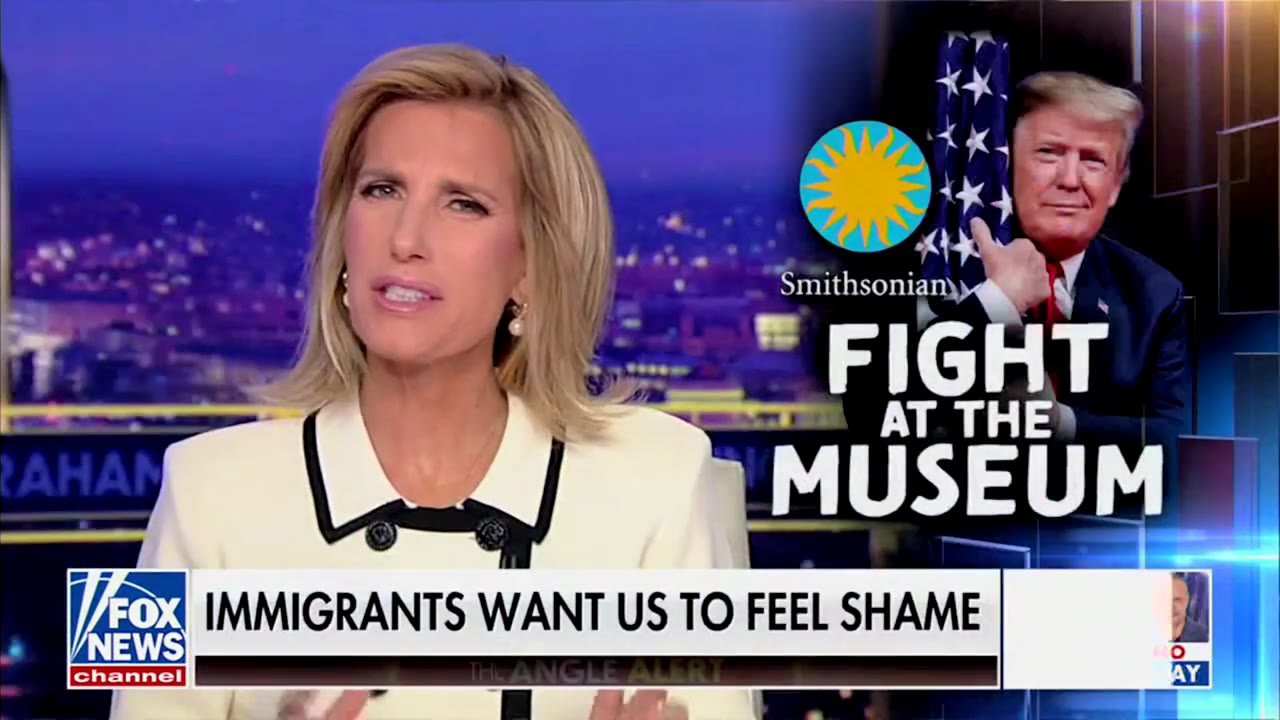

Trump shares a media post on Truth Social
Trump truth Social post containing 2 videos. Video transcript This is a single speaker commentary piece — no interview format with separate speakers. Here is the corrected transcript: Do you ever stop to wonder how they came to think this way? One of the.

WASHINGTON D.C. — Truth Social post containing 2 videos.
Video transcript This is a single speaker commentary piece — no interview format with separate speakers.
Donald J. Trump shared a post criticizing leadership at the Smithsonian’s National Museum of American History for promoting a “restorative history” mission. The museum has faced intense scrutiny from congressional Republicans and the Trump administration, who have accused director Anthea Hartig of allowing the institution to become infected by “woke ideology.”
Truth Social post containing 2 videos.
Video transcript This is a single speaker commentary piece — no interview format with separate speakers. Here is the corrected transcript:
Do you ever stop to wonder how they came to think this way? One of the things that brought me into starting my PhD program was finally coming to the realization that we were never really going to be able to tackle white supremacy in the way that we need to without reparations. Our ability to quantify racism, I think is so critical. I think we’ve been missing that in understanding it beyond just the general racial gap. The reparations obsession from a woman who was born in Ethiopia and whose family was allowed to come here courtesy of America’s goodwill, a diversity visa. Malak Quarles is the Democrats’ great socialist hope in Colorado. She’s a typical lefty, overeducated and entitled, and anti-American malcontent. But there are countless more like her. Their corrosive worldview is shaped by a number of inputs: the parents in some cases, the schools, social media, and yes, cultural institutions that feed and reinforce their resentment toward all things American. And this week the Trump administration is blowing the lid off one of the worst, the Smithsonian’s National Museum of American History. Now it’s a museum led by Anthea Hardig, with the help of top staff such as Patty Arteaga. They’ve taken our nation’s most important museum for American history and turned it into a crusade for restorative history. Their new mission statement: “Empowering people to create a more just and compassionate future by exploring, preserving, and sharing the complexity of our past.” As we all know, loving America is very complicated. The Smithsonian has been woke for years, but now you see this from this hokey video. Now it’s just gone a step further by launching its “Let’s Stand Together to Do Better” campaign. Don’t you love that title? To train a new generation of activists. If we want to change the biases in our world, we need to face them. We need to stand up together and face the injustices. There is no shame in wanting a better world for all and for our future. And we will not be alone in standing up. Whether we join with our neighbors to paint over symbols of hate or we come together to peacefully protest police violence, there is a community of allies that we join when we finally choose to stand up. Oh my god, it’s just all so tedious. Now, sure, there’s still the ruby slippers and the first Macintosh computer and the first telephone in the exhibits. But the museum’s political undercurrent is part BLM, part anti-ICE, with a little DSA, trans, and NEA thrown in for good measure. It’s kind of an amalgam of all of it. Now, mind you, we the people are funding this Smithsonian. About a billion dollars in appropriations. So I got to say, who voted for this? I didn’t. So, did this Smithsonian’s Board of Regents even know what the museum is being used for? Here’s the list of the folks on the Board of Regents: you got the Chief Justice of the Supreme Court, J.D. Vance. He’s a little busy. Okay, got Senator John Boozman, he’s a Republican. A couple of other Republican congressmen and various other people. Now, here’s what the report from the Domestic Policy Council found: that the Smithsonian presents the founders through the lens of slavery rather than their contributions. That Christianity is portrayed as a force of oppression, ditto for the Pilgrims, natch. And museum leadership thinks our founding should be problematized, emphasizing America’s shortcomings and, of course, reframing instead of celebrating our founding. Its mission statement is removing references to American history and instead focuses on a quote “more just and compassionate future.” And exhibits are directed to focus on modern political issues across nearly every topic. The report also found anti-white anti-oppression programming for staff. Immigration exhibits highlight activism surrounding illegal immigration. Gender-related exhibits present transgender identity as part of women’s and children’s history. Oh, by the way, youth exhibits contain material the report argues is inappropriate for children. Oh, no, that’s never going to happen. So look, our tax dollars are funding a museum that fails to provide a balanced view of American history. There’s bad stuff, but there’s a lot of good stuff. And instead, it devotes itself to left-wing activism. That’s obviously the goal. Now, it’s designed to encourage the dismantling of American norms and culture over time. And now we’re onto them. I was watching this today. The New York Times, I think they had like five articles on this today. No wonder they’re so upset and so many media outlets are out there running interference for the Smithsonian today. Haberman and Swan on their book tour had time to write a piece claiming that Trump is the one trying to impose his own view of American history on the museum. All right, of course that’s what they’re going to say. It’s absurd. Trump didn’t politicize the museum. The museum’s directors and staff did. Look, here’s the bottom line: the liberal establishment believes that the Smithsonian is theirs to use as a vehicle for advancing anti-American agendas. They believe that when Americans come to visit their nation’s capital or when foreigners come to visit DC, they should be confronted with evidence that’s built on America’s racism, xenophobia, and, of course, overall greed. It’s the kind of stuff that shallow celebrities spout to try to sound smart. Firing and taking the names off boats of important Latino history heroes in history and erasing all that erasure on women and black folk. The Smithsonian? Yeah, erasing our history? Completely taking it out. And since that’s the real history, right? We should all be ashamed and we should be ready to make amends, meaning they’re coming to take your money and maybe even your property and then just give it to a bunch of their friends. That’s what they want. And that’s what they’ll do unless we the people get involved and demand that our congressmen and our senators stop funding this anti-American madness. And that’s the angle. Vince Haley is the director of the White House Domestic Policy Council and has been given the task of implementing the president’s executive order restoring truth and sanity to American history. Vince, the media jumped on this really fast and they say you all are the ones who are trying to co-opt history, erase the sins of the past, and rewrite it in Trumpian terms. To that you say?
Well, it’s great to be here. I mean, the bottom line is that there’s no national story at the National Museum of American History. That’s what has happened under the ideology that reigns supreme over there. This was not hard to write in a sense because it’s all out in the open. The statements of the leadership, their interpretive guidelines, it’s very clearly designed. And the key that opened it up to me was this word that you touched upon: problematize. When the director said five years ago in the run-up to the 250, “We need to problematize the 1776 in the Declaration of Independence,” I was like, what in the world? Who uses that kind of language? Well, that’s academic jargon. You take a received narrative, you poke holes in it, and you talk about power relationships, who’s oppressed, who’s the oppressor, and you find fault. And at the end of the day, what you wind up with is no American history at the American History Museum. There’s very little on the American founding. There’s a little bit on the Constitution and the Bill of Rights. I was over there recently. There’s a little bit of that, but it’s very, very heavy on what’s wrong with America. It should be called the “What’s Wrong with America” Museum. But again, they have the ruby slippers and the stuff that everyone goes gaga over. But the undercurrent here is unmistakably political. It’s unmistakably political, and it’s very clear the way that the mission statement was changed from a focus on the infinite richness of American history to creating a just and compassionate future by exploring our past. It’s like a political party. It is, and the words are very clear. They view the Smithsonian, in the words of the director, as a prime tool of social justice. And that is the mission. And their mission is to create activists to carry out a political program, an ideological program. You asked me. The thing that I was most surprised about was how much the focus on illegal immigration and legitimizing illegal immigration comes through again and again in their programming. The effect of this kind of ideological capture is to abolish American identity. And the key vehicle and activism that they have to do that is illegal immigration promotion and advocacy. Now, they had a program looking at illegal immigrants. They went to Mexico City to interview people. They lionized somebody who was involved in a legal immigrant group that was involved in defeating a sheriff in an election in North Carolina for the crime of deporting criminal illegal aliens. So this comes through again and again. We are just using the words and the programs that they’ve set forth. And we did reach out to the Smithsonian about the report. A spokesperson told us, “For more than 180 years, the Smithsonian has served the American public in a nonpartisan and independent scholarship and remains committed to doing so.” Um, the fact of the matter is this: Anthea Hardig is very clear in the little webinars that she’s done. She did one with UC Riverside, I believe, where she discussed her 15 favorite exhibits in the museum. I’m going to repost this on my Instagram page so everyone can watch it. Overwhelmingly, they were negative portrayals of America. I mean, okay, a couple of things are fine, but it’s like the Statue of Liberty with a basket of tomatoes about the illegal immigrants. It was, you know, the internment camps. For very little to make people walk away from that museum thinking, “Thank God I’m in this country and not in a gulag in China or not in an internment camp somewhere else.” But it’s very, very, very clear when you’re there, especially with young people. A lot of superintendents, okay, school trips to the Smithsonian. And it’s an important school trip for kids.
No, it’s absolutely important. I mean, look, when President Lyndon Johnson dedicated the museum, he said it should focus on the victory of freedom and the genius of our country. You don’t find that today. This is on the shortcomings of the country. This is designed in this way to problematize your understanding of American heroes and America’s founding.
Well, the Board of Regents, they’re not paying attention? I mean, I don’t think anybody has quite put together the statements and the interpretive plan well, you did. They actually have a woke mandate in their interpretive plan. They say that everything, whatever the topic, has to be brought back to clear ideological categories: race and gender, sexuality, income inequality, climate change, and the abortion stuff. We could do two hours on this. I’m being wrapped by about five people. Vince, great to see you. Thank you for writing this. Every senator and every congressman has got to read this report. Go over to the museum, spend time there. I have. And you’ll see exactly what you’re talking about. We’re staying on this topic. Great. Thank you very much.
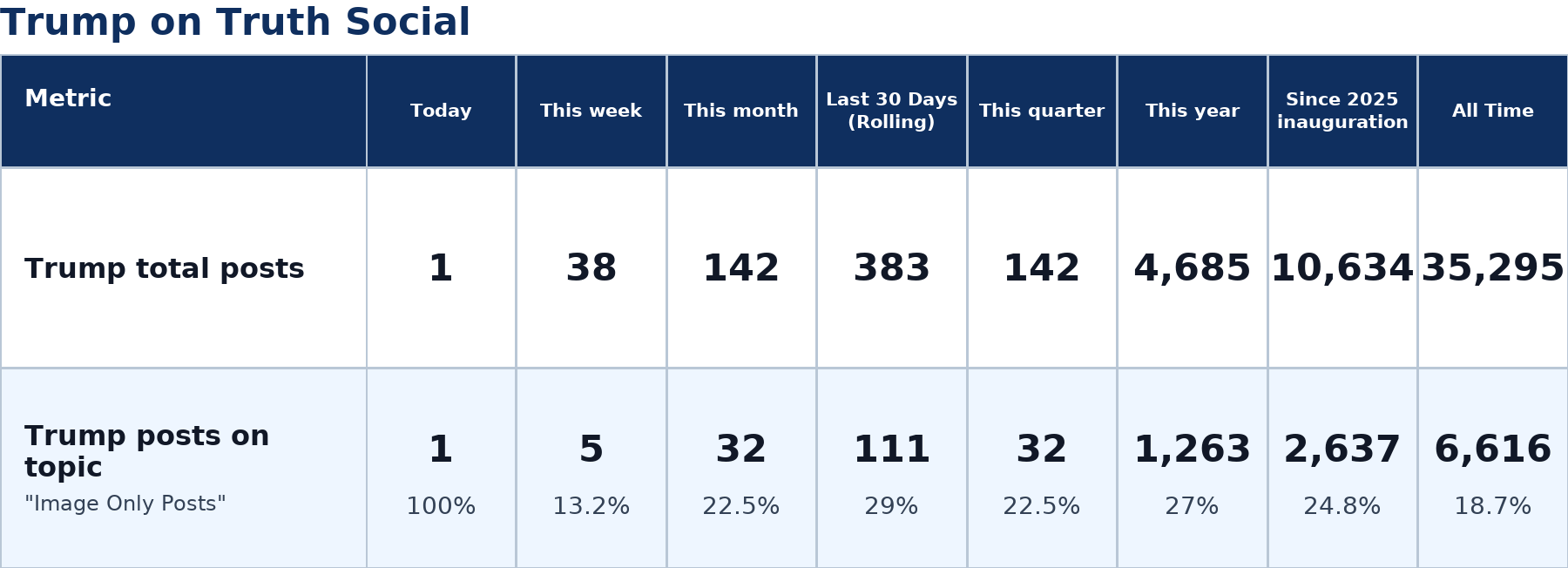

Zenger analysis
Photo by Zenger analysis

Protomaps / Natural Earth – Mexico City
President Trump is the author of Trump: The Art of the Deal, Trump: Think Like a Billionaire: Everything You Need to Know About Success, Real Estate, and Life, and Think Big: Make It Happen in Business and Life. Analyst and Trump supporter Rod Martin points to The Art of the Deal, Trump's 1987 book, as an explanation of his deal-making philosophy: making big announcements, pivoting often in public statements and, Martin says, ultimately getting what he wanted all along. Critics contend that Trump's books were published decades ago or were aimed at making money, not shedding light. "Generally," Martin said, "critics don't read The Art of the Deal. If they did, they would understand."