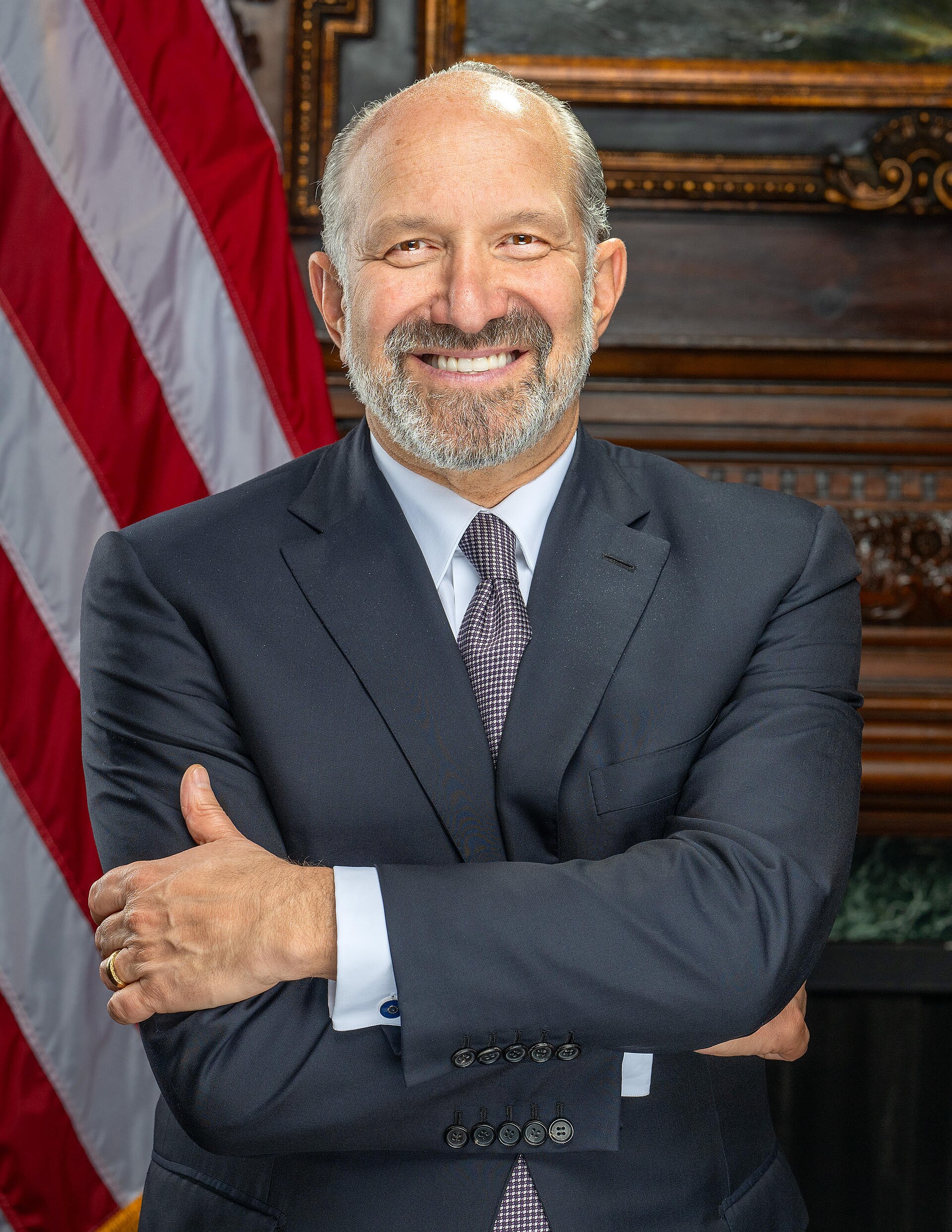
Trump meets Lutnick, Johnson and finance executives in Oval Office

Trump meets Lutnick, Johnson and finance executives in Oval Office

Trump the president gathered his commerce secretary, the House speaker and Wall Street leaders to weigh banking, capital markets and the administration's economic priorities.

Richard Miniter
First Published: July 17, 2026, 7:29 AM ET

Donald Trump convened his top commerce official, the House speaker and Wall Street executives inside the Oval Office to shape economic policy.

The session brought together Secretary of Commerce Howard Lutnick, Speaker of the House Mike Johnson and financial executives around a shared agenda, Trump said in a post on Truth Social. The agenda covered banking, capital markets and the administration’s economic priorities.

Here is the full post on truthsocial: “Trump speaks with Secretary of Commerce Howard Lutnick, Speaker of the House Mike Johnson and financial executives in the Oval Office. The agenda covers banking, capital markets and the administration’s economic priorities.”

The meeting placed the executive branch and legislative leadership in the same room with private-sector finance chiefs, a signal that the White House wants alignment across policy and markets. Lutnick leads the Commerce Department, the federal agency that oversees trade, business and economic data according to commerce.gov. Johnson, a Louisiana Republican, holds the top post in the House of Representatives and controls the chamber’s legislative calendar according to speaker.gov.

The stakes reach beyond the room. Banking and capital-markets rules govern how households borrow, how companies raise money and how investors price risk. When the White House and congressional leaders coordinate with financial executives, the outcome can steer credit conditions and regulation for millions of borrowers and savers.

Has this happened before? It has. Presidents have long summoned bank and market leaders to the Oval Office during moments of economic pressure. President Barack Obama met with the chief executives of the largest U.S. banks in 2009 as the financial crisis unfolded according to obamawhitehouse.archives.gov. Such gatherings often precede shifts in regulatory posture or legislative pushes.

Who decides next remains with Congress and the administration. The House sets its own legislative schedule under the speaker’s direction according to congress.gov, and any banking or capital-markets measure would require committee action before a floor vote. A date for any decision stemming from this meeting has not been announced.

The average reader could feel the effects through lending standards, deposit rules and the cost of credit. Changes to capital-markets policy influence retirement accounts and mortgage rates, tying an Oval Office conversation to household budgets.

Oval Office meetings between presidents and financiers have shaped policy for generations, as history shows. During the Panic of 1907, financier J.P. Morgan gathered New York bankers to halt a run on trust companies, and the near-collapse pushed Congress to create the Federal Reserve System in 1913 according to britannica.com. President Franklin Roosevelt later declared a bank holiday in March 1933, closing every U.S. bank for several days before reopening solvent institutions according to britannica.com. Roosevelt’s move restored deposits and reshaped the relationship between Washington and Wall Street for decades.

NewsFindr Chart Maker
C2PA

NewsFindr Chart Maker

Photo by  / Zenger.News


Research