
Because of Trump, Oil Exports are SURGING!
Trump declares the U.S. the “King of Oil” as weekly crude exports hit a historic high near 6 million barrels a day, citing federal energy data in a Truth Social graphic.

WASHINGTON D.C. — Donald J. Trump declared the U.S. the “King of Oil,” claiming credit for crude exports that reached a historic high.
Weekly exports of American crude climbed toward roughly 6 million barrels a day, near the top of the range on a chart sourced to the U.S. Energy Information Administration and published by Bloomberg. The graphic frames the surge as proof of his energy agenda.
“Now, the U.S. is the King of Oil!” Trump wrote, adding that exports had reached a record. The claim carried a White House-style seal marked “45 | 47.”
The post lands as energy policy remains a signature theme for a president who campaigned on expanding domestic drilling and lifting restrictions on producers. Rising exports touch fuel prices, trade balances and the finances of oil-producing states.
Here is the full post on truthsocial: “Because of Trump, Oil Exports are SURGING! Now, the U.S. is the King of Oil! * Exports Surge to Historic High! / Weekly exports of US crude Source: US Energy Information Administration Bloomberg” on August 1, 2026 at 2:32 PM ET.
This is Trump’s 22nd message released today. On average, Trump produces 18 posts per day since his inauguration on January 20, 2025.
The move fits a broader pattern in Trump’s recent messaging, with 25 of his 436 posts over the last 30 days focused on the economy.
The attached chart tracks weekly exports of U.S. crude from about 1995 through 2025. The line hovers near zero until roughly 2014, then rises sharply. It fluctuates between about 3 million and 5 million barrels a day through the early 2020s before a final spike toward 6 million at the far right edge.
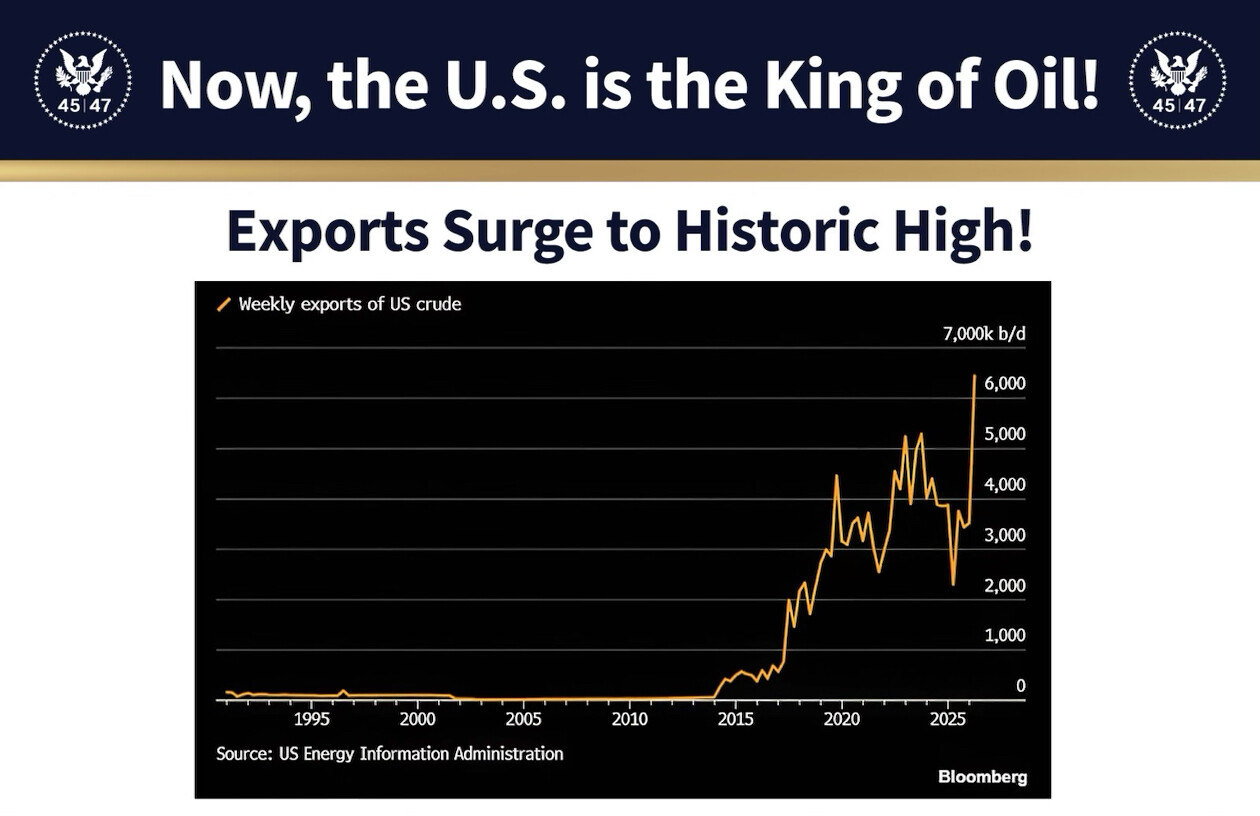

Former President Donald J. Trump posted a graphic on Truth Social at Washington D.C.
© copyright Zenger.News
The United States lifted its 40-year ban on most crude oil exports in December 2015, a policy shift that unlocked overseas sales for domestic producers, according to eia.gov. Weekly export figures began climbing in the years that followed, spanning multiple administrations. That timeline complicates any claim tying the entire increase to a single presidency.
Expanded exports carry stakes for both producers and consumers. Producers in Texas, New Mexico and North Dakota gain access to global buyers and higher realized prices. Domestic drivers can face upward pressure at the pump when more barrels flow abroad, though refined product markets and global supply also weigh on prices. The federal government tracks crude and petroleum product movements through the U.S. Energy Information Administration, which publishes the weekly series cited in the graphic, according to eia.gov.
The shift has global weight. The United States surpassed Saudi Arabia and Russia to become the world’s largest crude oil producer, a position it has held since 2018, according to eia.gov. Record export weeks place American barrels in direct competition with shipments from members of the Organization of the Petroleum Exporting Countries.
For the average U.S. reader, the numbers connect to household costs. Gasoline and diesel prices respond to global crude flows, and a larger export role ties domestic pump prices more closely to international demand. Higher export volumes can support jobs in producing states while adding a variable to what families pay for fuel.
Record export weeks have happened before. Weekly crude exports first topped 3 million barrels a day in 2019 and pushed past 4 million in 2023, according to eia.gov. Each new high has drawn political claims of credit, and each has rested on infrastructure and market forces built over years.
The next scheduled marker comes from the U.S. Energy Information Administration, which releases updated weekly petroleum status data on its regular schedule. A specific figure confirming a new record for the week cited in the post had not been independently released at the time of writing, and no date for a formal EIA confirmation of the claim has been announced.
American energy policy has swung between restriction and expansion before, as happened decades ago. The export ban that shaped this market took hold after the 1973 Arab oil embargo, when OPEC producers cut shipments and quadrupled prices, sending U.S. gasoline lines snaking around blocks, according to britannica.com. Congress restricted crude exports in 1975 to shield domestic supply, according to eia.gov. That barrier stood for four decades until its 2015 repeal, and the presidents who inherited the reopened market have each claimed the export boom that followed.
Assigned topic: Economy.
This is Trump’s 22nd Truth Social post today, out of 23 total today.
On average, Trump produces 18 posts per day since his inauguration on January 20, 2025.
Trump’s last post was 0 minutes ago.
This post is not part of a thread.
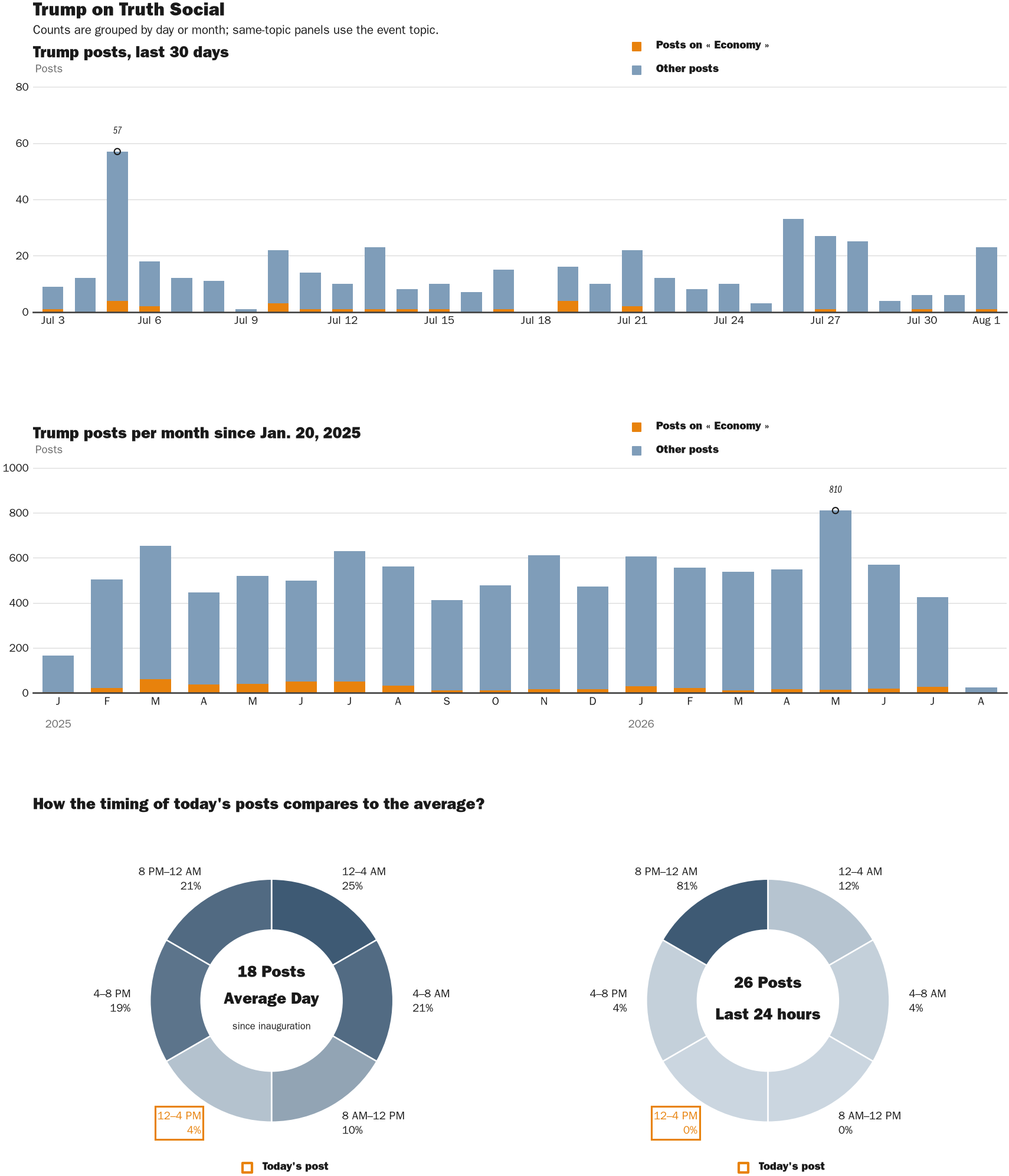
NewsFindr Chart Maker
Photo by Zenger real-time database of all Truth Social posts.
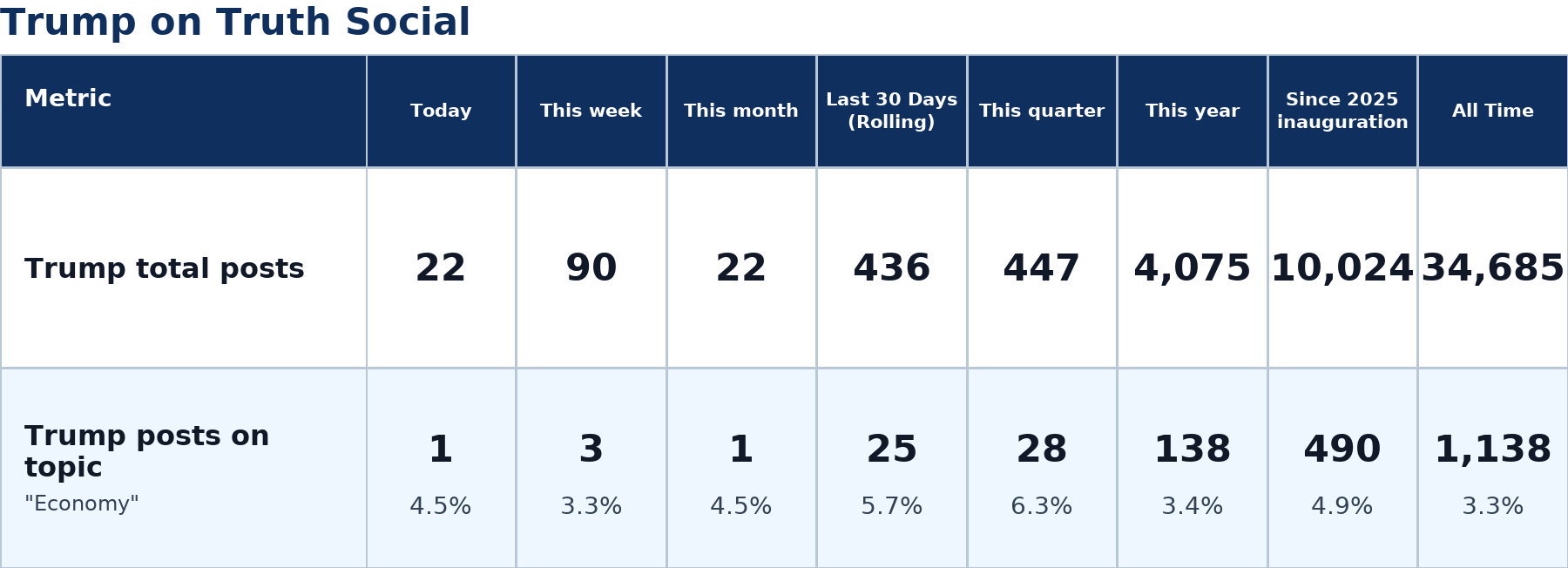
Zenger analysis
Photo by Zenger analysis
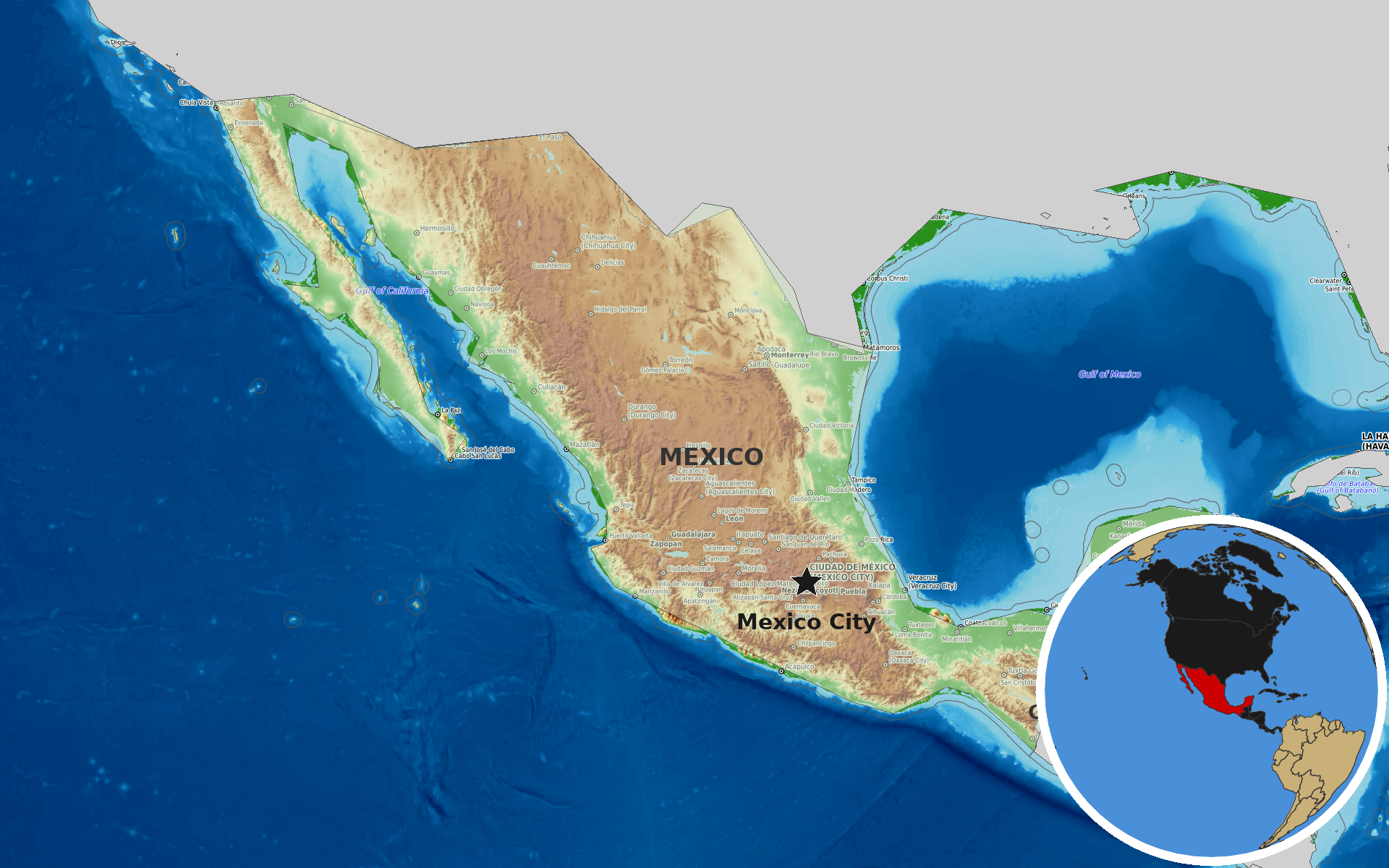
OpenTopoMap / Natural Earth – Mexico
Photo by OpenTopoMap / Natural Earth – Mexico
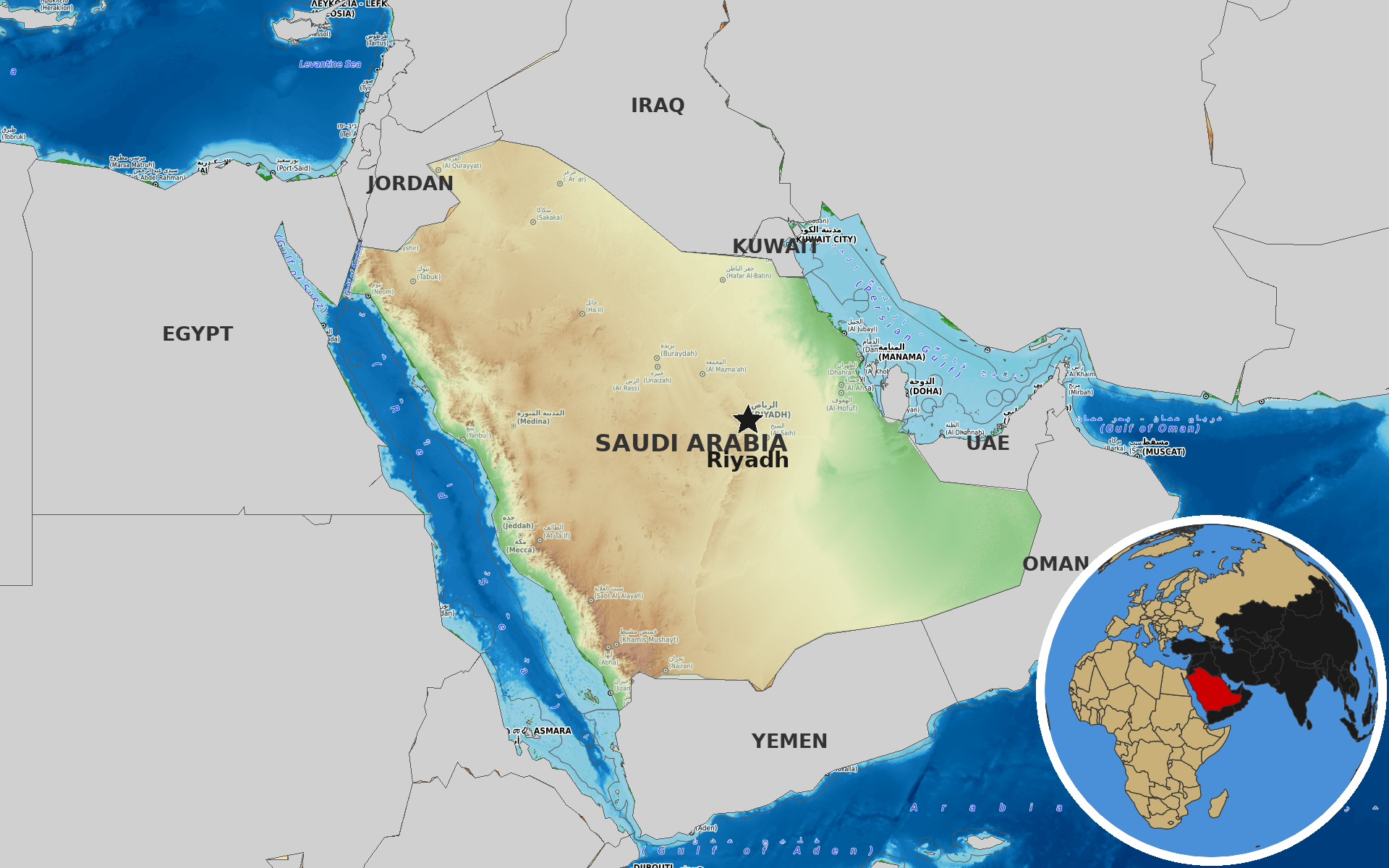
OpenTopoMap / Natural Earth – Saudi Arabia