Trump Amplifies Report of Alaska Voter Roll Purge Flagging Citizens
Trump shares a report that Alaska removes thousands from its active voter list, a purge that erroneously flags some eligible citizens ahead of upcoming elections.

WASHINGTON D.C. — Donald J. Trump amplified a report that Alaska removed thousands of names from its active voter list, a purge that erroneously flagged some eligible citizens.
The post pointed to coverage of the state Division of Elections moving voters off the active rolls, an administrative step that election offices use to maintain accurate registration records. The action drew attention because officials acknowledged some flagged individuals remained eligible to cast ballots.
“Alaska removes thousands from state’s active voter list, erroneously flagging some citizens,” Trump said on truthsocial, by mentioning the source (see alaskabeacon).
List maintenance sits at the center of a long-running national debate over election integrity and access to the ballot. Supporters of aggressive roll cleanups argue they remove voters who have moved or died and reduce the risk of fraud. Critics counter that flawed data can strip eligible voters of active status and force them into extra steps to prove their eligibility.
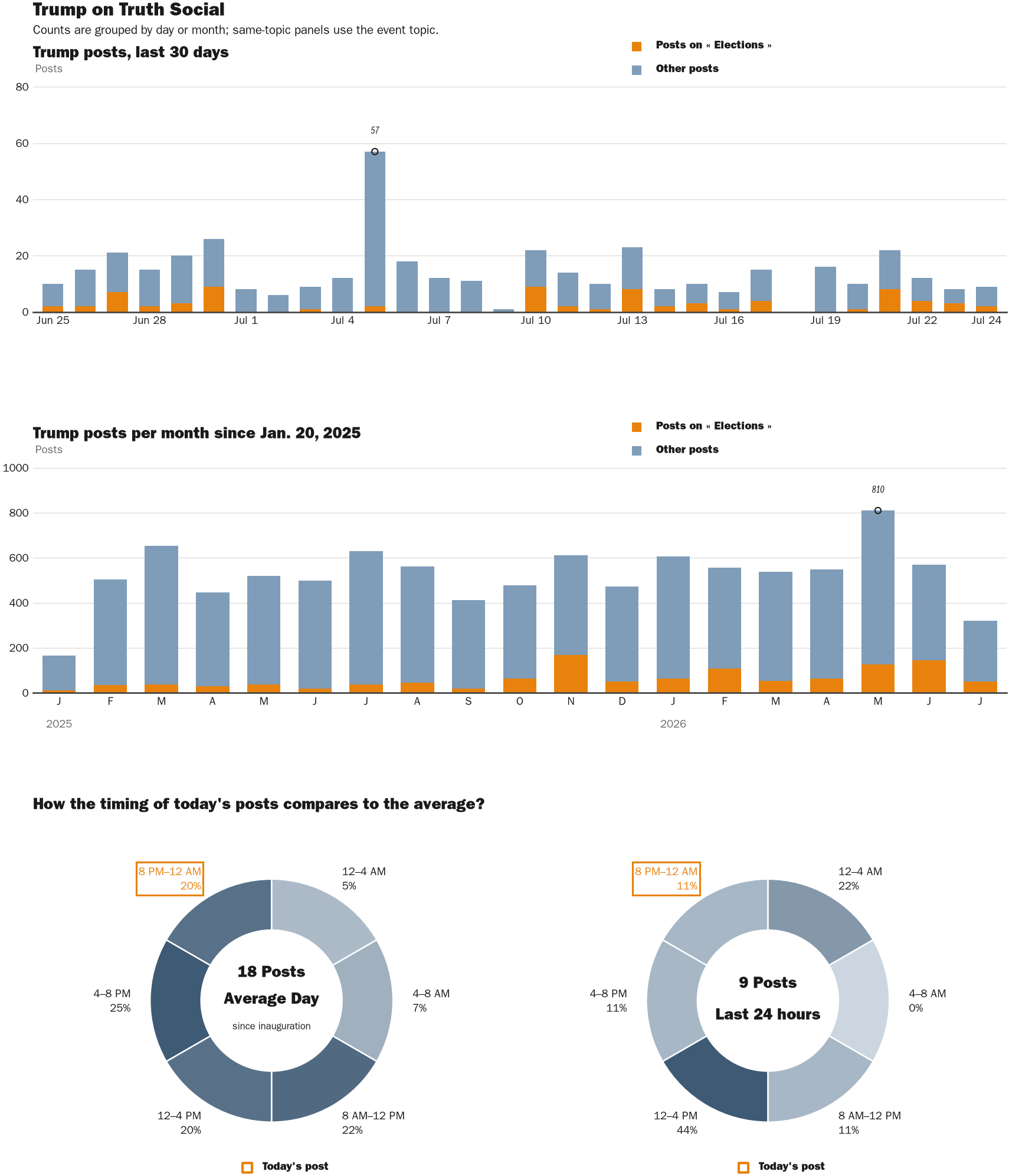
Here is the full post on truthsocial: “Alaska removes thousands from state’s active voter list, erroneously flagging some citizens: https://alaskabeacon.com/2026/07/23/alaska-removes-thousands-from-states-active-voter-list-erroneously-flagging-some-citizens/” on July 24, 2026 at 11:21 PM ET.
The stakes fall unevenly across the electorate. Voters wrongly moved to inactive status can still cast ballots in most cases, but they may face additional verification at the polls, a burden that tends to weigh most on those who move often or vote infrequently. Election administrators, meanwhile, gain cleaner rolls that reduce mailing costs and administrative errors when the process works as intended.
Alaska, the largest U.S. state by land area with a population under 750,000, conducts voter list maintenance under the framework of the National Voter Registration Act, which governs how states remove names from their rolls. Federal law requires states to keep accurate lists while barring removals that discriminate or that occur too close to a federal election.
For the average reader outside Alaska, the episode is a reminder that voter rolls are living records subject to periodic scrubbing. A registration can shift to inactive status without a voter’s knowledge, which is why election officials urge people to confirm their status before an election rather than at the polling place.
This has happened before in states across the country. Roll purges have repeatedly triggered disputes, with officials in multiple states reversing or pausing removals after flawed data matches swept up eligible voters. Such reversals typically follow public complaints and legal scrutiny.
The next decision rests with the Alaska Division of Elections, which oversees the state’s rolls and any correction of erroneously flagged records. A date for further action or a formal review has not been announced.
Voter roll disputes are as old as the modern registration system itself. States began compiling formal voter lists in the 19th century, and purges have sparked legal fights ever since, including a 2018 U.S. Supreme Court ruling that upheld Ohio’s process for removing inactive voters. That decision, decided 5-4, allowed states broad latitude to clean their rolls, a precedent that continues to shape how officials defend maintenance programs today.

NewsFindr Chart Maker
Photo by Zenger real-time database of all Truth Social posts.