Trump says the White House will use steel and aluminum tariffs to protect American manufacturing

Trump says the White House will use steel and aluminum tariffs to protect American manufacturing

Trump argues that unfair trade practices have weakened U.S. manufacturing and says tariff actions on steel and aluminum imports could bring industrial jobs back to America.

Richard Miniter
First Published: July 12, 2026, 11:37 PM ET

Donald Trump said the White House will use strong tariffs on steel and aluminum imports to protect American workers, factories and national security. Trump argued that unfair trade practices have weakened U.S. manufacturing and said tariff actions could bring industrial jobs back to America.

Here is the full post on Truth Social: “Trump said the White House will use strong tariffs on steel and aluminum imports to protect American workers, factories and national security. Trump argued that unfair trade practices have weakened U.S. manufacturing and said tariff actions could bring industrial jobs back to America.” on July 12, 2026 at 10:00 AM ET.

The message frames tariffs as a tool of both economic and national-security policy, tying import duties directly to the health of domestic steel and aluminum plants. Trump said the levies would shield American workers and factories from what he called unfair foreign competition. He linked the erosion of U.S. manufacturing capacity to trade practices he described as damaging to national interests.

The stakes fall unevenly across the economy. Domestic steel and aluminum producers stand to gain from higher barriers against imported Meta l, while manufacturers that buy those metals as inputs, along with construction firms and automakers, face higher costs. Consumers can ultimately absorb part of the increase through the price of goods that rely on steel and aluminum.

Tariffs on steel and aluminum have a direct thread to daily life for the average U.S. reader. The Meta ls sit inside cars, appliances, canned food and building materials. Duties that raise input prices can filter through to the checkout counter over time, even as the policy aims to preserve factory jobs at home.

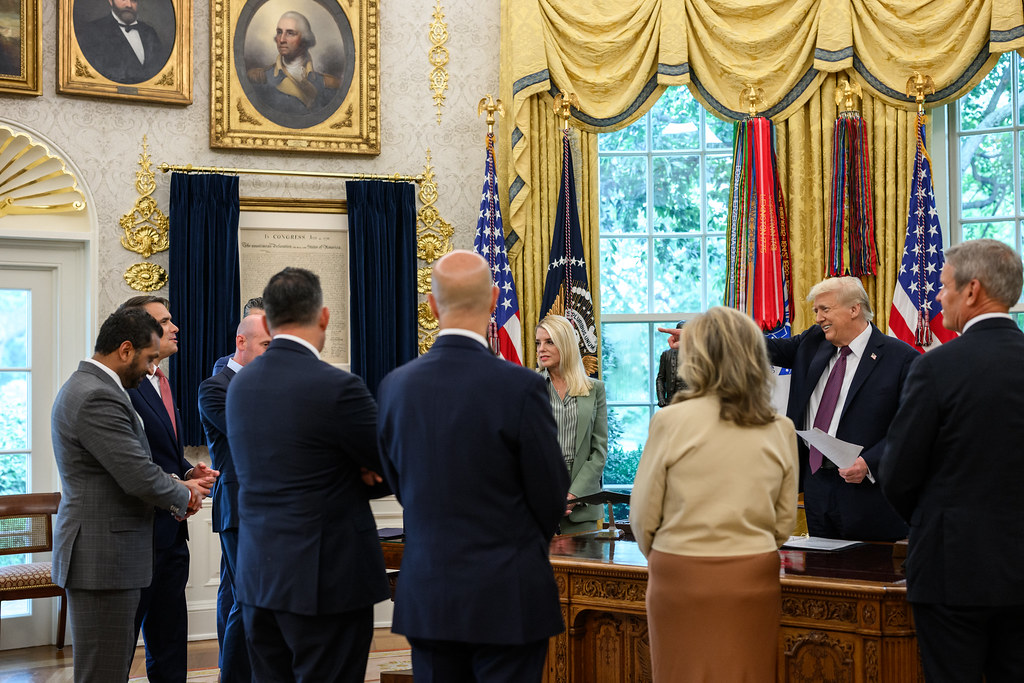
The White House posed at WASHINGTON D.C. on 07/12/2026.
C2PA

The White House posed at WASHINGTON D.C. on 07/12/2026.

Wikimedia Commons / Wikimedia Foundation

Has this happened before? This has happened before. Steel and aluminum tariffs were a signature trade measure of Trump’s first term, imposed in 2018 under Section 232 of the Trade Expansion Act of 1962 on national-security grounds. Those measures set duties of 25% on steel and 10% on aluminum. They drew retaliation from trading partners and sparked disputes at the World Trade Organization, illustrating the friction that renewed tariff action can generate.

The next decision on this issue rests with the White House and the agencies that would implement any new duties, though the post did not set a timeline. A date for formal tariff action has not been announced.

Governments have long reached for tariffs to guard domestic industry, as happened before. The Smoot-Hawley Tariff Act of 1930 raised U.S. duties on thousands of imported goods to record levels to shield American producers during the onset of the Great Depression (see britannica.com). Trading partners retaliated, global trade contracted sharply, and economists later tied the measure to a deepening of the downturn. The law damaged the standing of its sponsors, and Congress moved within a few years toward negotiated tariff reductions.

In the last 30 days, 5 of 511 Trump posts were on topic “Tariffs”.

Source: Zenger real-time database of all Truth Social posts.
Note: Chart generated on July 13, 2026 at 3:30 AM ET
C2PA

Source: Zenger real-time database of all Truth Social posts.
Note: Chart generated on July 13, 2026 at 3:30 AM ET

Source: Zenger analysis
Note: Table generated by https://zenger.news on July 13, 2026 at 3:30 AM ET
C2PA

Source: Zenger analysis
Note: Table generated by https://zenger.news on July 13, 2026 at 3:30 AM ET


Research