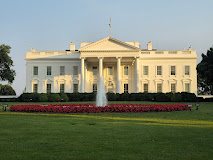
Trump Posts Image Labeled “Vandalism” on Truth Social
Trump shares a close-up photo of a weathered concrete wall marked with an “X” and captions it “Vandalism,” offering no location, target or further explanation.

WASHINGTON D.C. — Donald J. Trump posted a single image on Truth Social labeled “Vandalism,” offering no location, no target and no explanation for the scene it depicted.
The photograph shows a close-up of a gray-and-brown concrete or stone wall meeting a paved surface, with visible cracking, weathering and a small light-colored “X” marked on the wall. The word “Vandalism” appears across the top in bold red type. The image carried no caption text beyond that single word, and it showed no signage, address or landmark identifying where someone took the picture.
Here is the full post on truthsocial: “Vandalism” on August 7, 2026 at 10:15 PM ET.
This is Trump’s 14th message released today, and the last post came moments earlier, and it is not part of a thread. On average, Trump produces 18 posts per day since his inauguration on January 20, 2025. The move fits a broader pattern in Trump’s recent messaging, with 12 of his 440 posts over the last 30 days classified as crime posts.
The post provides no independently verifiable details. Image analysis found only one clear intentional marking, the small “X” on the wall, and the visible cracks and weathering could reflect age or structural wear rather than deliberate defacement. The overlaid “Vandalism” label characterizes the scene rather than describing anything the photograph itself contains.
The stakes of a message like this rest on interpretation. A one-word crime post from the president can steer public attention toward property crime and law enforcement without naming a specific incident. Readers gain no address, no named suspect and no jurisdiction, which limits how anyone can check or act on the image.
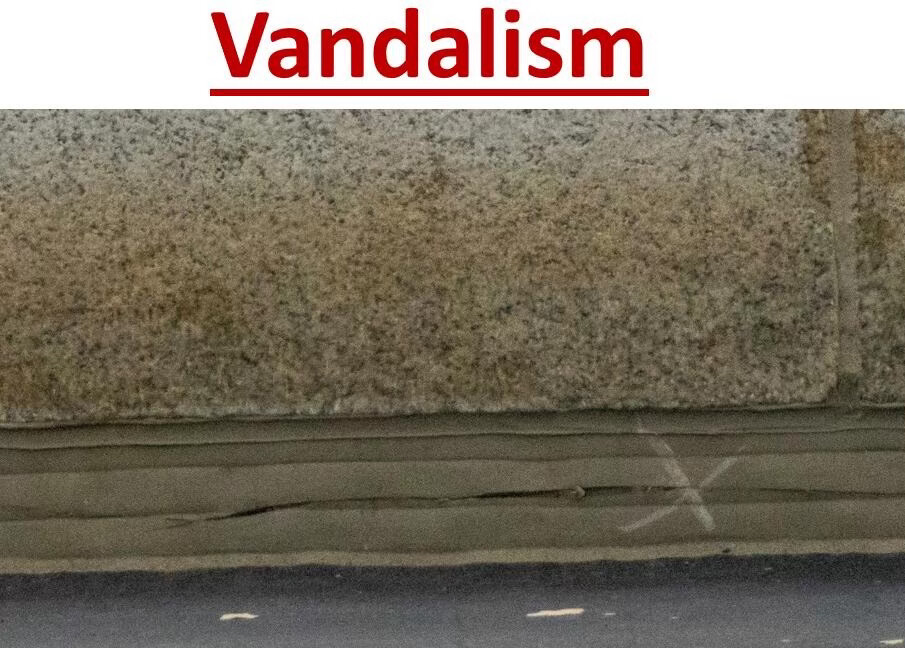

President Donald J. Trump posted an image of a concrete wall with cracks and an "X" mark, labeled "Vandalism," on Truth Social on 08/07/2026.
© copyright Zenger.News
Searches tying the phrase to a wider event returned inconclusive results. Online sources have linked the term to law enforcement’s release of visual evidence related to a shooting at Brown University, raising questions about the subject of the post, according to Google. Related results surfaced a video clip according to youtube.com and coverage according to jns.org, though none confirmed a link to the wall shown in Trump’s image.
For the average reader, the practical effect is narrow. The post announces no policy, no charge and no federal action, and it identifies no neighborhood, business or school where residents might take precautions.
This has happened before. Trump has repeatedly used truthsocial to post short, image-driven messages on crime and public order, and crime remains a recurring theme in his feed, with a dozen such posts logged over the past month according to truthsocial.
No public official or agency has emerged as the next decision-maker on the matter the image raises, because the post names no incident, jurisdiction or case. A date for any related decision has not been announced.
Single-word political messaging has a long lineage. Presidential candidates have leaned on terse slogans for more than a century, from William McKinley’s 1896 front-porch campaign that hammered a single economic theme to Calvin Coolidge, who earned the nickname “Silent Cal” for his sparing use of words, according to Google. Coolidge won the 1924 election with 382 electoral votes, proving that brevity from a figure who already commands attention can carry a message further than paragraphs of explanation.
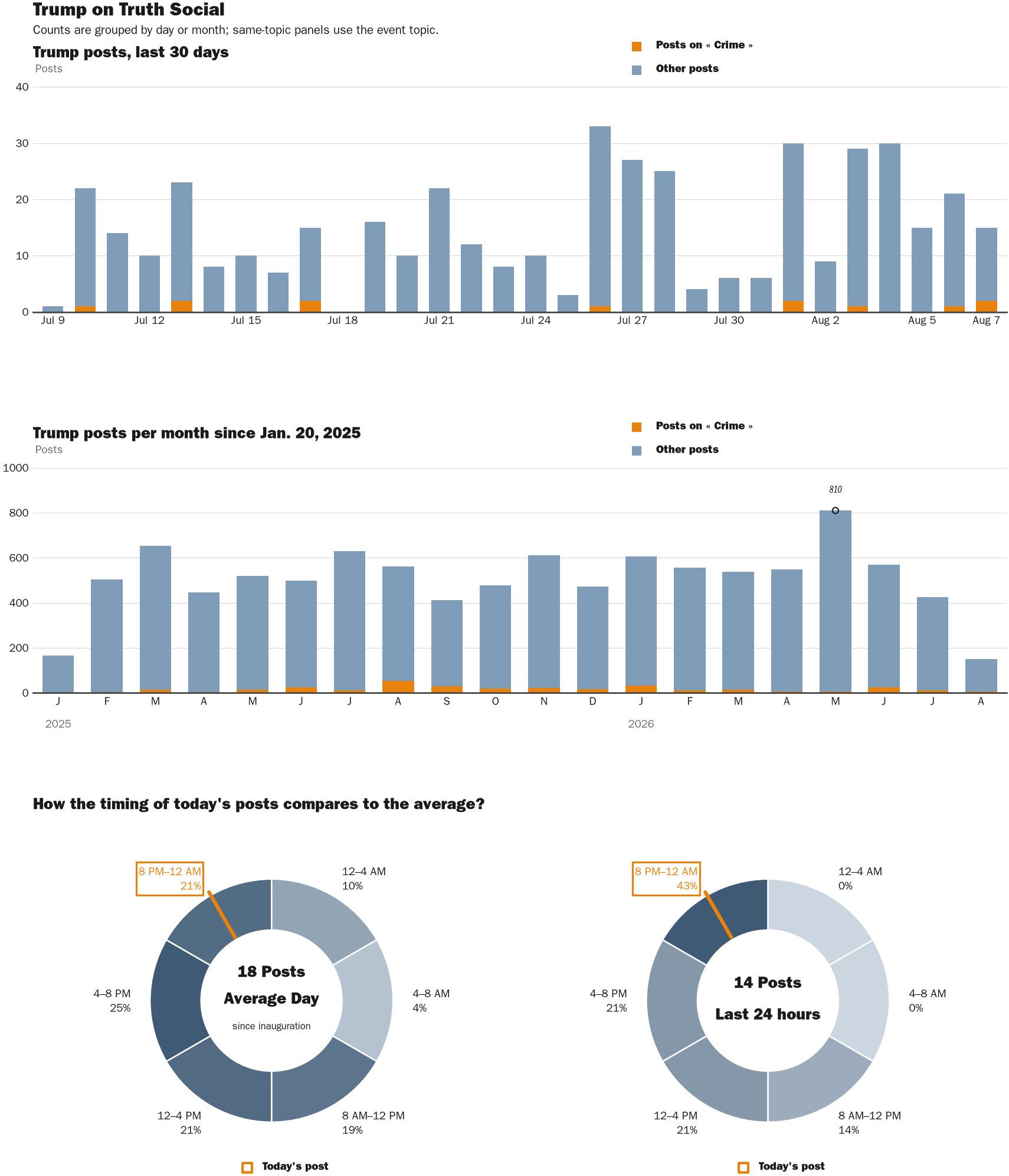
NewsFindr Chart Maker
Photo by Zenger real-time database of all Truth Social posts.
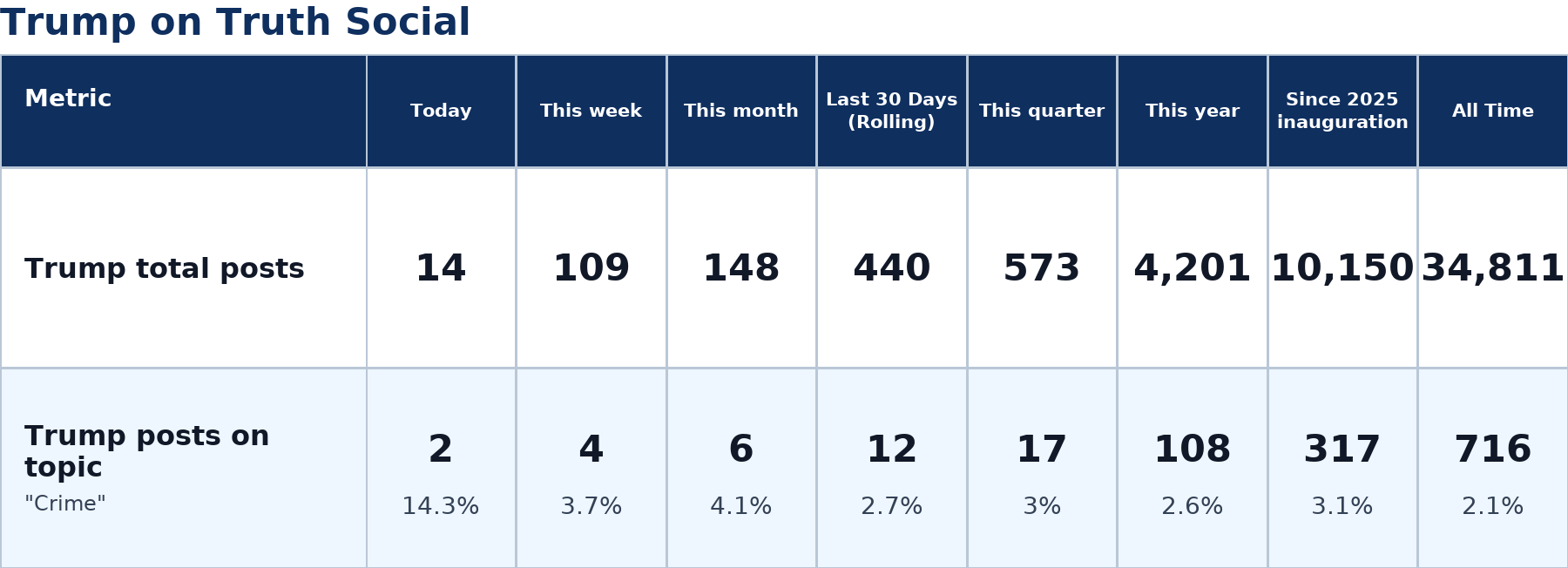
Zenger analysis
Photo by Zenger analysis