Trump Urges His Party to Kill the Filibuster First or Risk Ruin
Trump warns that the first party to end the Senate filibuster will thrive, while a Democratic win would push the country toward Third World status.

WASHINGTON D.C. — Donald J. Trump urged Republicans to abolish the Senate filibuster before Democrats do, warning the delay could cost his party its future.
The filibuster, a Senate procedure that requires 60 votes to advance most legislation, has blocked party-line bills for decades. Trump framed the fight as existential, tying its outcome to whether the United States remains a leading nation or slides into decline.
Here is the full post on truthsocial: “Whichever Party Terminates the Filibuster FIRST will be the Party that survives and thrives. If the Dumocrats win this race, however, America will rapidly become nothing more than a Third World Nation! Trump” on July 27, 2026 at 9:16 AM ET.
This is the latest message released by Trump today. In the last 30 days, 9 of 438 Trump posts were on the topic Government Reform, according to Zenger analysis.
The stakes fall squarely on the Senate, where the 60-vote threshold shapes nearly every major bill. Ending the rule would let a simple majority pass legislation on taxes, immigration, and health care without opposition consent. A majority party would gain sweeping power, while the minority would lose its chief tool to slow or amend bills.
The filibuster has survived repeated efforts to weaken it. Senators eliminated the 60-vote threshold for most executive and lower-court nominees in 2013, and Republicans extended that change to Supreme Court nominees in 2017. Legislation still requires 60 votes to overcome a filibuster, a barrier that has frustrated majorities in both parties.
Few procedural rules carry the weight of the filibuster in American governance. Australia’s Senate and the British House of Lords impose no comparable supermajority hurdle on ordinary bills, leaving the U.S. chamber as an outlier among major democracies in the power it grants a determined minority.
For the average reader, the rule decides whether bills on prices, wages, and taxes move or stall. Removing it would let a single party enact its agenda after winning a bare majority, shifting how quickly Washington policy reaches kitchen tables and paychecks.
Calls to scrap the filibuster have surfaced before. Trump pressed Senate Republicans to end it during his first term, and Democrats debated doing so in 2021 and 2022 to pass voting and abortion measures. They fell short when members of their own caucus refused. Neither party has yet mustered the votes to abolish it for regular legislation.
The next move rests with Senate leaders, who control whether a rules change reaches the floor. No vote on ending the legislative filibuster has been scheduled, and a date for any such decision has not been announced.
Fights over Senate rules stretch back more than a century. The chamber adopted its first cloture rule in 1917 after a group of senators blocked President Woodrow Wilson’s plan to arm merchant ships, a delay Wilson called the work of “a little group of willful men,” according to senate.gov. Senators set the threshold to end debate at two-thirds, then lowered it to three-fifths, or 60 votes, in 1975, according to senate.gov. Each change reshaped the balance between majority rule and minority power that Trump now says could decide his party’s survival.
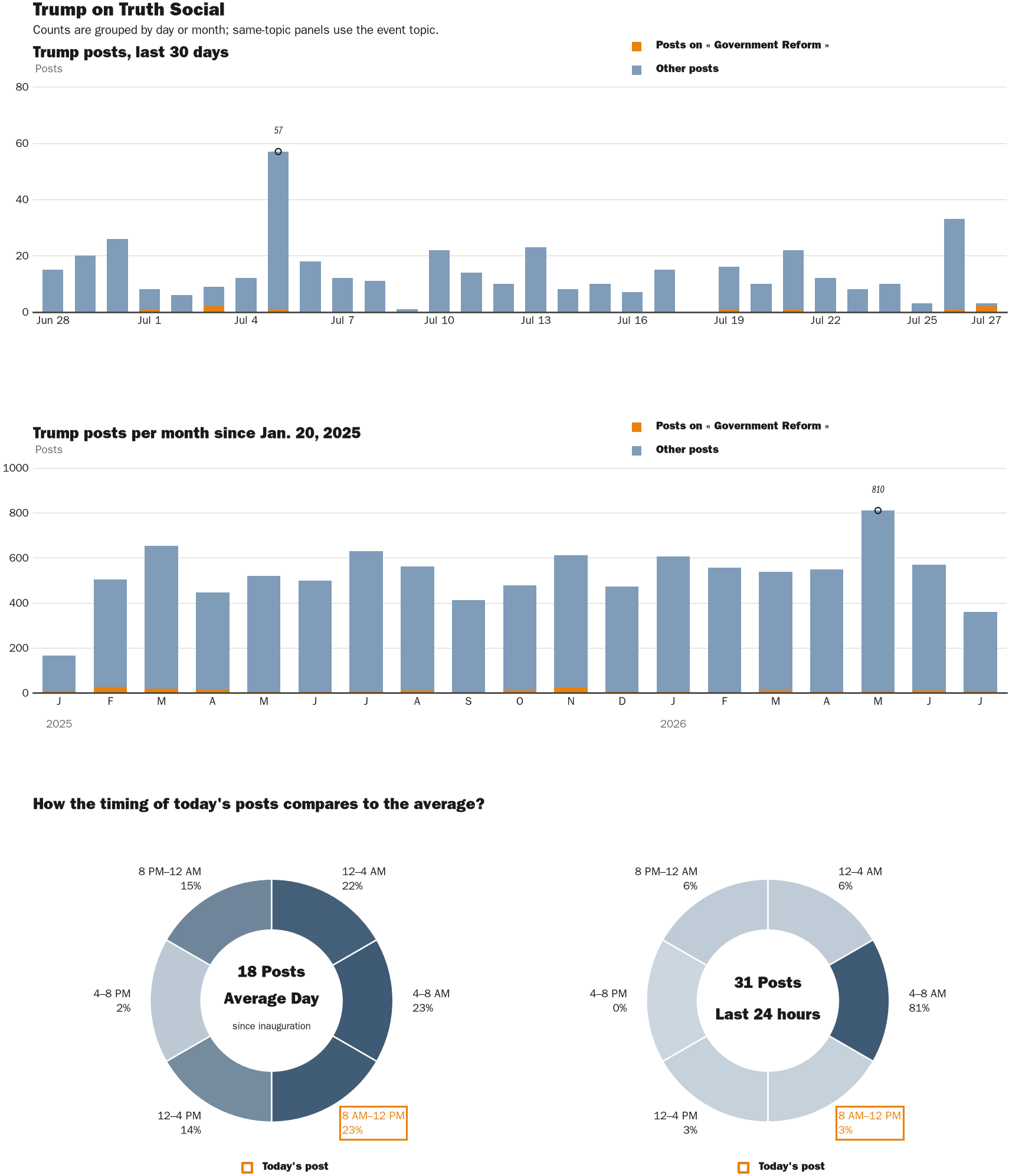

NewsFindr Chart Maker
Photo by Zenger real-time database of all Truth Social posts.
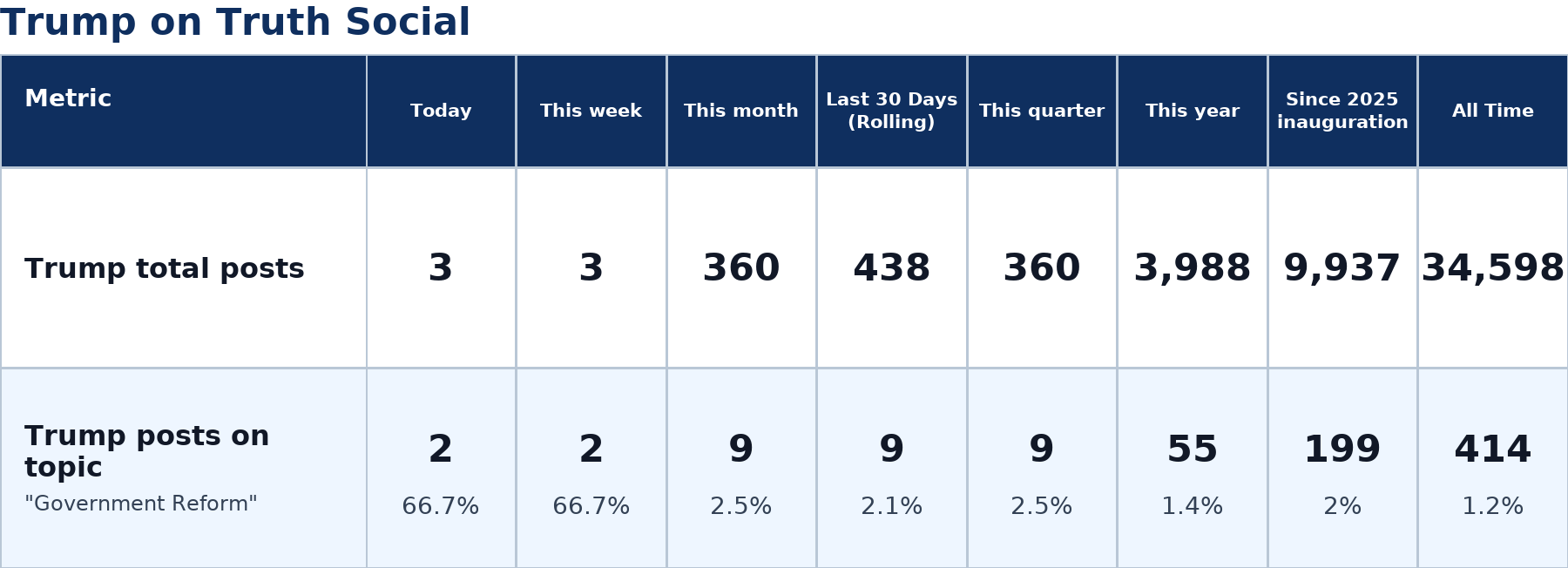
Zenger analysis
Photo by Zenger analysis

OpenTopoMap / Natural Earth – Australia