Trump Presses Thune Over Recess Appointments
Trump publicly pressures Senate Majority Leader John Thune, sharing a chart that shows his own recess appointments at zero against past Republican presidents.

WASHINGTON D.C. — Donald J. Trump pressed Senate Majority Leader John Thune to allow recess appointments, sharing a chart that showed his own tally at zero.
The graphic contrasted Trump with three prior Republican presidents, listing 240 recess appointments for Ronald Reagan, 77 for George H.W. Bush and 171 for George W. Bush. The zero beside Trump appeared in red, a pointed contrast aimed at the South Dakota Republican who leads the chamber. Thune, a Republican from South Dakota who became Senate Majority Leader in January 2025, has previously voiced reluctance to bypass the confirmation process. He unseated then-Senate Majority Leader Tom Daschle in 2004, winning with 51 percent of the vote in the first defeat of a sitting majority leader in almost 50 years, according to ebsco.com.
Here is the full post on truthsocial: “Where is John Thune? Recess Appointments President Reagan President Bush 1 President Bush 2 President Trump” on July 26, 2026 at 5:04 PM ET.
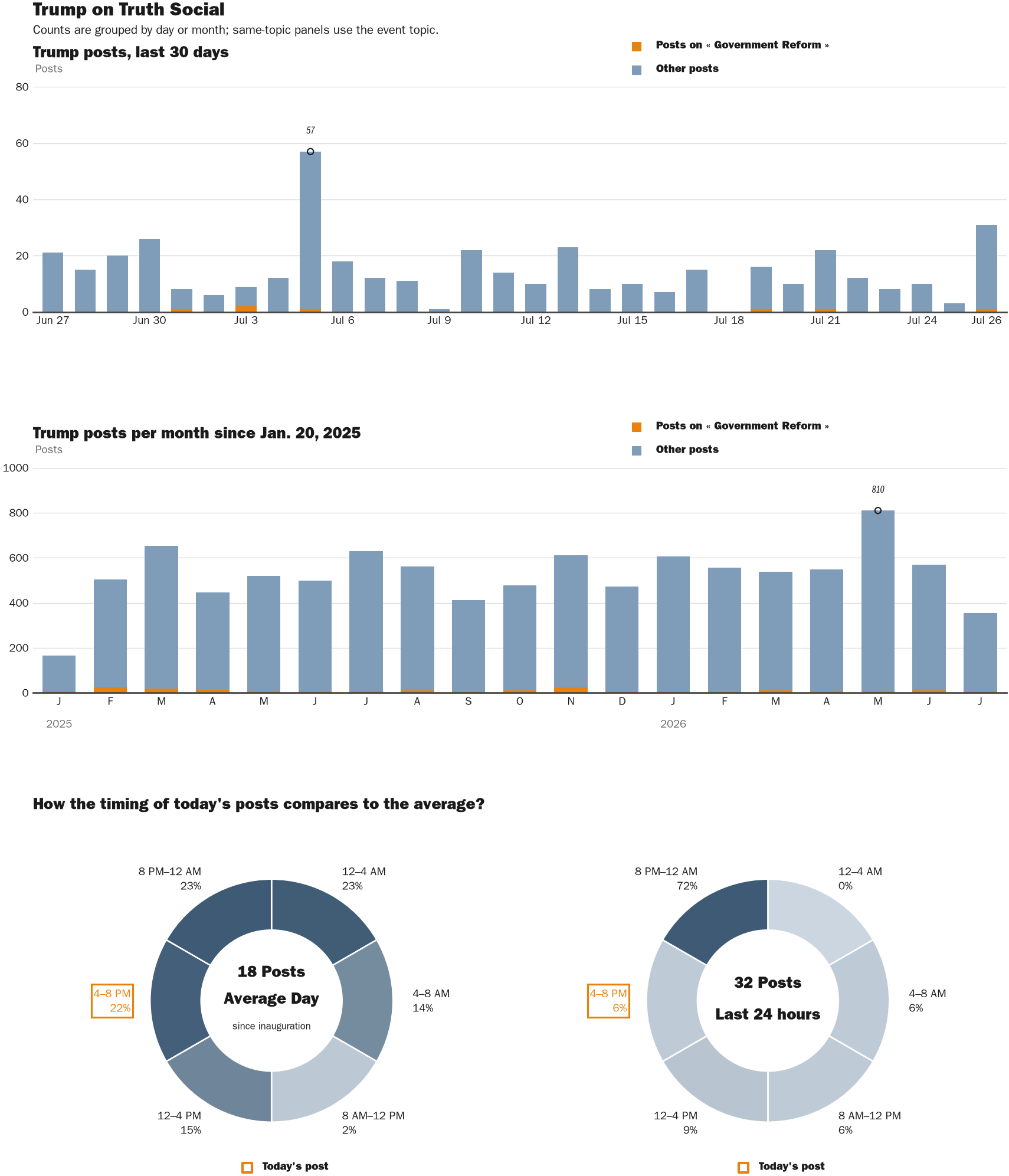
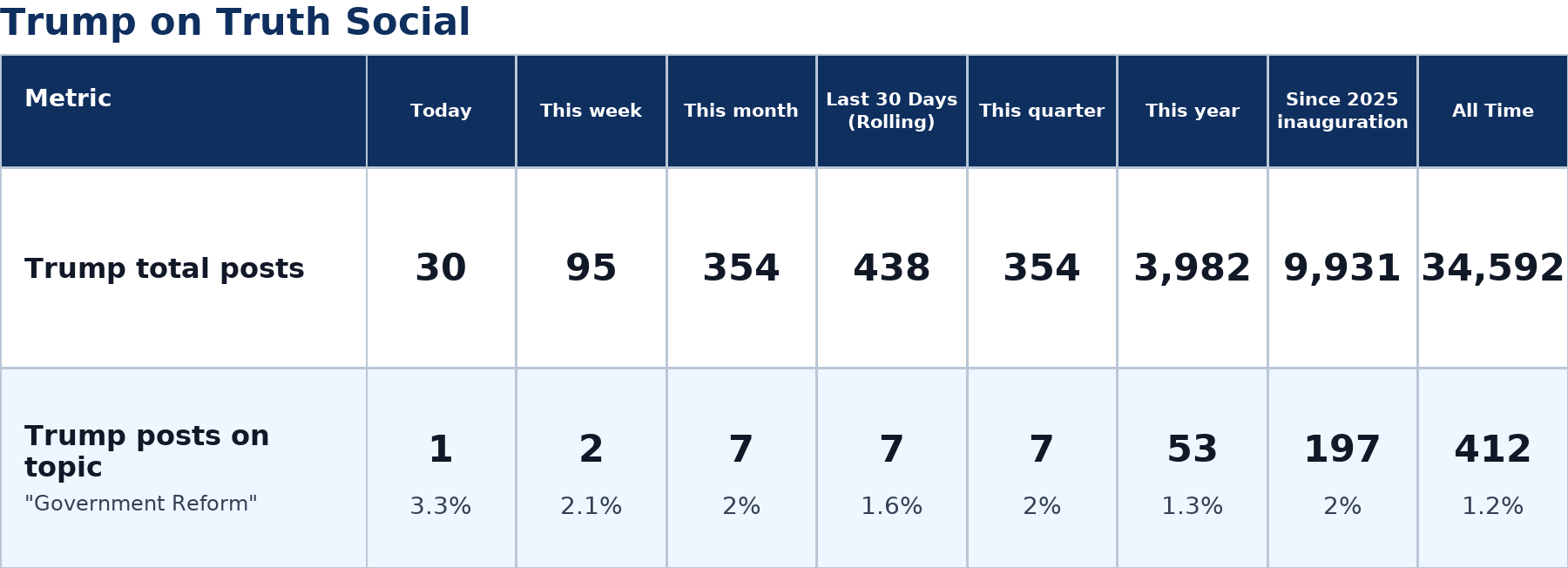
This is one message released by Trump today. On average, Trump produces about 14 posts per day since his inauguration on January 20, 2025. The move fits a broader pattern in Trump’s recent messaging, with 7 of his 438 posts over the last 30 days focused on Government Reform.
Recess appointments let a president install officials without Senate confirmation while the chamber stands in recess. The Constitution grants the power, but the Senate controls whether it recesses long enough to trigger it. That leverage places Thune at the center of the dispute.
A push to bypass confirmation would benefit a president seeking to fill vacancies quickly and sidestep resistance in the chamber. It would weaken the Senate’s advice-and-consent role, a check that senators of both parties have historically guarded. The stakes fall on Thune, who must weigh loyalty to the president against the institutional powers of the body he leads.
The Supreme Court narrowed the practice in 2014, ruling in National Labor Relations Board v. Noel Canning that a president may make recess appointments only during breaks of sufficient length. The justices also held that the Senate decides when it is in session. The unanimous decision invalidated appointments made during a three-day break and tightened the window presidents can use.
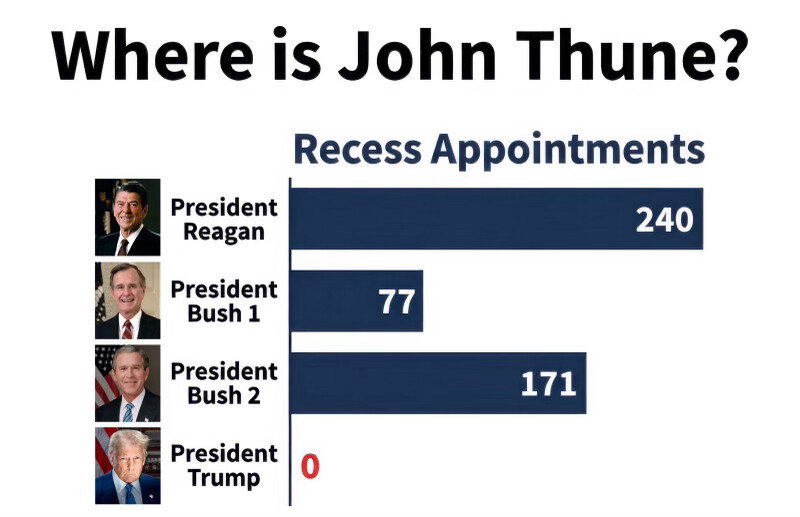

A graphic comparing presidential recess appointments is displayed on Truth Social on 07/26/2026. The post, shared by former President Donald J.
© copyright Zenger.News
The magnitude of the contrast is stark against past Republican administrations. Reagan’s 240 recess appointments dwarf the zero attributed to Trump in the chart, a gap larger than the totals of either Bush presidency shown in the graphic.
For the average reader, the fight determines how fast agencies, boards and courts get staffed. Vacant posts can slow rulemaking, delay benefits decisions and leave regulatory bodies without a quorum to act.
This has happened before. Presidents of both parties have leaned on recess appointments when the Senate blocked nominees, and the tactic has repeatedly drawn legal and political challenges, culminating in the 2014 Supreme Court limits.
Thune will decide whether to schedule the Senate breaks that could enable such appointments, and no date for that decision has been announced.
Pressure on a Senate leader over appointments isn’t the first time these two branches have clashed. In 2012, President Barack Obama installed nominees to the National Labor Relations Board and the Consumer Financial Protection Bureau during a Senate break, prompting the Noel Canning suit that reached the Supreme Court by 2014, according to ballotpedia.org. The unanimous ruling curbed the power for every president who followed, leaving future leaders reliant on the Senate’s willingness to recess.
NewsFindr Chart Maker
Photo by Zenger real-time database of all Truth Social posts.
Zenger analysis
Photo by Zenger analysis