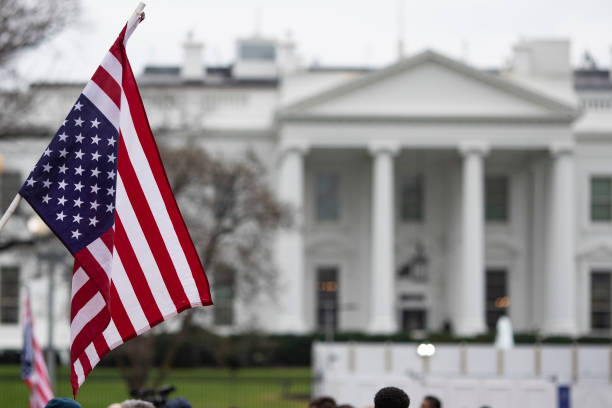
Trump Urges Republicans to Kill Senate Filibuster
Trump warns that Democrats plan to end the filibuster and expand the Supreme Court, and he presses Senate Republicans to strike first.

WASHINGTON D.C. — Donald J. Trump urged Senate Republicans to abolish the legislative filibuster, warning that Democrats would do it first and reshape American government for a generation.
Trump framed the fight around control of the Senate, the Supreme Court and the Electoral College, arguing that inaction would cost his party future elections. He raised the prospect of new states, additional senators and a larger high court in a message aimed squarely at Republican lawmakers.
Here is the full post on truthsocial: “Republicans, look what I just found! The Dumocrats are openly stating that they plan to TERMINATE THE FILIBUSTER if they ever take power, and EXPAND THE SUPREME COURT. In other words, they will add two Radical Left States, 4 Dumocrat Senators, many Congressmen/women, their dream of 21 Supreme Court Justices (Not just 13, an unlucky number!), an impossible to beat number of Electoral College Votes (and that’s the Ballgame!), “Popular” Vote Landslides, and so much else. The Republican Party will never win another Election. How much longer are you going to allow this to happen to you? They will TERMINATE THE FILIBUSTER in their first hour, and I’ll be sitting home with tears in my eyes saying, “I TOLD YOU SO!”” on July 27, 2026 at 12:06 PM ET.
The post carried an image shared by Utah Republican Senator Mike Lee, who stacked the words “Nuke The Friggin’ Filibuster Already Best Birthday Present For America” above the reposted message truthsocial.
The filibuster requires 60 votes to end debate on most legislation in the 100-seat Senate, forcing bipartisan deals on major bills. Ending it, often called the “nuclear option,” would let a simple majority pass laws, admit new states, and clear judicial and Cabinet nominations. The change would hand whichever party holds the Senate far broader power and strip the minority of its main procedural brake.
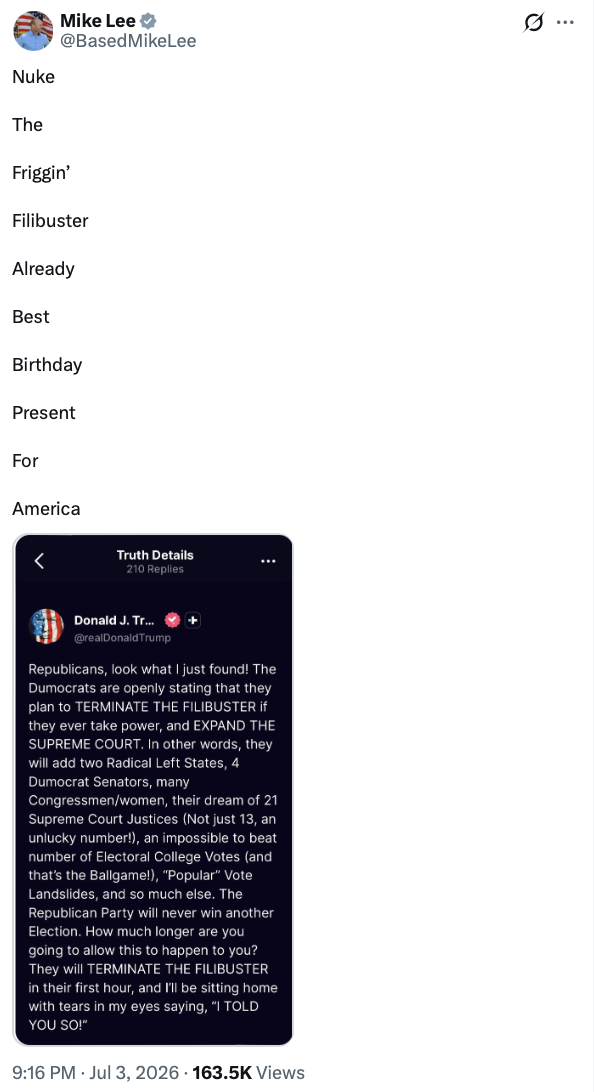

U.S. Senator Mike Lee's social media post is shown at WASHINGTON D.C.
© copyright Zenger.News
Both parties would gain and lose depending on who holds the majority. A ruling party could pass its agenda unchecked, while the minority would lose leverage that has blocked spending bills, tax packages and civil-rights measures for decades. The stakes reach every voter, since a majority-rules Senate could reshape health care, immigration and tax law with far narrower margins.
This has happened before, in stages. The Senate lowered the threshold for most executive and judicial nominees to a simple majority in 2013, then extended that change to Supreme Court nominees in 2017. Neither party has erased the 60-vote rule for ordinary legislation, leaving the legislative filibuster the last major barrier standing.
The next move rests with the Senate itself, where any rule change would need a majority vote on the floor. Republican leaders have not scheduled such a vote, and a date for any decision on the filibuster has not been announced.
The fight over the filibuster isn’t the first time a president has pressed the Senate to bend its own rules. A bloc of senators known as the “Gang of 14” struck a deal in 2005 to preserve the filibuster on judicial nominees and avert the nuclear option during George W. Bush’s second term. Then-Majority Leader Harry Reid triggered the change for lower-court and executive nominees eight years later, a move his successors expanded rather than reversed. Each leader who weakened the rule found the same tool turned against his own party once power shifted.
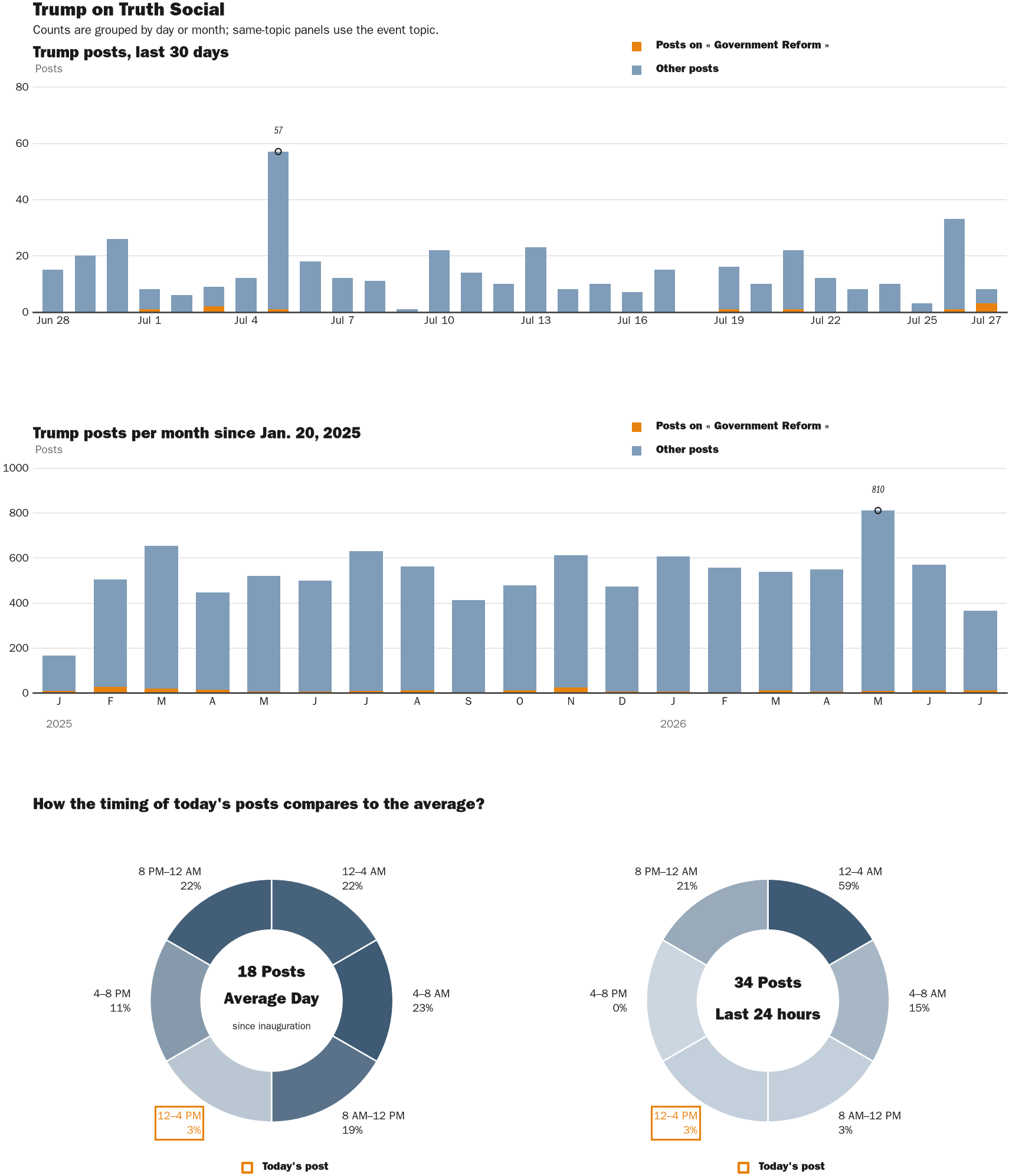
NewsFindr Chart Maker
Photo by Zenger real-time database of all Truth Social posts.