
L3 Technologies Awarded $22.6 Million Air Force Deal to Repair Combat Radios
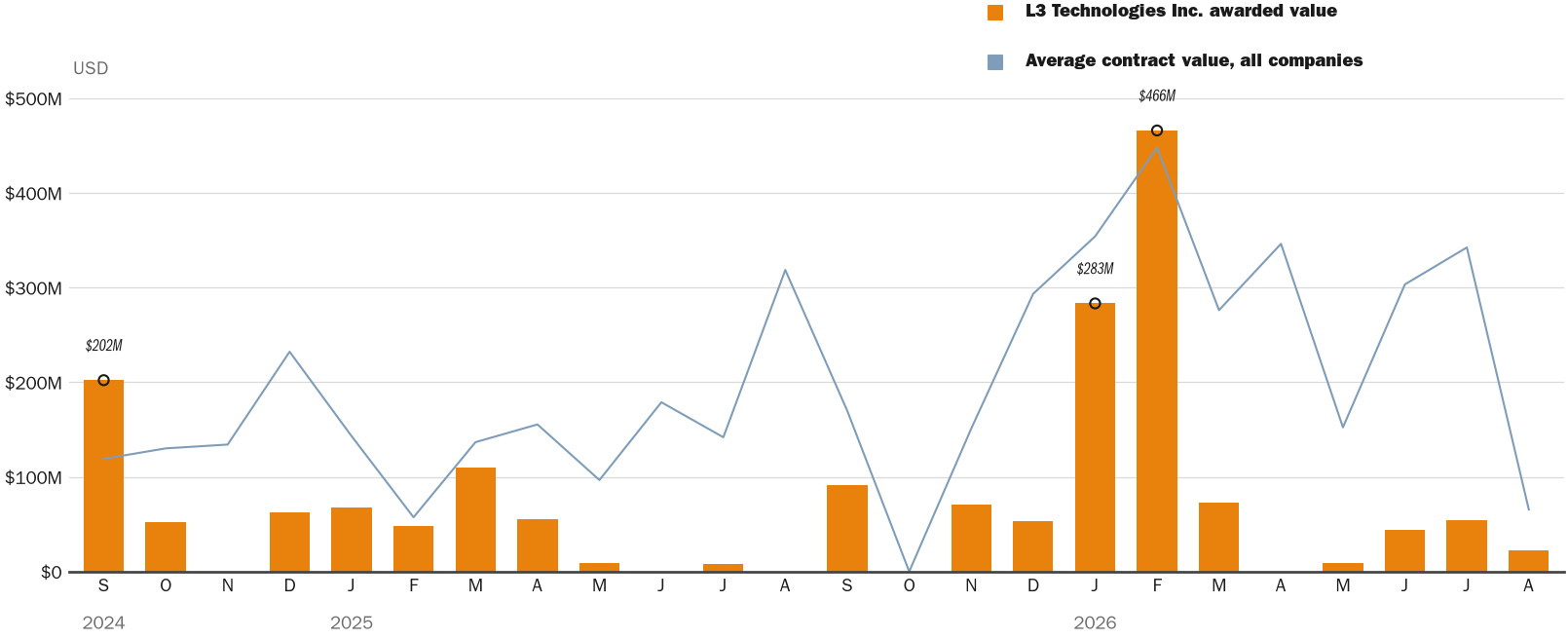
The Air Force awarded L3 Technologies Inc. a maximum $22.6 million indefinite-delivery contract to repair MIDS and Joint Tactical Radio System gear through August 2, 2031, with foreign military sales attached.

L3 Technologies Inc., a defense electronics supplier, received an Air Force contract worth up to $22.6 million to repair battlefield communications equipment, as announced on war.gov.
The requirements, indefinite-delivery award covers the Multifunctional Information Distribution System Low Volume Terminal and the Joint Tactical Radio System, according to war.gov. Work will run at Salt Lake City, Utah, and finish by August 2, 2031, according to war.gov. The deal is a sole-source acquisition that involves Foreign Military Sales to various countries, according to war.gov. The Air Force Life Cycle Management Center, Cryptologic and Cyber Systems Division in San Antonio, Texas, holds the contract under identifier FA8307-26-D-B001, according to war.gov. The award carried a date of August 3, 2026, according to war.gov.
MIDS terminals and Joint Tactical Radio System hardware carry secure voice and data across aircraft, ships and ground units, letting allied forces share targeting and position data on a common network. The repair contract keeps that fielded equipment serviceable rather than buying new units, a lower-cost path for a system already in wide use.
The structure matters for who benefits. A ceiling contract sets a spending cap without guaranteeing orders, so L3 Technologies Inc.gains a repair pipeline while the Air Force retains flexibility to order only what it needs. Allied governments buying through Foreign Military Sales gain a maintenance channel for terminals they already operate, and the U.S. keeps a domestic depot workload in Utah.
Multi-year ceiling contracts of this kind are routine in military procurement. The Pentagon publishes daily award notices for deals valued at $7.5 million or more, and repair and sustainment work for tactical data-link systems has appeared on those lists for years. The five-year window through 2031 matches the standard term for indefinite-delivery repair arrangements.
For the average U.S. reader, the effect is indirect. The award sustains skilled electronics jobs at the Salt Lake City site and channels a portion of defense spending toward maintaining existing hardware instead of new production. That choice shapes how tax dollars flow through the sustainment side of the military budget.
This has happened before. Repair and support contracts for MIDS and Joint Tactical Radio System equipment recur across procurement cycles because the terminals equip a broad range of platforms and require ongoing depot service. Sole-source awards are common when a single manufacturer holds the technical data and tooling for the specific hardware.
The next decision rests with the Air Force Life Cycle Management Center, which will issue individual delivery orders against the ceiling as repair needs arise. A date for the first order has not been announced.
Military communications gear has shaped outcomes on the battlefield as long as armies have fought, as happened before. During World War II, the U.S. Army fielded the SCR-300 backpack radio in 1943, the first unit widely called a “walkie-talkie,” and it carried voice traffic across battle lines in Europe and the Pacific. The device let commanders coordinate movements in real time, and the officers who controlled reliable radio nets held a decisive edge over those who did not.

NewsFindr Chart Maker
Photo by NewsFindr Chart Maker

Protomaps / Natural Earth – Salt Lake City, Utah