Trump Ties Saudi Civil Nuclear Deal to Abraham Accords Entry
Trump conditions approval of a U.S.-Saudi civil nuclear agreement on Riyadh joining the Abraham Accords, insisting the pact bars uranium enrichment.

WASHINGTON D.C. — Donald J. Trump conditioned approval of a U.S.-Saudi civil nuclear agreement on Saudi Arabia joining the Abraham Accords, insisting the deal will bar uranium enrichment.
The agreement, negotiated between the U.S. Department of Energy and Riyadh, would cover only non-military use of the kind Iran and the United Arab Emirates already possess, Trump wrote. He framed the pact as approvable but contingent on the kingdom entering the diplomatic framework that normalized ties between Israel and several Arab states.
Here is the full post on Truth Social: “The Civil Nuclear Deal (There will be no enrichment of material!) being made between the United States Department of Energy and Saudi Arabia, which pertains only to non-military use such as the ones that Iran and UAE (and others) already have, will be approved, but is totally subject to Saudi Arabia joining the very respected and successful Abraham Accords. The United States is not opposed to Civil (Non-Enriched) Nuclear Facilities. Thank you for your attention to this matter! Trump” on July 23, 2026 at 7:52 AM ET.
This is the first message released by Trump today. On average, Trump produces about 15 posts per day since his inauguration on January 20, 2025. The move fits a broader pattern in Trump’s recent messaging, with 60 of his 452 posts over the last 30 days focused on foreign policy.
The post followed a formal announcement one day earlier. The U.S. Department of Energy said Secretary Chris Wright and his Saudi counterpart, Prince Abdulaziz bin Salman, signed a peaceful nuclear cooperation agreement along with a bilateral safeguards agreement, according to theguardian.com. The full text of the deal remains unreleased.
The stakes reach far beyond energy. The agreement will generate billions of dollars for American companies and expand U.S. nuclear technology exports, according to al-monitor.com. Westinghouse Electric Company, an American nuclear reactor maker positioned to support Saudi development, called the launch a landmark step for energy security and long-term economic growth, according to theguardian.com. Critics counter that the arrangement could open a path to enrichment and an atomic arms race in a region already battered by war.
The timing drew scrutiny because the United States is fighting a war with Iran waged in part to stop Tehran from enriching uranium domestically, according to theguardian.com. Senator Bernie Sanders wrote on X that Trump was letting Saudi Arabia do exactly what he claims to oppose in Iran, according to al-monitor.com. Secretary of State Marco Rubio said any civil nuclear agreement would carry safeguards to ensure it cannot become a weapons program, according to al-monitor.com.
For the average American, the deal promises high-paying jobs in the nuclear sector and a larger role for U.S. reactor firms competing against Russia and China for a market Saudi Arabia intends to build one way or another, according to al-monitor.com. The administration argued that ceding the market to rivals would undermine national security for decades, according to theguardian.com.
This has happened before. The United States signed a nuclear cooperation agreement with the neighboring United Arab Emirates in 2009, a pact that does not permit the country to enrich its own uranium, according to al-monitor.com. Washington maintains agreements governing nuclear cooperation with more than 50 countries, according to al-monitor.com.
Congress will make the next decision. Lawmakers will review the deal, and members who fear a lack of monitoring safeguards could push back, according to theguardian.com. A firm date for a congressional vote has not been announced.
Linking recognition of Israel to nuclear cooperation is not the first time these parties have negotiated over the atom and diplomacy at once. A civil nuclear deal with Saudi Arabia stalled across both Trump’s first administration and that of former President Joe Biden, in part because of warnings from nonproliferation groups, according to theguardian.com. Saudi Arabia has long said it would seek nuclear technology from China or Russia if Washington refused, and in the past warned it would need a weapon if Iran obtained one, according to theguardian.com. The current pact resolves years of stalled talks, handing Riyadh access to American reactors and giving U.S. firms a contract that eluded two presidents.
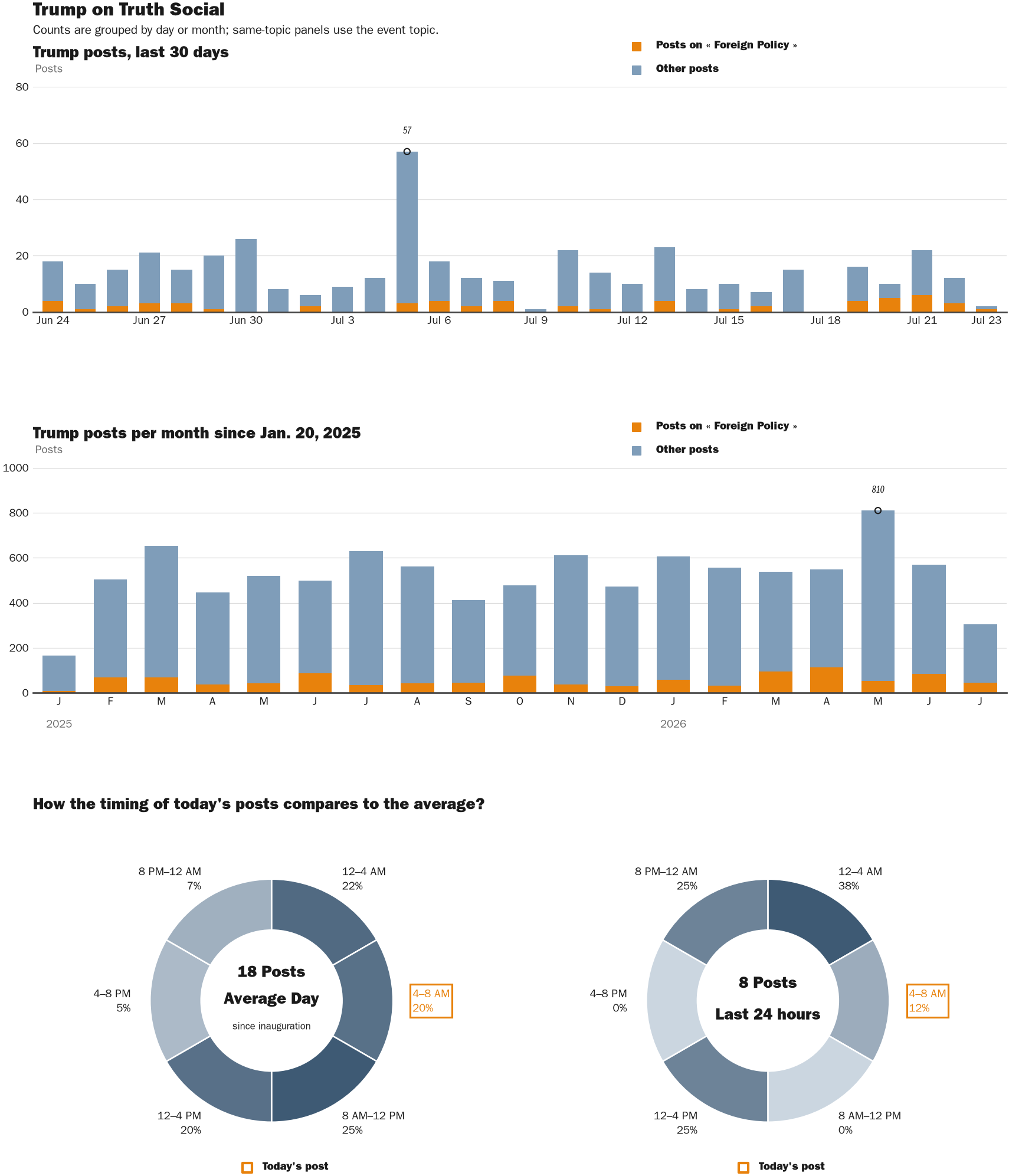

NewsFindr Chart Maker
Photo by Zenger real-time database of all Truth Social posts.
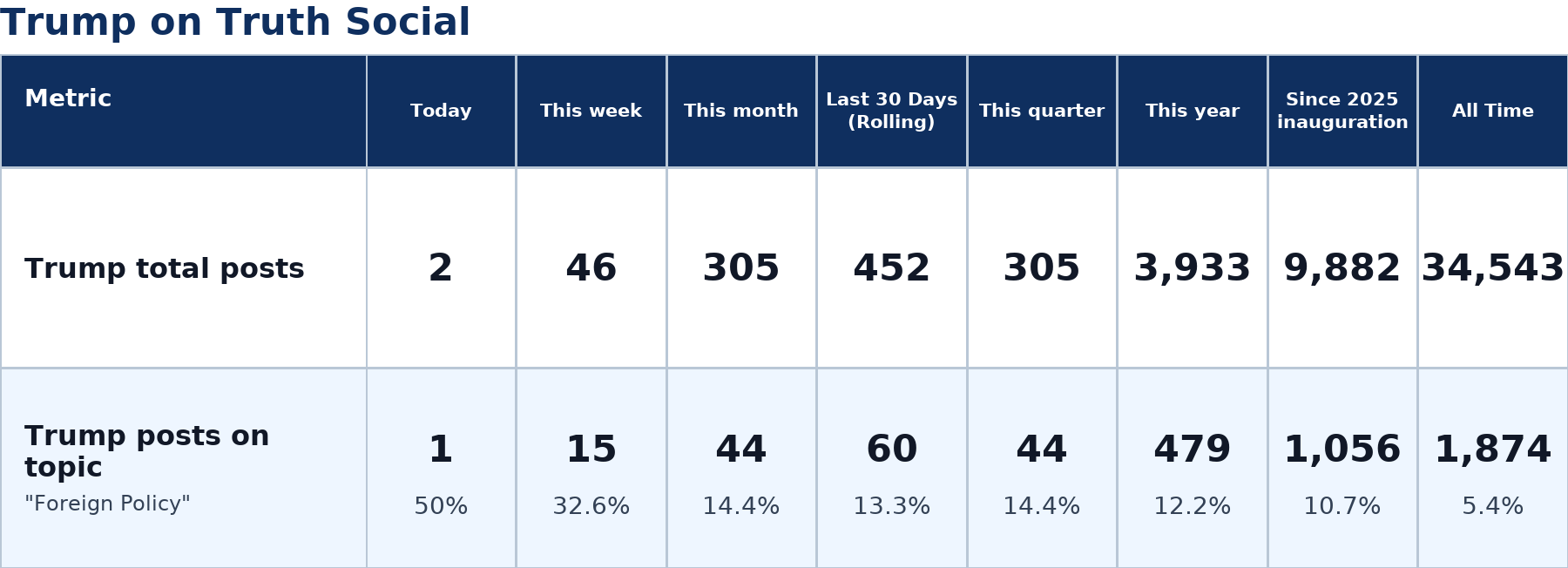
Zenger analysis
Photo by Zenger analysis