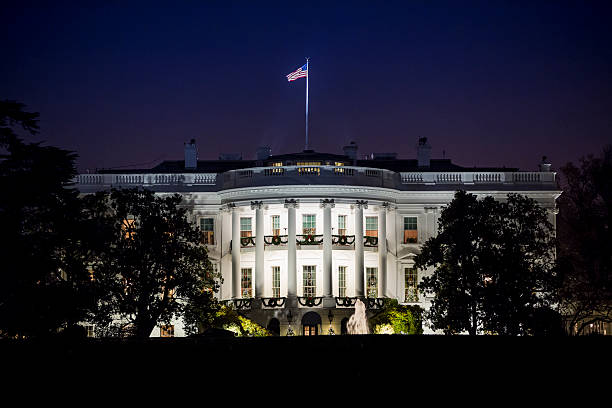
Trump Shares U.S.-UK Finding That China’s Kimi K3 Trails Top American AI
Trump amplifies a NIST assessment showing Moonshot AI's Kimi K3 performs well below leading U.S. frontier models on cyber tasks, keeping American labs ahead in the AI race.

WASHINGTON D.C. — Donald J. Trump amplified a U.S. government finding that a leading Chinese artificial intelligence model trails top American systems on cyberattack tasks.
The National Institute of Standards and Technology concluded that Moonshot AI’s Kimi K3 performs significantly below the most recent frontier cyber-capable U.S. models on preliminary tests, according to nist.gov. The U.S. Center for AI Standards and Innovation and the UK Artificial Intelligence Security Institute ran the evaluation jointly.
“CAISI’s latest blog post evaluates Kimi K3 and its cyber capabilities. Based on a preliminary cyber-focused evaluation, Kimi K3 performed significantly below the leading U.S. frontier AI models,” the post read, sharing the report by mentioning the source (see nist.gov) on July 28, 2026 at 9:53 AM ET.
This is Trump’s 8th message released today. On average, Trump produces 18 posts per day since his inauguration on January 20, 2025.
The move fits a broader pattern in Trump’s recent messaging, with 53 of his 452 posts over the last 30 days focused on Domestic Policy.
Moonshot AI, the Beijing startup behind the Kimi line of models, released Kimi K3 on July 16, 2026 and slated it for open-weight release by July 27, 2026, according to nist.gov. Evaluators tasked the model with developing software exploits and attacking a simulated corporate network named “The Last Ones.” Kimi K3 reached step 17 of a 32-step attack path on average, while the most cyber-capable U.S. models reached 28.5 steps, according to nist.gov.
The stakes reach beyond a single benchmark. A result showing American models ahead supports the administration’s argument that domestic AI firms should lead global development without heavy new restrictions. Chinese developers gain from open-weight releases that spread their models widely, while U.S. labs benefit from any official signal that their systems retain a lead. Evaluators cautioned that Kimi K3’s safeguards did not stop it from attempting cyber exploit development during testing, a warning that cuts against any single reading of the results.
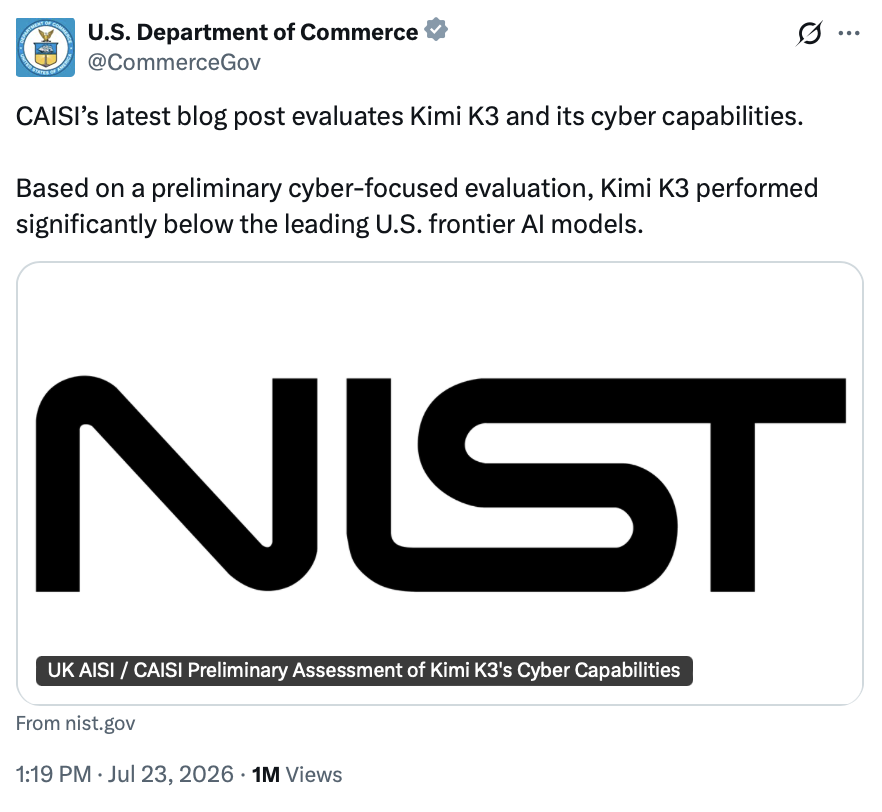

A social media post from the U.S. Department of Commerce highlights a U.S.-UK finding on Chinese AI capabilities online on 07/28/2026.
© copyright Zenger.News
The finding lands amid a widening contest between Washington and Beijing over AI supremacy. The Center for AI Standards and Innovation sits inside NIST and shifted from an earlier AI safety mandate toward measuring foreign models and defending American competitiveness, according to nist.gov. Testers evaluated U.S. closed-weight models with system-level safeguards disabled to measure maximal capabilities, a choice that flatters raw capability scores, according to nist.gov.
Kimi K3 still outperformed another Chinese model, GLM-5.2, on the same tests, showing gaps within the Chinese field itself, according to nist.gov. A 400-point gain on the study’s capability scale equals a tenfold increase in the odds of solving tasks, a spread that dwarfs the margins separating many consumer AI products.
For the average American reader, the report signals that the tools capable of automating cyberattacks remain concentrated in a handful of firms, most of them domestic, shaping which systems could one day threaten banks, hospitals and power grids.
This has happened before. Federal evaluators have repeatedly measured Chinese frontier models against American ones over the past two years, with each release from Beijing prompting fresh benchmarking. Carnegie Mellon University built the exploit test used here, ExploitBench, which contains 41 tasks focused on exploit development, according to nist.gov.
The next move rests with CAISI and its UK counterpart, which said the results are preliminary and drawn from a limited set of public and private benchmarks. A date for a fuller assessment of Kimi K3 has not been announced.
Government measurement of a rival’s technology has shaped great-power contests before. During the Cold War, the U.S. built an entire intelligence apparatus to gauge Soviet missile and warhead counts, and estimates of a “missile gap” drove the 1960 presidential campaign and a surge in American defense spending, according to Encyclopedia Britannica. Later satellite reconnaissance revealed that Washington had overestimated Moscow’s arsenal, and the corrected count reshaped arms-control talks for a generation.
Assigned topic: Domestic Policy.
This is Trump’s 8th Truth Social post today, out of 10 total today.
On average, Trump produces 18 posts per day since his inauguration on January 20, 2025.
Trump’s last post was 4 minutes ago.
This post is not part of a thread.
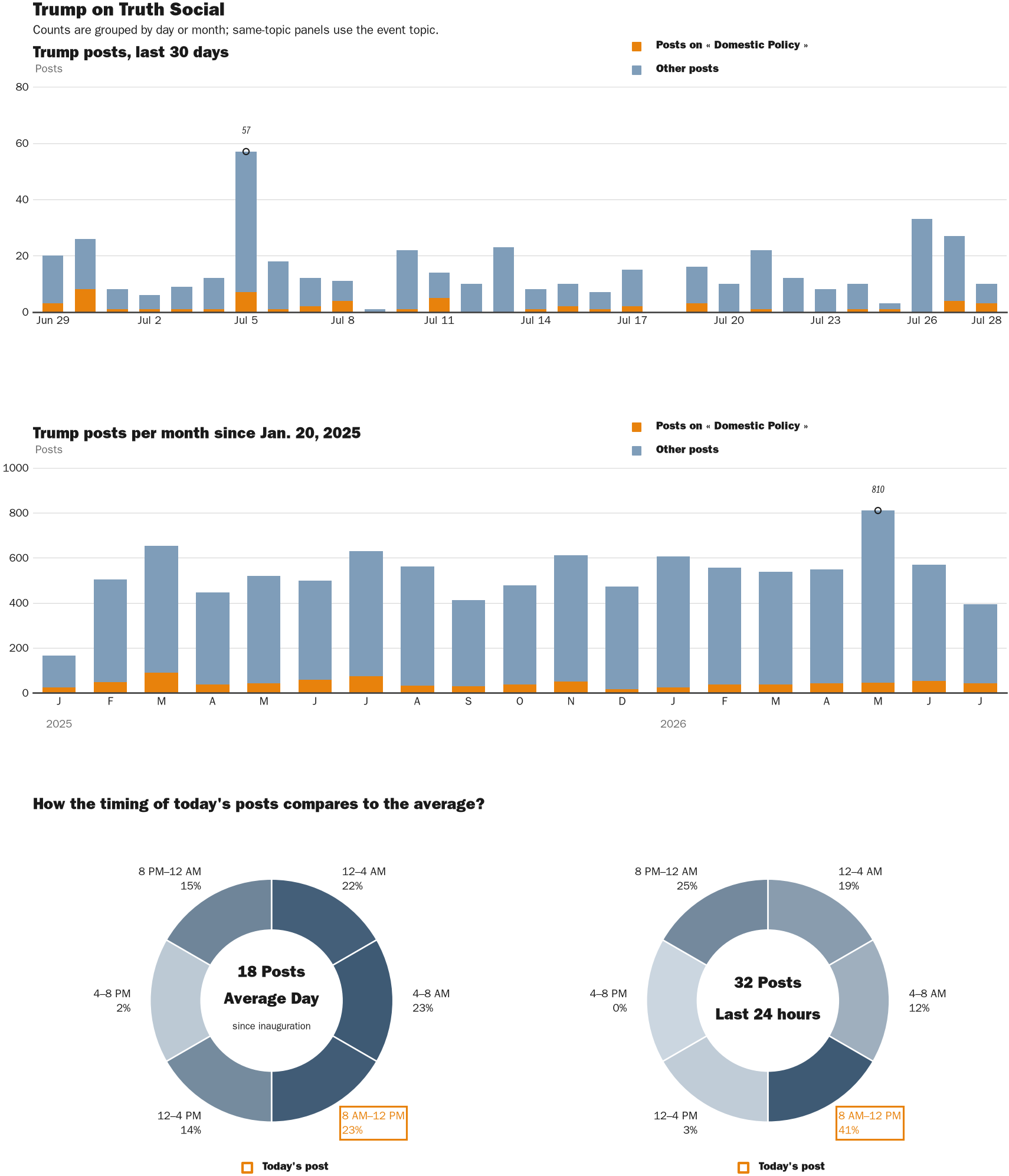
NewsFindr Chart Maker
Photo by Zenger real-time database of all Truth Social posts.
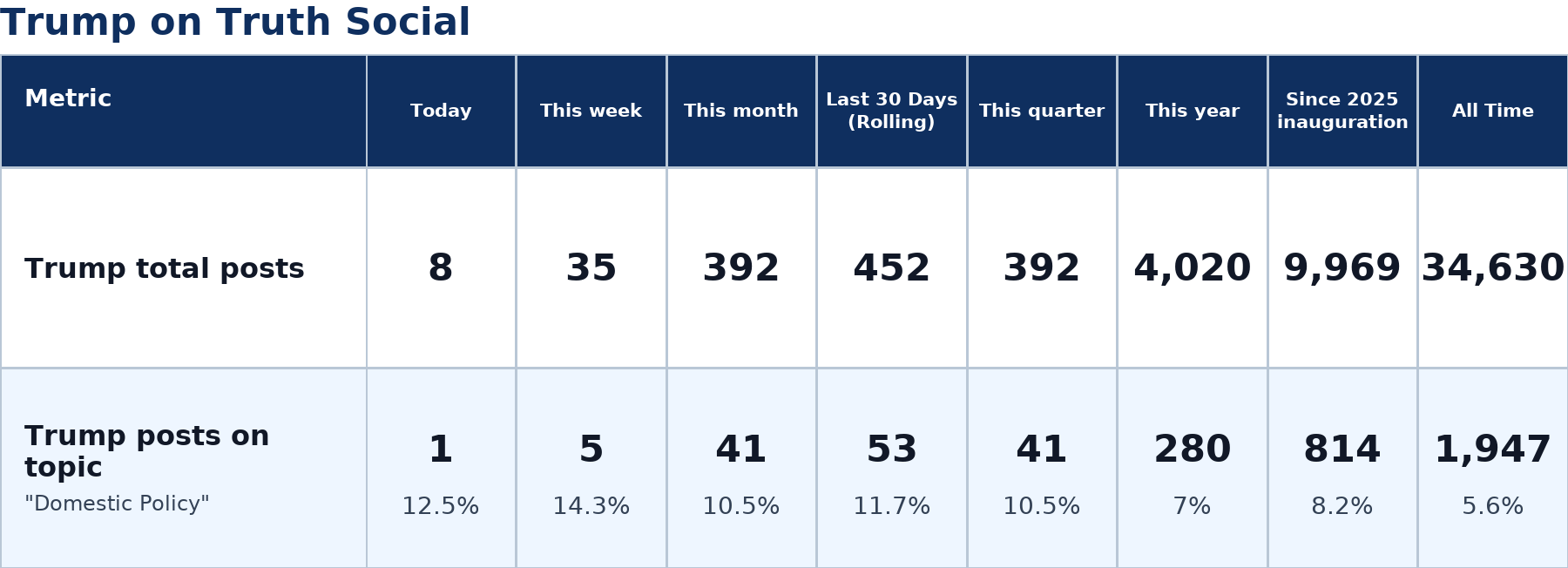
Zenger analysis
Photo by Zenger analysis
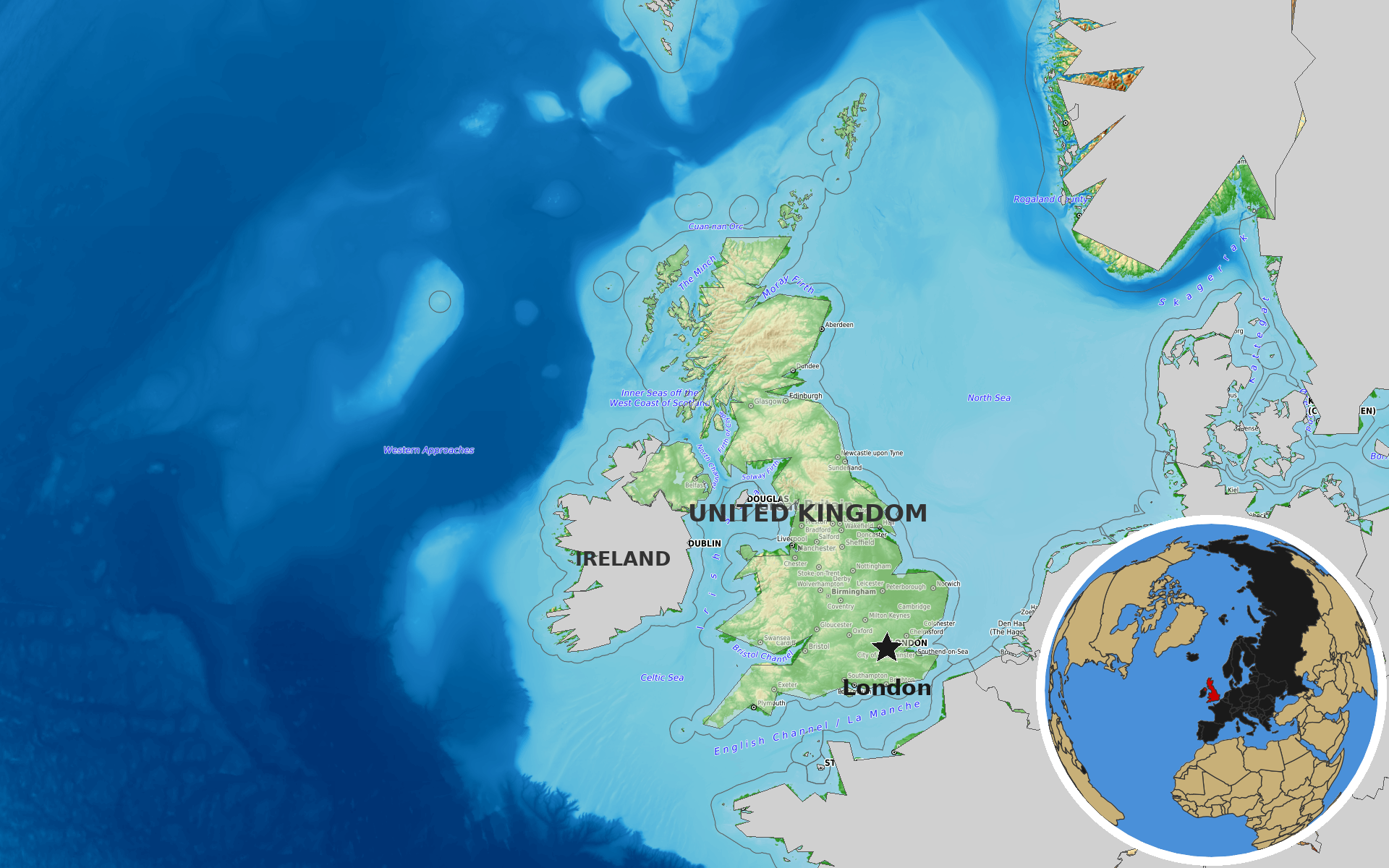
OpenTopoMap / Natural Earth – United Kingdom
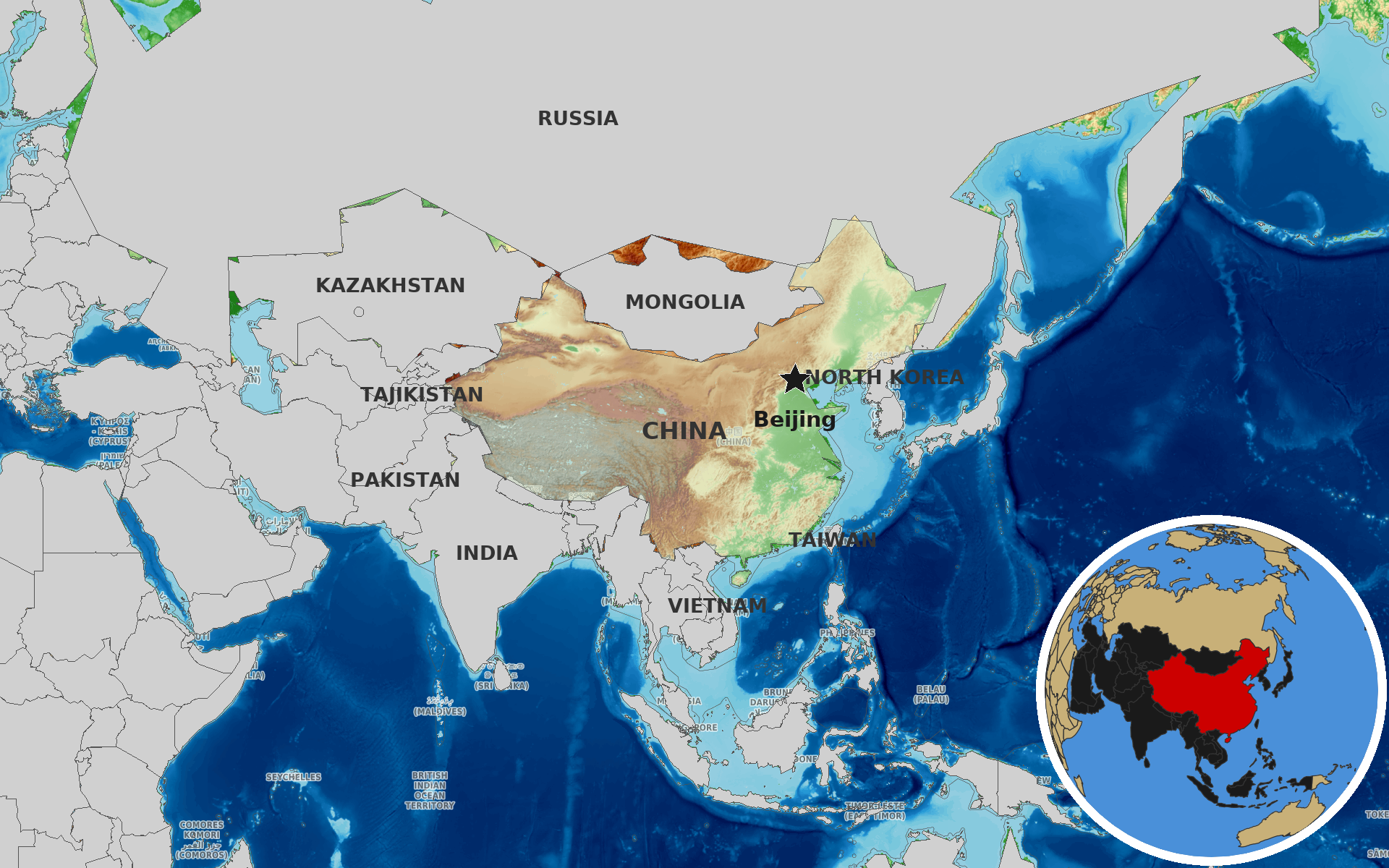
OpenTopoMap / Natural Earth – China
Photo by OpenTopoMap / Natural Earth – China