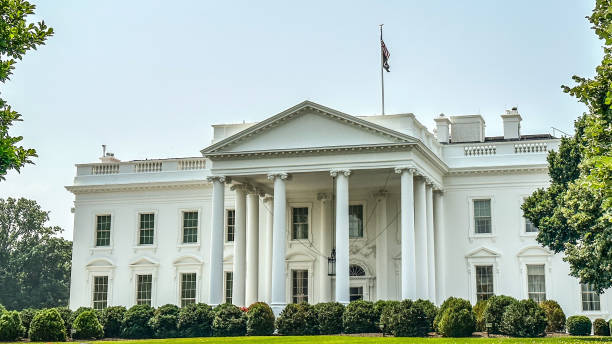
Trump warns Republican Party is “DEAD” if Democrats target Supreme Court, filibuster

Trump warns Republican Party is “DEAD” if Democrats target Supreme Court, filibuster

Trump the president amplified a report on House Democratic caucus leaders pursuing changes to the Supreme Court and the Senate filibuster, calling the effort a threat to his party.

Richard Miniter
First Published: July 19, 2026, 10:37 AM ET

Donald Trump warned that his party would be finished if House Democratic leaders reshape the Supreme Court and gut the Senate filibuster.

Here is the full post on truthsocial: “They do this, and the Republican Party is DEAD! Key House caucus leaders target Supreme Court, Senate filibuster: https://www.politico.com/live-updates/2026/06/24/congress/dem-caucuses-target-scotus-00973895”

The president shared a report on House Democratic caucus leaders pressing to overhaul the high court and the chamber’s supermajority rule according to politico. He framed the effort as an existential danger, writing that “the Republican Party is DEAD” if the changes advance. The post landed on Truth Social on July 19, 2026 at 2:27 PM ET.

The stakes divide cleanly along party lines. Democrats who favor court expansion or term limits argue the changes would rebalance a bench shaped by three Trump-era confirmations. Republicans, who hold six of nine seats through appointees confirmed during Trump’s first term, see any restructuring as a direct threat to conservative control. Ending the filibuster would let a bare Senate majority pass legislation, stripping the minority party of its most powerful blocking tool.

The filibuster fight carries deep history. The Senate requires 60 votes to end debate under Rule 22, adopted in 1917 and revised in 1975 to lower the threshold from two-thirds according to senate.gov. Both parties have chipped at it before. Senate Democrats removed the 60-vote threshold for most nominations in 2013, and Republicans extended that carve-out to Supreme Court picks in 2017, clearing the path for Neil Gorsuch’s confirmation according to congress.gov.

The Supreme Court itself has held nine seats since 1869, fixed by the Judiciary Act of that year according to supremecourt.gov. Congress last altered the number in the 19th century, and Franklin Roosevelt’s 1937 plan to add justices collapsed in the Senate despite his landslide reelection.

For the average reader, the outcome touches everyday law. A court reshaped by new appointees or a Senate freed of the filibuster could move faster on rulings and statutes covering health care, guns, abortion, and voting rights, areas where narrow margins have decided recent cases.

Has this happened before? It has. Presidents and lawmakers have tried to bend the court and the filibuster for more than a century, from Roosevelt’s failed 1937 gambit to the nomination carve-outs of the last decade. Each fight left the institutions changed but intact.

The next move rests with Senate leadership and the House Democratic caucus leaders named in the report. No vote or formal decision date has been announced.

Structural fights over the Supreme Court are older than most sitting institutions in Washington. Roosevelt, fresh off winning 46 of 48 states in 1936, asked Congress in February 1937 to let him appoint up to six new justices according to britannica.com. The Senate Judiciary Committee rejected the plan by a 10-8 vote, and the full Senate buried it that July. Roosevelt served eight more years yet never again tried to enlarge the bench, a defeat that shadowed the most powerful president of his era.

NewsFindr Chart Maker
C2PA

NewsFindr Chart Maker

Zenger analysis
C2PA

Zenger analysis


Research