Trump Ranks Wars by Deaths, Puts Venezuela at Zero and Iran at 18
Trump posts a casualty tally comparing six US military conflicts, placing recent operations in Venezuela and Iran far below the tolls of Vietnam, Korea, Iraq and Afghanistan.

WASHINGTON D.C. — Donald J. Trump ranked six US military conflicts by their death tolls in a Truth Social post, placing recent operations in Venezuela and Iran far below the historic wars of the 20th and 21st centuries.
The list contrasts prolonged conflicts with short campaigns, citing 58,220 dead over more than 19 years in Vietnam and zero dead in what he labeled a one-day Venezuela war. The post frames casualty numbers as the measure of military success.
Here is the full post on Truth Social: “Afghanistan War: 20 years, 2,000 DEAD. Iraq War: 9 years, 4,600 DEAD. Vietnam War: 19 years and 5 months, 58,220 DEAD. Korean War: 3 years and 1 month, 36,574 DEAD. Venezuela War: 1 day, 0 DEAD. Iran Military Conflict: 4 months, 18 DEAD.” on July 21, 2026 at 3:54 PM ET.
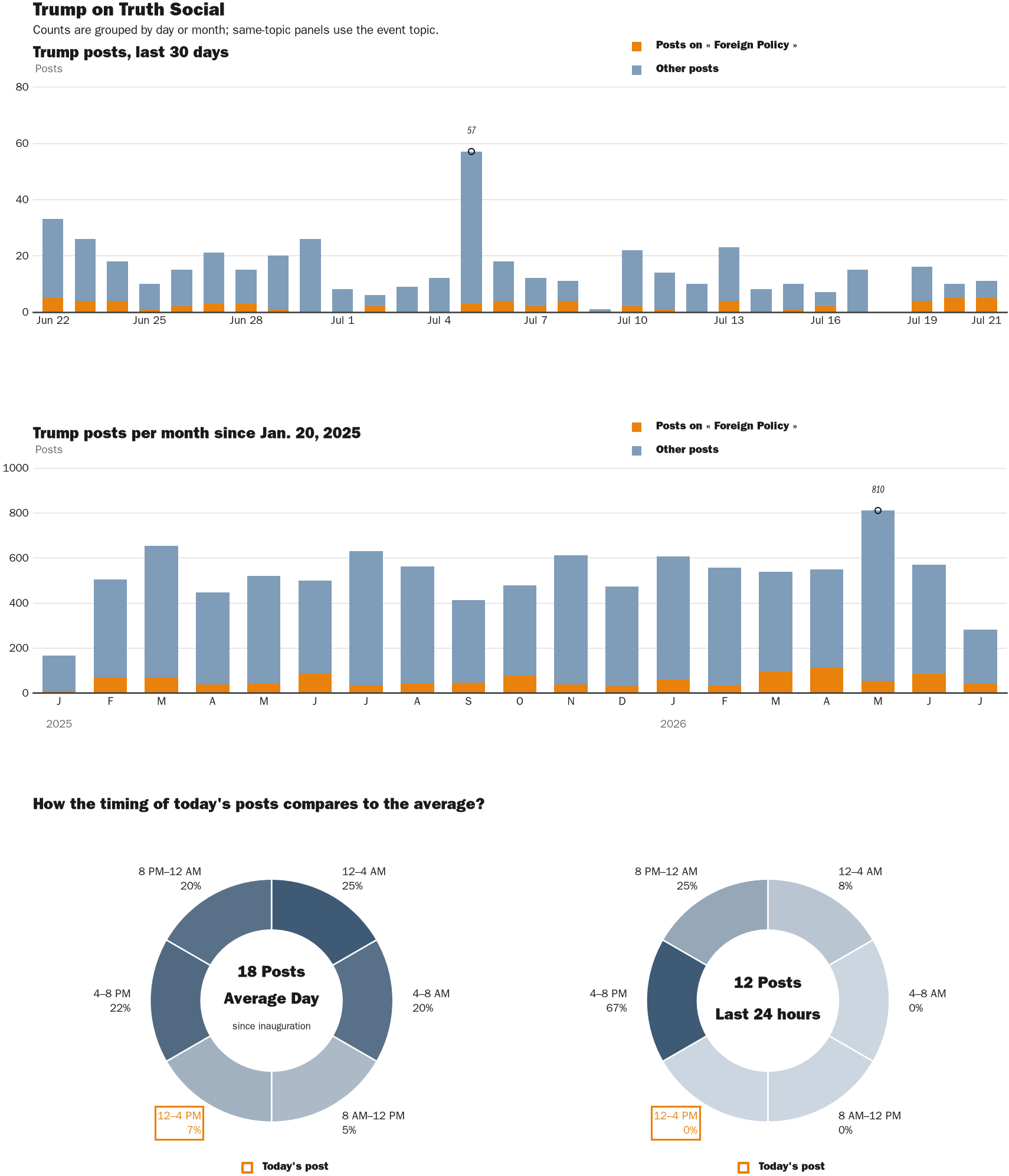
This is the first message released by Trump today. On average, Trump produces about 15 posts per day since his inauguration on January 20, 2025.
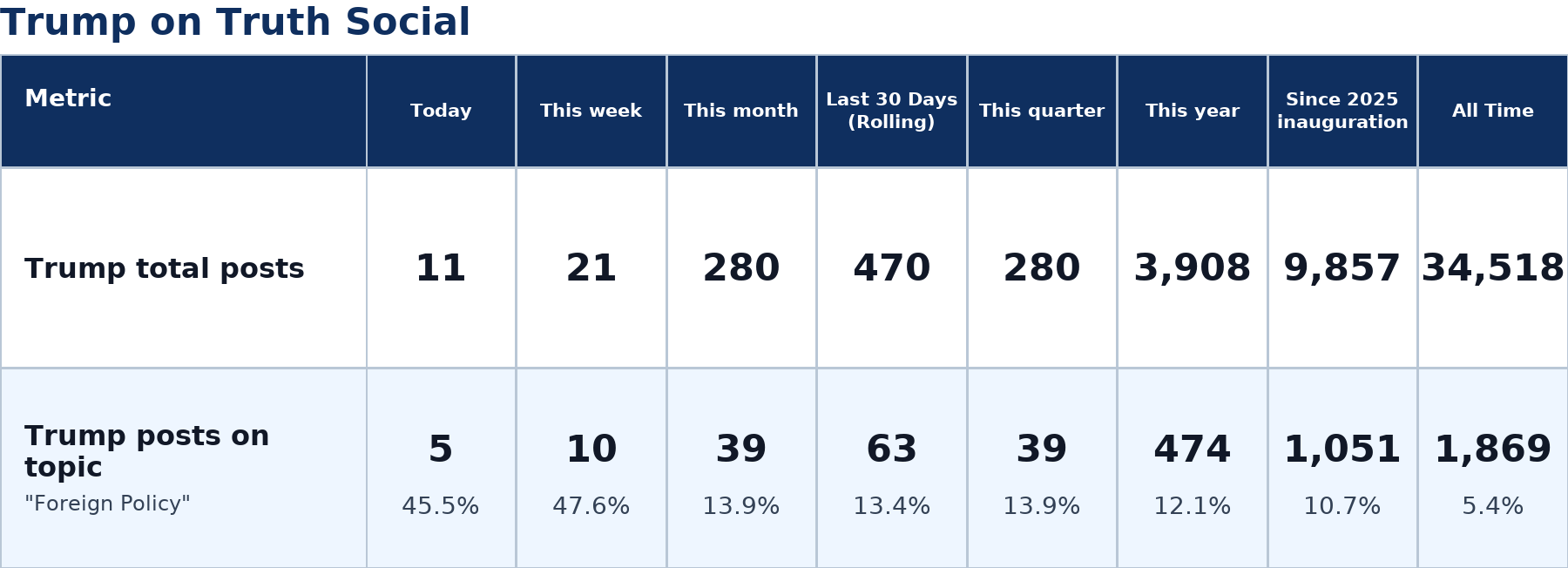
The move fits a broader pattern in Trump’s recent messaging, with 63 of his 470 posts over the last 30 days focused on Foreign Policy.
The figures Trump cited for the longer wars track closely with official government records. The Defense Casualty Analysis System lists 58,220 US military deaths in the Vietnam War and 36,574 deaths during the Korean War, according to dcas.dmdc.osd.mil. The Iraq War figure of roughly 4,600 and the Afghanistan total align with Department of Defense casualty summaries maintained across two decades of overseas operations.
The stakes center on how the public measures the cost of military action. By presenting Venezuela and Iran with near-zero casualties, the post advances a case that recent operations achieved objectives without the losses that defined earlier generations. Veterans, active-duty families and voters weighing foreign engagements are the audience for that comparison.
The Vietnam War, the deadliest conflict on the list, stretched from the early 1960s until the fall of Saigon in 1975, according to history.army.mil. The Korean War ended with an armistice in July 1953 that never became a formal peace treaty, leaving the peninsula divided at the 38th parallel. Both wars produced casualty counts many times larger than any recent US operation.
The scale of the older conflicts dwarfs the recent ones. The 58,220 dead in Vietnam exceeds the combined populations of many small American cities and stands roughly 26 times the Afghanistan figure Trump cited. The one-day, zero-death Venezuela entry sits at the opposite extreme of that spectrum.
For the average US reader, the comparison touches the recurring national debate over when and how to send troops abroad. The human cost of war shapes voting decisions, veterans’ benefits and defense budgets that draw on taxpayer funds.
This has happened before. Presidents have long invoked casualty comparisons to defend or criticize military strategy, using the toll of past wars as a yardstick for current decisions. The practice ties directly to how administrations justify the use of force.
The next decisions on US posture toward Venezuela and Iran rest with the White House and Congress, which controls war funding and authorizations. A date for any formal congressional action on these operations has not been announced.
Casualty accounting has shaped American war debates before, as happened after Vietnam. Public revulsion at the mounting death toll fueled protests that pressured Washington to withdraw. Congress passed the War Powers Resolution in 1973 to limit a president’s ability to commit troops without legislative approval, according to britannica.com. That law still governs how far a commander in chief can act alone, a constraint every president since has confronted.

NewsFindr Chart Maker
Photo by Zenger real-time database of all Truth Social posts.
Zenger analysis
Photo by Zenger analysis
OpenTopoMap / Natural Earth – Afghanistan
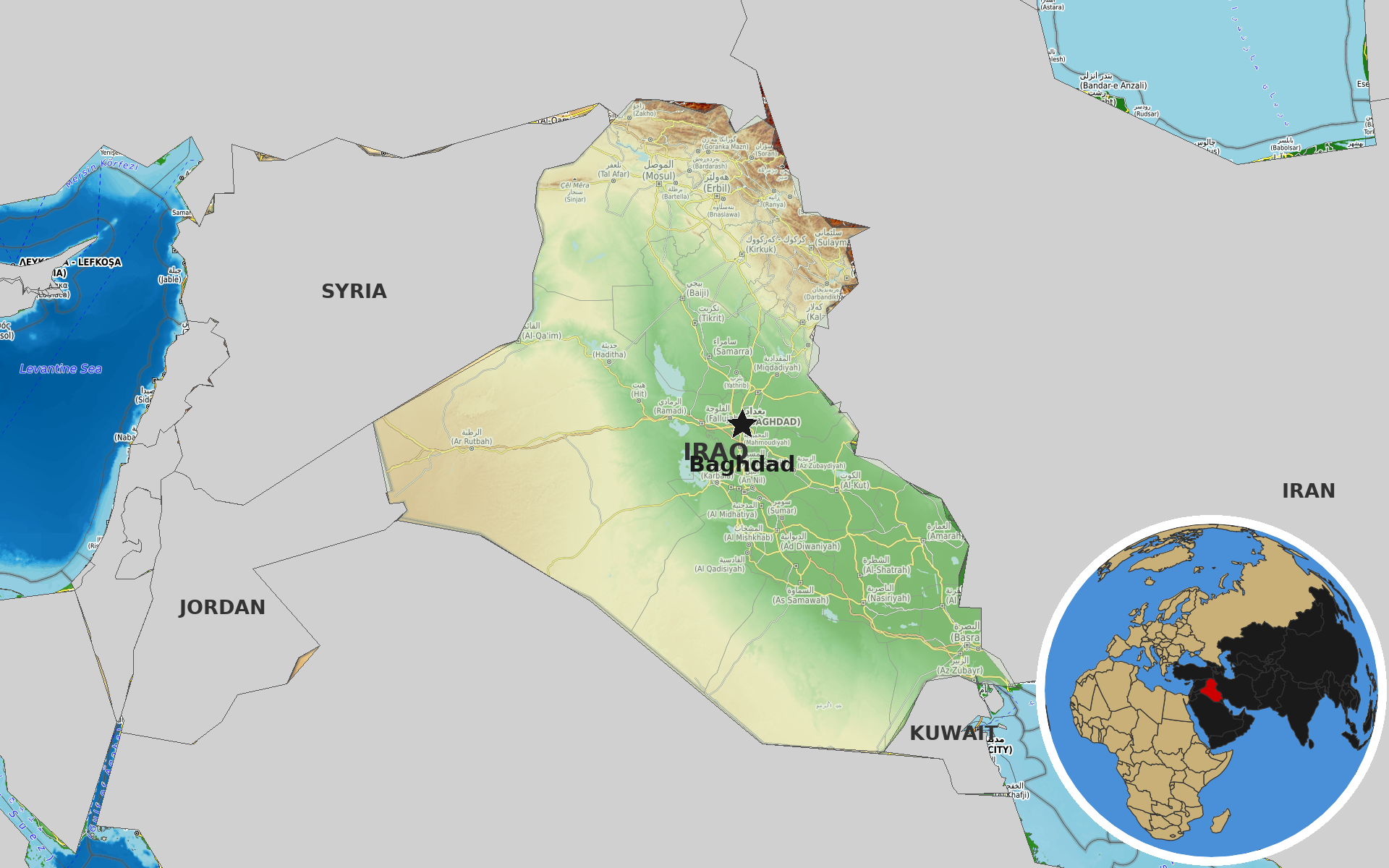
OpenTopoMap / Natural Earth – Iraq
Photo by OpenTopoMap / Natural Earth – Iraq
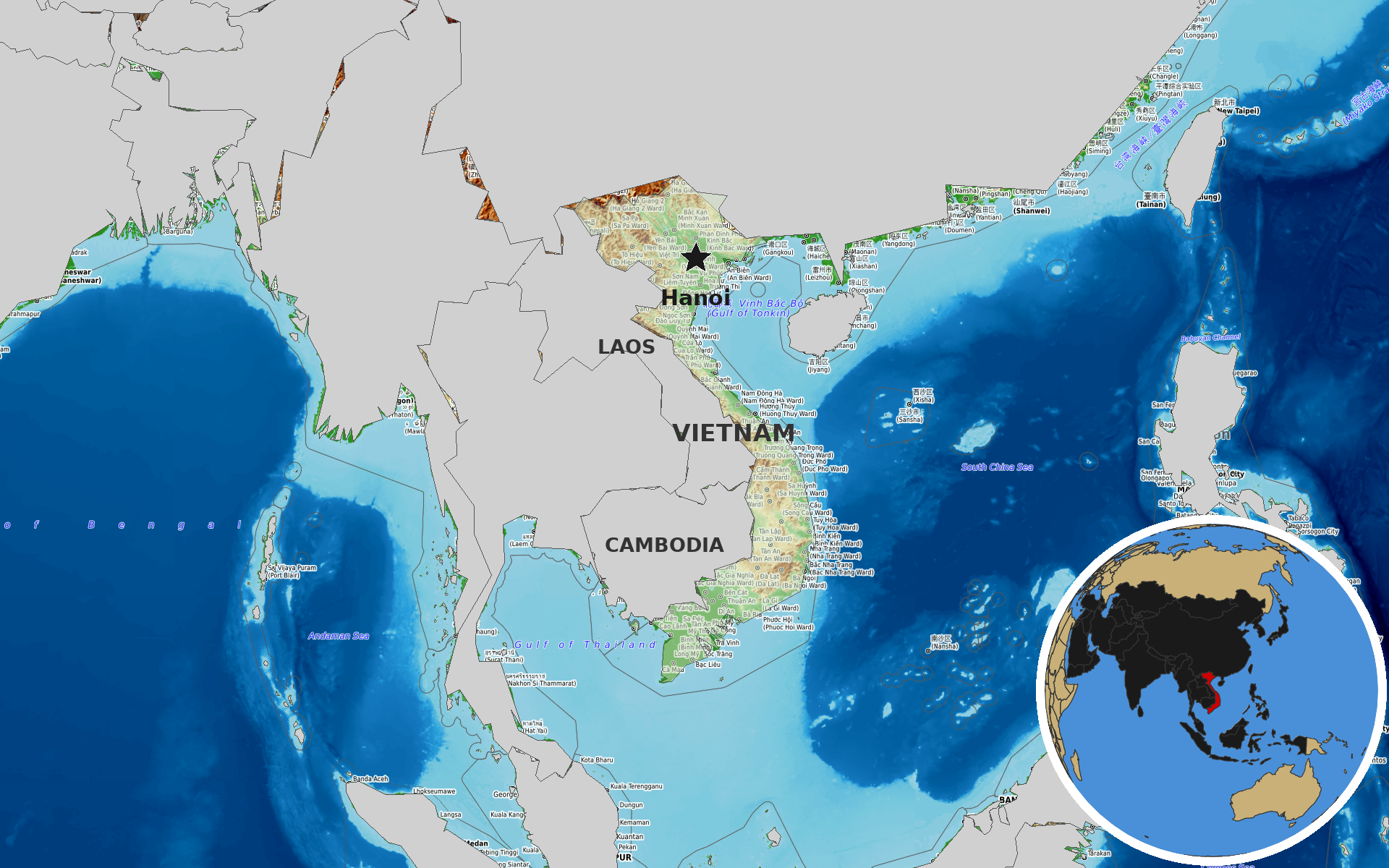
OpenTopoMap / Natural Earth – Vietnam
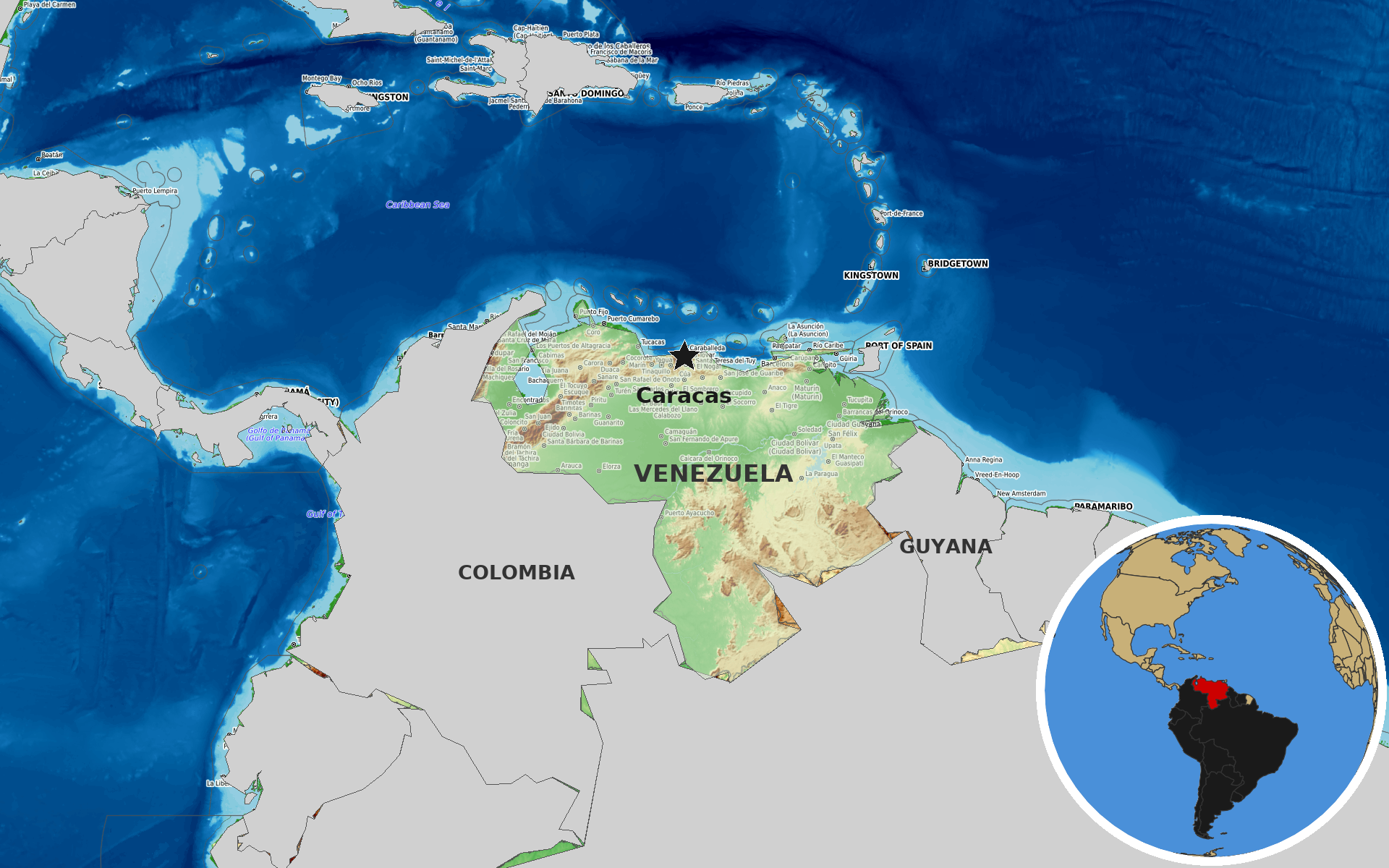
OpenTopoMap / Natural Earth – Venezuela
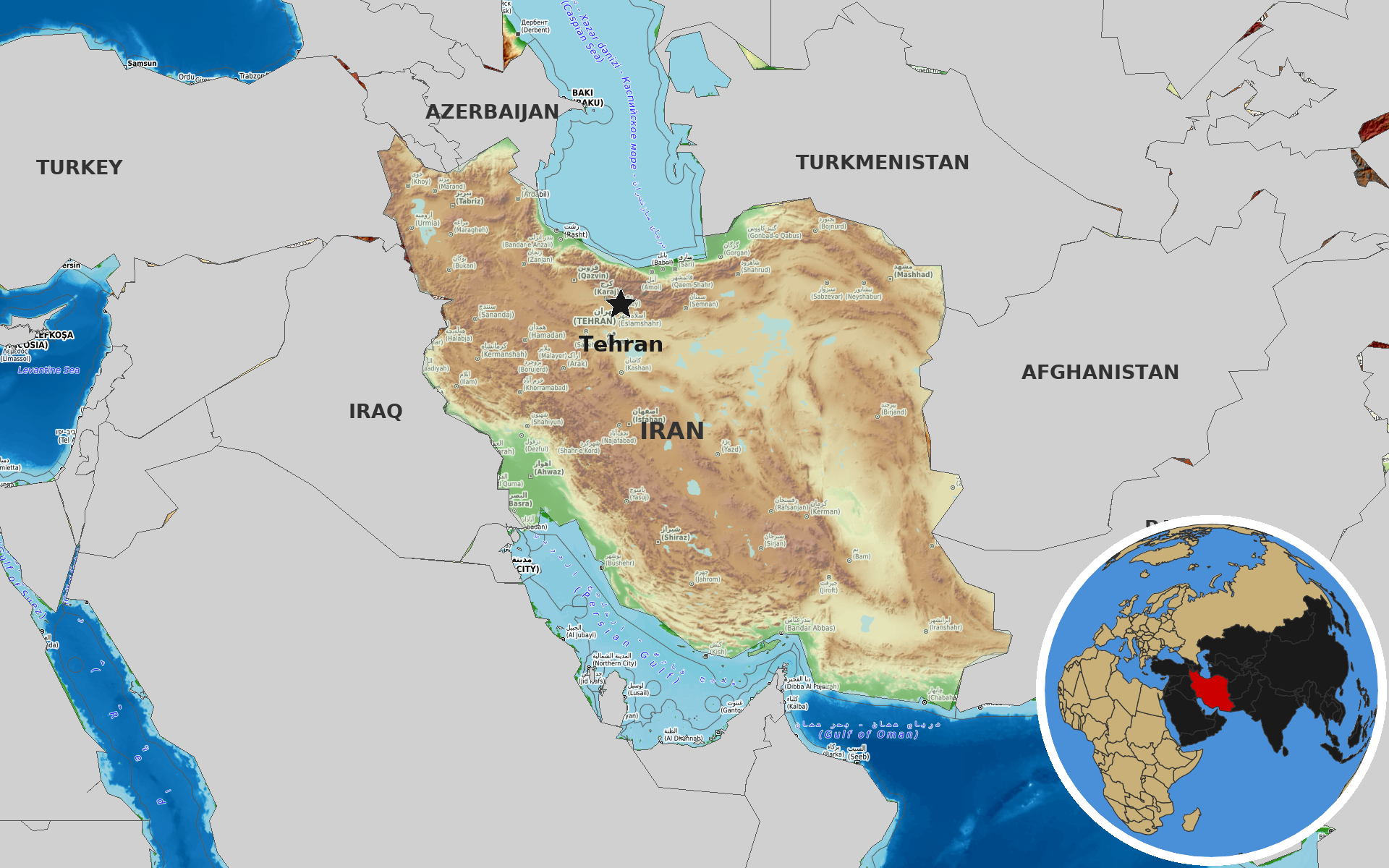
OpenTopoMap / Natural Earth – Iran
Photo by OpenTopoMap / Natural Earth – Iran