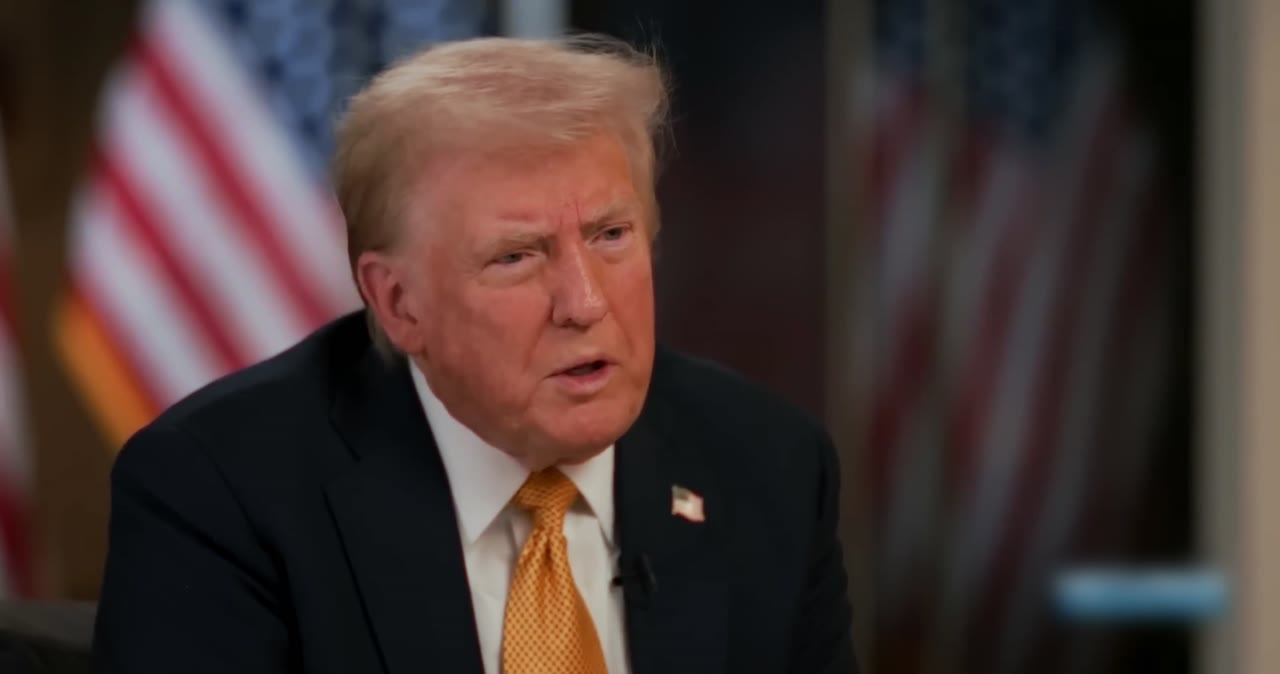

Trump shares video monologue focused on retribution and healing
Trump shares a video post featuring a transcript about overcoming pain, finding belonging, and achieving retribution through success.

WASHINGTON D.C. — Donald J. Trump shared a video featuring a monologue focused on themes of retribution, healing, and overcoming pain.
Here is the full post on truthsocial: “Truth Social post containing 2 videos. Video transcript Retribution will be through success. I want to heal. I want to feel what I thought was meant for me now. I want to let go of the pain I’ve felt so long. Erase all the pain till it’s gone. I want to heal. I want to feel like I’m close to something real. I want to find something I’ve wanted all along. Somewhere I belong. I want to heal.” on October 14, 2026 at 1:19 AM ET.
This is Trump’s 12th message released today, and the last post was 0 minutes ago, and it is not part of a thread. On average, Trump produces 17 posts per day since his inauguration on January 20, 2025. The move fits a broader pattern in Trump’s recent messaging, with 148 of his 515 posts over the last 30 days classified as Image Only Posts.
The transcript features a speaker expressing a desire to let go of long-held pain and find a sense of belonging. The audio emphasizes that retribution will be achieved through success, before shifting to repeated statements about wanting to heal.
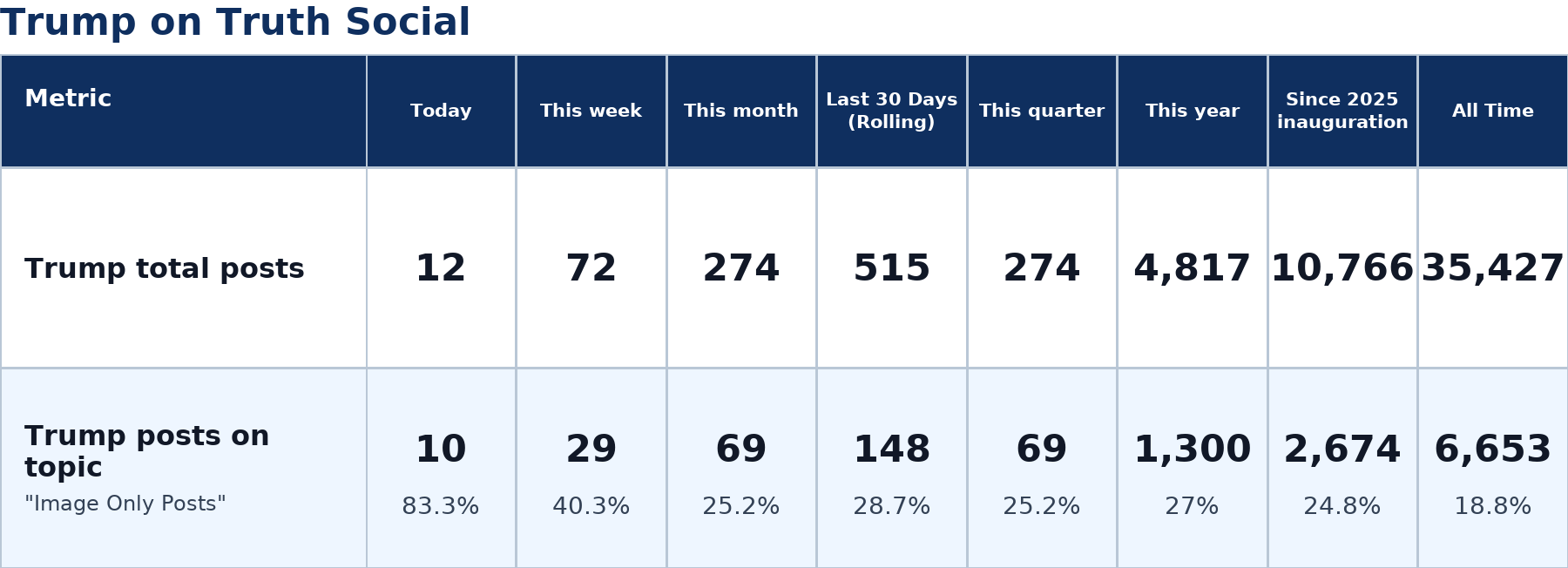

Zenger analysis
Photo by Zenger analysis
President Trump is the author of The Art of the Deal, Think Like a Billionaire, and Think Big. Analyst and Trump supporter Rod Martin points to The Art of the Deal, Trump's 1987 book, as an explanation of his deal-making philosophy: making big announcements, pivoting often in public statements and, Martin says, ultimately getting what he wanted all along. Critics contend that Trump's books were published decades ago or were aimed at making money, not shedding light. "Generally," Martin said, "critics don't read The Art of the Deal. If they did, they would understand."