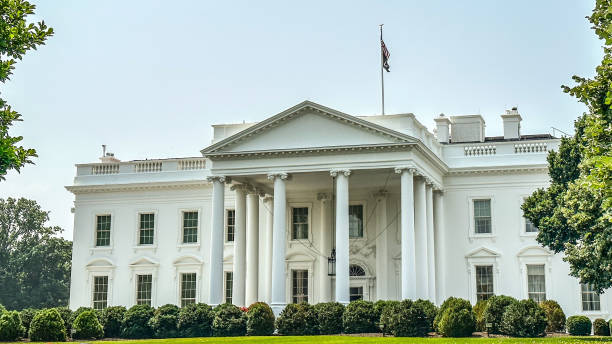
Trump shares Washington Times column praising his Iran strategy

Trump shares Washington Times column praising his Iran strategy

Trump the opinion piece by Alexander B. Gray calls Operation Epic Fury the fulfillment of Trump's decade-long push to stop Tehran from acquiring nuclear weapons and to pivot toward China.

Richard Miniter
First Published: July 19, 2026, 10:32 AM ET

Donald Trump shared a Washington Times opinion column crediting his Iran policy with reorienting American grand strategy toward China on July 19, 2026 at 2:15 PM ET.

Here is the full post on truthsocial: “The grand strategy behind the Trump-Vance Iran deal. The president has displayed uncommon vision. By Alexander B. Gray. The Trump administration’s deal with Iran accomplishes the objectives set by the president at the outset of Operation Epic Fury, and it represents the culmination of his continuous strategic policy focus to prevent Tehran from acquiring nuclear weapons.”

The column, written by Alexander B. Gray, a nonresident senior fellow at The Atlantic Council who served as chief of staff of the White House National Security Council from 2019 to 2021, frames the Iran deal as the endpoint of a decade-long campaign. Gray writes that the agreement begins the process of moving American focus away from Middle Eastern conflicts and toward great-power rivalry. The piece appeared on the opinion page of The Washington Times.

“His willingness to wage war for limited ends and to conclude a peace that serves core U.S. national interests will satisfy neither hawks nor doves, but it will place the U.S. in a better strategic position,” Gray wrote in the column.

The column traces Trump’s stance to 2015, when he first said Iran could not acquire a nuclear weapon. Gray notes that Trump withdrew from the Joint Comprehensive Plan of Action in 2018, the multinational accord negotiated under President Obama. The piece describes Operation Midnight Hammer, launched in June 2025, and a later Operation Epic Fury that it says degraded Tehran’s missile program and disrupted its economy through a U.S. Navy blockade.

The stakes described in the column reach beyond the Persian Gulf. Gray argues that a proposed $15 trillion defense budget and continued investment in domestic energy would let Washington deprioritize the Middle East and concentrate on deterring China in the Indo-Pacific. The column identifies U.S. Gulf Arab allies and the domestic defense industrial base as the primary beneficiaries of the shift.

Truth Social
C2PA

Truth Social

Margo Martin / X (formerly Twitter)

For the average American reader, the argument connects military spending and energy policy to daily concerns such as fuel prices and the tax dollars directed to defense. The column ties reindustrialization to sectors including artificial intelligence, quantum computing and fusion energy.

Has this happened before? Presidents have promised to pivot toward Asia before without completing the shift. Gray writes that every administration since Obama’s pledged a “rebalance” to the Indo-Pacific, and he argues only the current administration has done the statecraft to position the country for it.

The next decisions rest with Congress and the administration as they weigh the proposed defense budget and the durability of any Iran agreement. A date for congressional action on the defense budget has not been announced.

The framing of Iran as a distraction from larger rivalries echoes earlier strategic debates. During the Cold War, U.S. planners repeatedly weighed commitments in peripheral regions against the central contest with the Soviet Union, and successive presidents from Nixon to Reagan reshaped force posture around that judgment. Those earlier pivots often outlasted the presidents who ordered them, leaving successors to manage the consequences.

NewsFindr Chart Maker
C2PA

NewsFindr Chart Maker

Zenger analysis
C2PA

Zenger analysis

OpenTopoMap / Natural Earth - Iran
C2PA

OpenTopoMap / Natural Earth – Iran

OpenTopoMap / Natural Earth - China
C2PA

OpenTopoMap / Natural Earth – China


Research