Dutra Group Wins $28.2 Million Army Contract to Dredge Charleston Harbor
The Dutra Group, a San Rafael, California marine construction firm, secured a firm-fixed-price award to deepen Charleston Lower Harbor, with work due by Sept. 29, 2027.

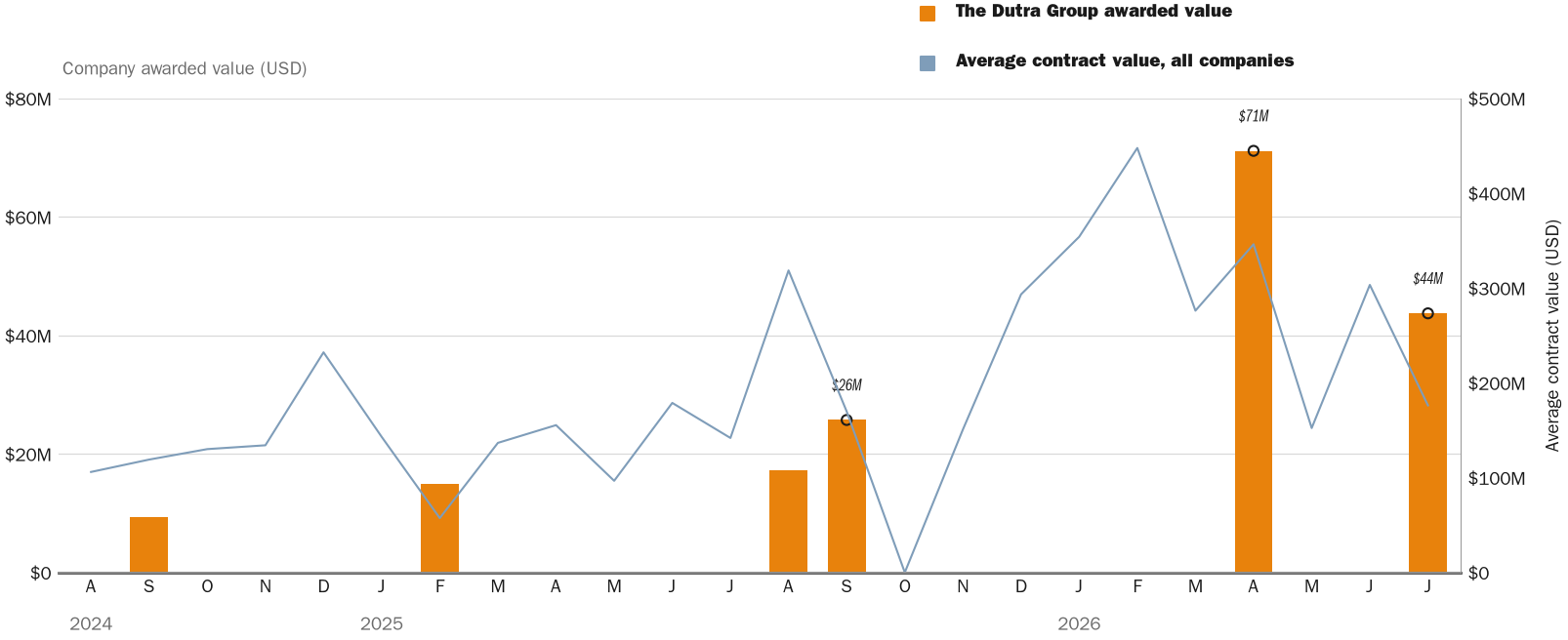
SAN RAFAEL, CALIFORNIA — The Dutra Group, a San Rafael, California marine construction firm, won a $28.2 million Army contract to dredge Charleston Lower Harbor, as announced on war.gov.
The firm-fixed-price award covers maintenance dredging work in Charleston, South Carolina, with an estimated completion date of Sept. 29, 2027, according to war.gov. The U.S. Army Corps of Engineers solicited bids over the internet and received four offers before selecting the company.
Fiscal 2026 civil operation and maintenance funds of $28.2 million were obligated at the time of the award, according to war.gov. The U.S. Army Corps of Engineers office in Charleston, South Carolina, serves as the contracting activity under identifier W912HP-26-C-A013.
Maintenance dredging keeps shipping channels deep enough for cargo vessels to move safely through a harbor. Silt and sediment settle over time and shrink the usable depth of a channel. Ports must clear that buildup to protect commercial traffic and preserve access for larger ships. The Charleston project sustains one of the busiest container gateways on the U.S. Southeast coast.
The stakes reach beyond a single contractor and a single port. Shippers, terminal operators and importers benefit when a harbor stays navigable, since delays and draft limits raise freight costs. Taxpayers carry the bill through federal civil works funding. A deeper, well-maintained channel supports the flow of goods that reach store shelves across the region.
Harbor dredging in Charleston has a long history tied to federal investment. The port completed a separate deepening program in recent years that took its channel to 52 feet, ranking it among the deepest on the East Coast. Maintenance work follows every deepening effort, because currents and tides steadily refill dredged channels.
For the average U.S. reader, the connection runs through the checkout line. A functioning port moves the furniture, electronics and vehicles that pass through Charleston toward warehouses and homes. Keeping the channel clear reduces the chance of bottlenecks that push prices higher.
This has happened before. Federal maintenance dredging contracts recur on a regular cycle at major U.S. ports, and the Army Corps of Engineers awards similar work year after year. The scale of this award places it among routine, mid-sized harbor projects rather than a landmark expansion.
The U.S. Army Corps of Engineers will oversee the next steps as the contractor mobilizes and performs the work. The contract sets an estimated completion date of Sept. 29, 2027. No further decision date beyond that schedule has been announced.
Dredging at Charleston traces back centuries, as happened before along the harbor’s shifting sandbars. The city’s port grew into a colonial trade hub in the 1700s, when vessels carrying rice and indigo navigated a channel that constantly filled with silt. Federal engineers began systematic improvements in the 1800s to keep the entrance open to deeper drafts. Each generation of ships demanded a deeper cut, and the harbor that once turned away large vessels now welcomes some of the largest container ships afloat.

NewsFindr Chart Maker
Photo by NewsFindr Chart Maker