Trump Says Judge Kept His Defamation Suit Against New York Times Alive
Trump claims a judge rejected The New York Times bid to dismiss his defamation lawsuit and ordered him to file an updated complaint detailing alleged malice.

WASHINGTON D.C. — Donald J. Trump said a federal judge rejected The New York Times bid to dismiss his defamation lawsuit, keeping the case alive.
The president, who filed the suit against the newspaper he calls “failing,” said the court ordered an updated complaint to detail the alleged conduct. He framed the ruling as a defeat for the paper after what he described as a decade of hostile coverage.
“As we requested, the Highly Respected Judge has called for an updated complaint, which will lay out, in extreme detail, all the ways in which The Times has repeatedly and consistently acted, with actual malice,” Trump said on truthsocial.
The development matters because “actual malice” is the demanding legal standard a public official must prove to win a defamation claim against a news organization. That threshold has shaped press-freedom law in the United States for six decades. A sitting president pressing such a claim tests the boundary between political grievance and actionable harm.
Here is the full post on truthsocial: “BREAKING NEWS: The Failing New York Times, after 10 years of harassment, slander, and libel, just failed again in their desperate attempt to have our powerful Defamation Lawsuit against them dropped. As we requested, the Highly Respected Judge has called for an updated complaint, which will lay out, in extreme detail, all the ways in which The Times has repeatedly and consistently acted, with actual malice in defaming me, my family, our Great MAGA Movement, and America, itself. We will continue to hold The Times and their “comrades” in the Mainstream Media accountable for publishing, promoting, and dealing in Fake News. Thank you for your attention to this matter! Trump” on July 27, 2026 at 7:47 PM ET.
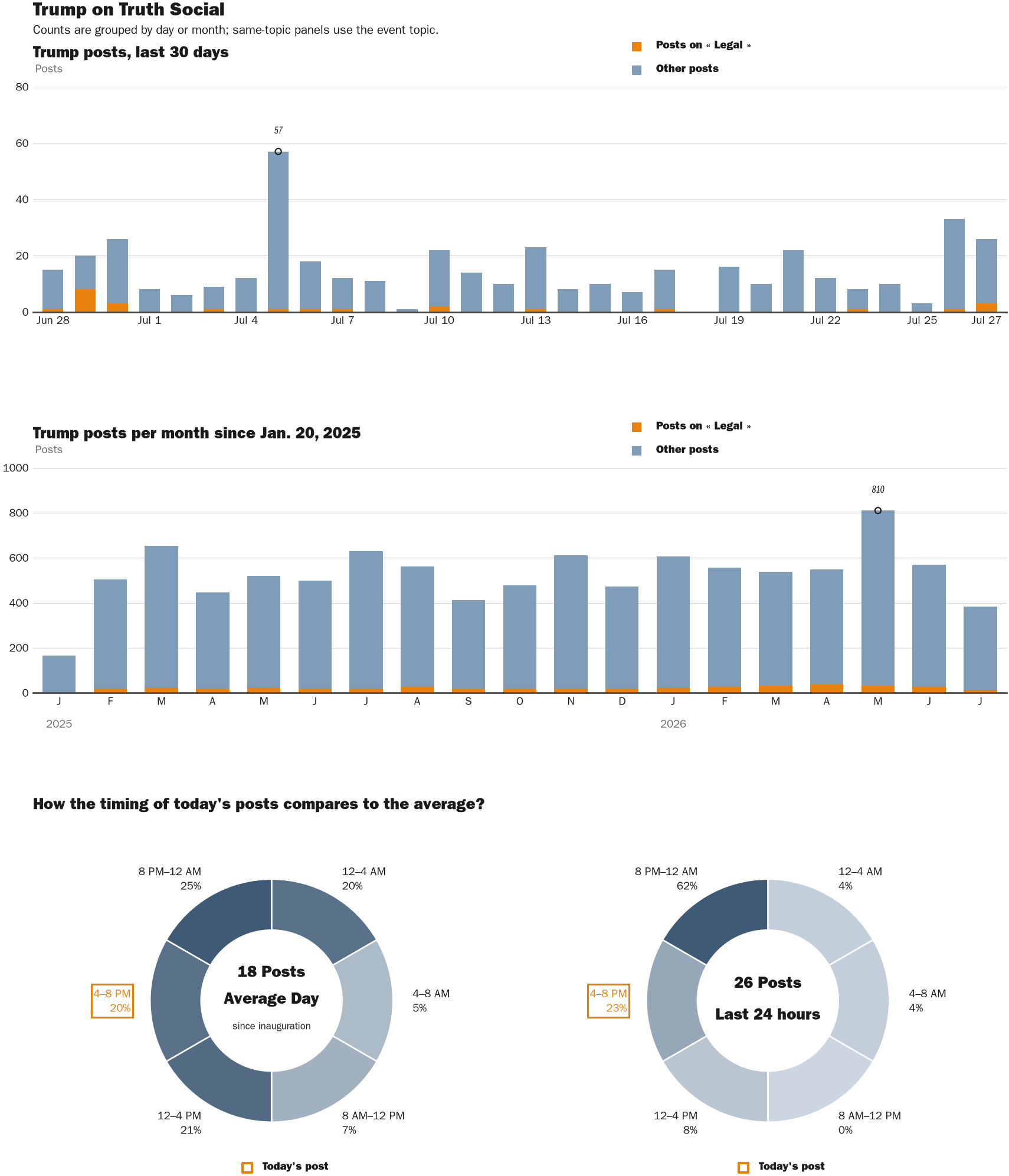
This is Trump’s 25th message released today. On average, Trump produces 18 posts per day since his inauguration on January 20, 2025.
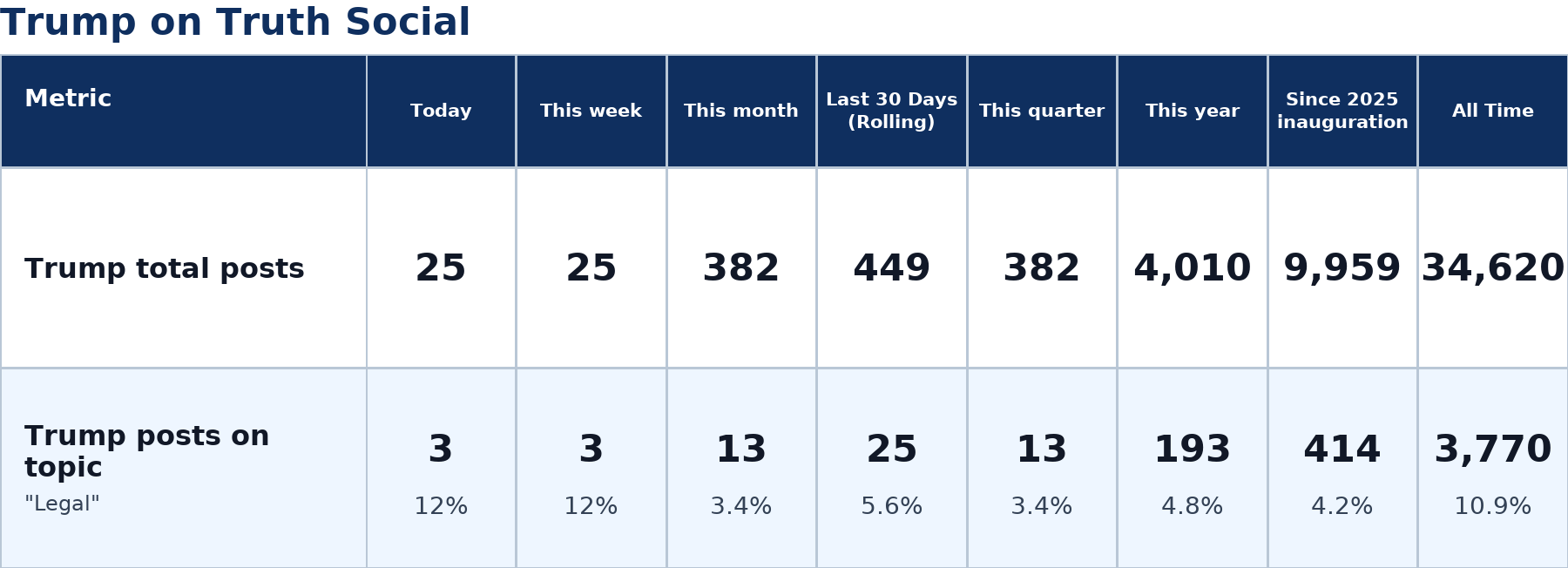
The move fits a broader pattern in Trump’s recent messaging, with 25 of his 449 posts over the last 30 days focused on legal matters.
A court order requiring an amended complaint is a routine procedural step rather than a final win. Judges frequently direct plaintiffs to refile with more specific allegations, and such an instruction does not resolve whether the underlying claims can survive later dismissal motions. The order keeps the litigation moving without deciding its merits.
The stakes cut in two directions. A ruling for Trump would expose a major newspaper to potential damages and heighten legal pressure on critical coverage. A ruling for The New York Times, the largest U.S. metropolitan daily by circulation, would reinforce protections that shield reporting on public figures. Newsrooms, plaintiffs and press-freedom advocates all track the outcome closely.
The legal contest has a long backdrop. The actual-malice standard was set by the U.S. Supreme Court, which held that public officials must show a publisher knew a statement was false or acted with reckless disregard for the truth. That precedent has defeated many defamation suits brought by politicians against news organizations over the years.
High-profile media defamation fights have reshaped the industry before. Large settlements and verdicts in recent cable-news disputes ran into the hundreds of millions of dollars, signaling that these battles carry real financial weight for the parties involved.
For the average U.S. reader, the case touches what news outlets can publish about powerful figures without facing costly liability. A shift in how courts apply the malice standard could influence coverage decisions that reach every household that consumes news.
This has happened before. Public officials have long sued newspapers over unfavorable coverage, and Trump himself has pursued multiple defamation actions against media companies during and after his campaigns. Most such suits have faced steep odds under existing precedent.
The next decision rests with the presiding judge, who will weigh the updated complaint once Trump’s legal team files it. A specific date for a subsequent ruling has not been announced.
Disputes between presidents and the press are as old as the republic. President John Adams signed the Sedition Act in 1798, which criminalized “false, scandalous and malicious” writing against the government, and prosecutors jailed several newspaper editors under it. The law expired in 1801, and Thomas Jefferson pardoned those convicted, an outcome that damaged Adams’ standing and helped end his political career after a single term.
Assigned topic: Legal.
This is Trump’s 25th Truth Social post today, out of 26 total today.
On average, Trump produces 18 posts per day since his inauguration on January 20, 2025.
Trump’s last post was 0 minutes ago.
This post is not part of a thread.

NewsFindr Chart Maker
Photo by Zenger real-time database of all Truth Social posts.
Zenger analysis
Photo by Zenger analysis