Trump Flags Graffiti Vandalism in One-Word Post
Trump shares a photo of a defaced concrete wall marked with an “RIP” tag, adding the single label “Vandalism” to the image.

WASHINGTON D.C. — Donald J. Trump posted an image of graffiti scrawled across a concrete wall, labeling it with a single word: vandalism.
Here is the full post on truthsocial: “Vandalism RIP” on August 7, 2026 at 10:15 PM ET.
This is Trump’s 13th message released today, and the last post was 11 minutes ago, and it is not part of a thread. On average, Trump produces 18 posts per day since his inauguration on January 20, 2025. The move fits a broader pattern in Trump’s recent messaging, with 11 of his 439 posts over the last 30 days classified as crime posts.
The image shows a section of concrete barrier at street level with two distinct textures, a rough aggregate surface on top and a smoother band below. White markings sprayed on the lower band include an arrow pointing right and the letters “RIP.” Scattered debris and a small red object rest on the pavement in front of the wall. No people, vehicles, signage or address markers appear in the frame. A bold, underlined header reading “Vandalism” sits above the scene.
The post carries no location, no date within the image, and no explanation of where the wall stands or who defaced it. Trump did not identify a city, a suspect, or a policy response. The single-word framing turns a photograph into a statement about disorder without offering supporting detail.
Graffiti and property defacement fall under vandalism statutes that vary by state, and enforcement typically rests with local police and prosecutors rather than the federal government. Municipalities bear the cleanup costs, and business owners often absorb the expense of removing tags from private property. Residents in affected neighborhoods weigh the visible signs of disorder against limited enforcement resources, while cities balance abatement budgets against other priorities.
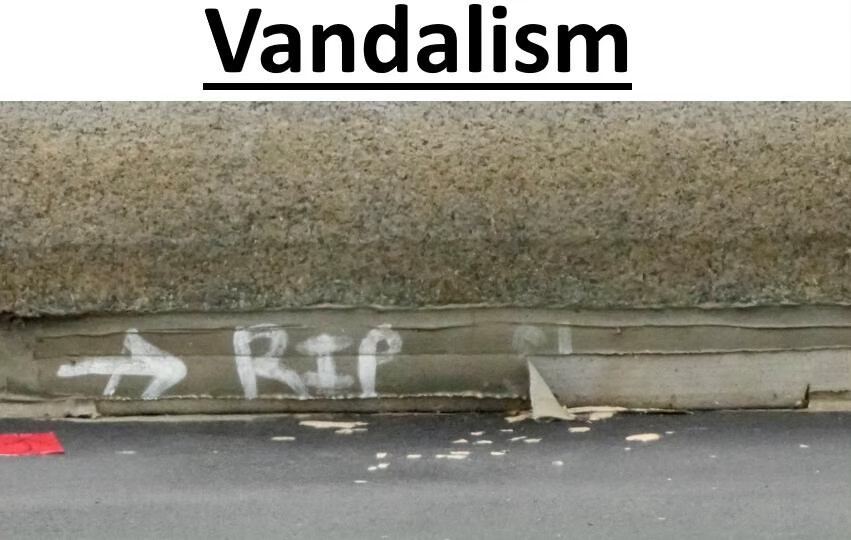

Graffiti reading 'RIP' is spray-painted on a concrete wall at an undisclosed location on 08/07/2026. Former President Donald J.
© copyright Zenger.News
Crime messaging has become a recurring theme in Trump’s feed. Eleven of his 439 posts over the last 30 days addressed crime, according to a Zenger analysis of truthsocial activity. The volume places the subject among the topics he returns to repeatedly, though it trails his most frequent categories.
For the average reader, the post itself changes nothing about daily life. It signals a talking point rather than a directive. Anti-graffiti programs, camera enforcement, and rapid-removal ordinances remain matters decided at city halls and statehouses, where officials set the practical response to defacement.
This has happened before. Trump has repeatedly used images and short captions to spotlight what he calls urban disorder, folding graffiti, homelessness, and street crime into a broader message. The pattern predates his current term and has surfaced across multiple campaigns.
No authority is scheduled to act on the post, because it names no target and requests no ruling. A date for any decision tied to the image has not been announced.
Graffiti as a political flashpoint stretches back decades, as happened before in New York. In the 1970s and 1980s, spray-painted subway cars became a symbol of a city seen as ungovernable. Mayor Ed Koch launched an aggressive cleanup campaign in 1984 that walled off rail yards with razor wire and double fencing. The Transit Authority declared its subway fleet graffiti-free in 1989 after years of scrubbing and repainting cars, and later mayors built anti-crime platforms on the imagery of restored order.
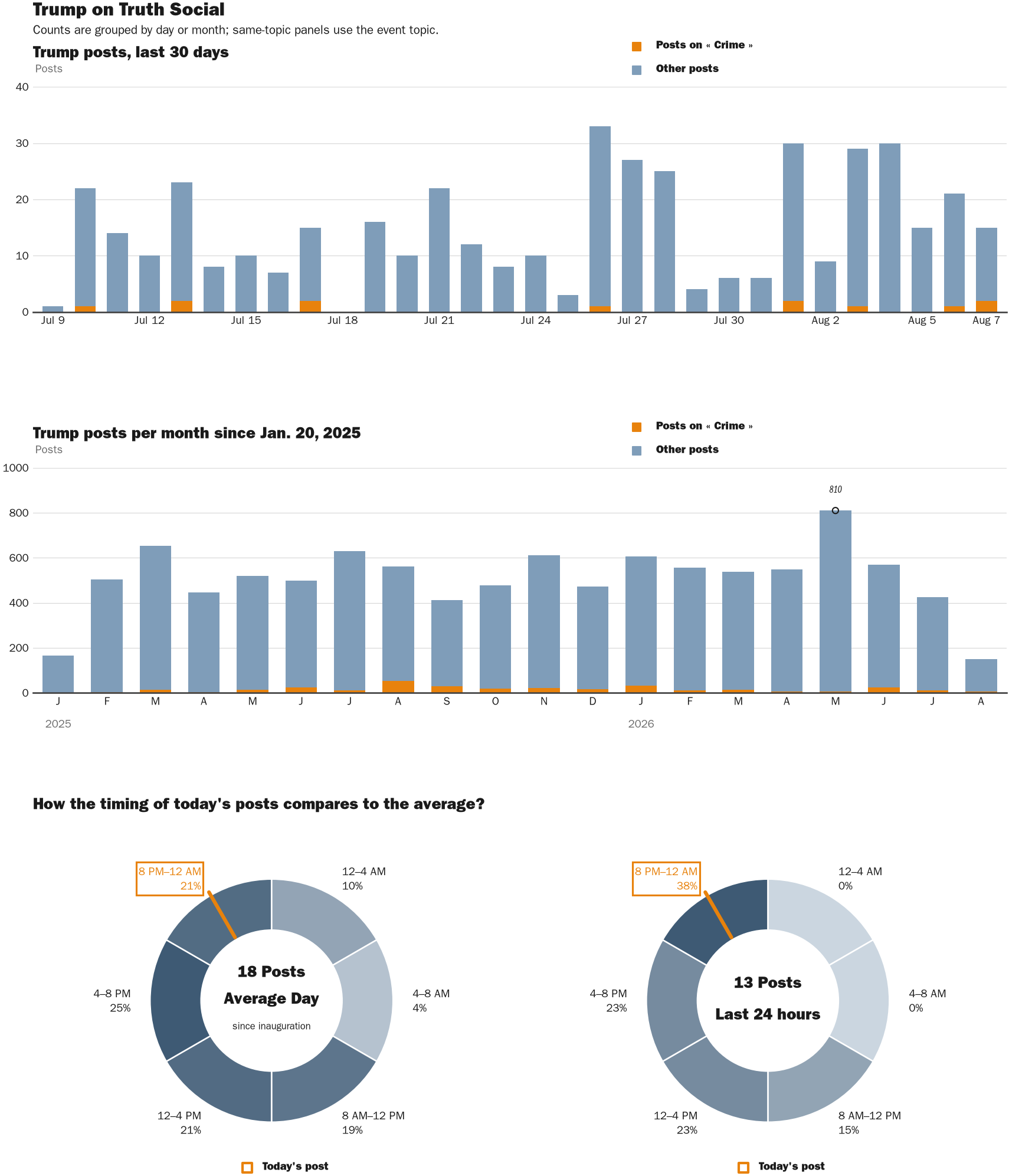
NewsFindr Chart Maker
Photo by Zenger real-time database of all Truth Social posts.
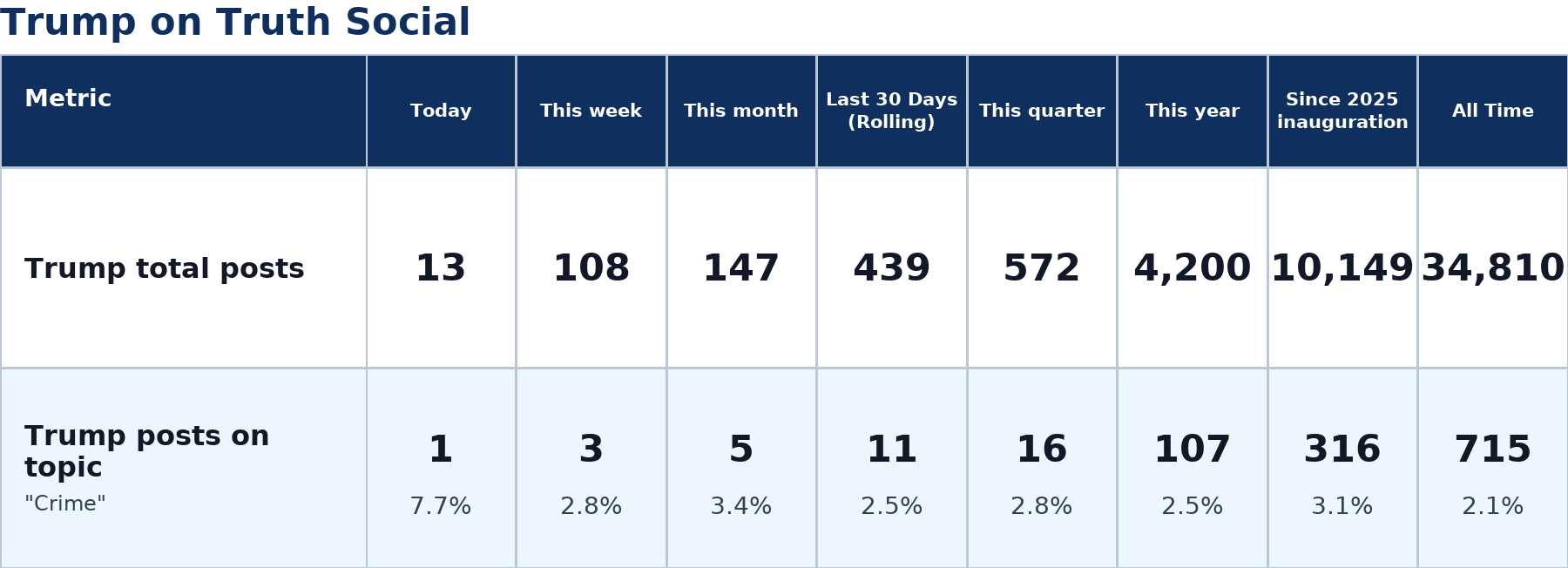
Zenger analysis
Photo by Zenger analysis