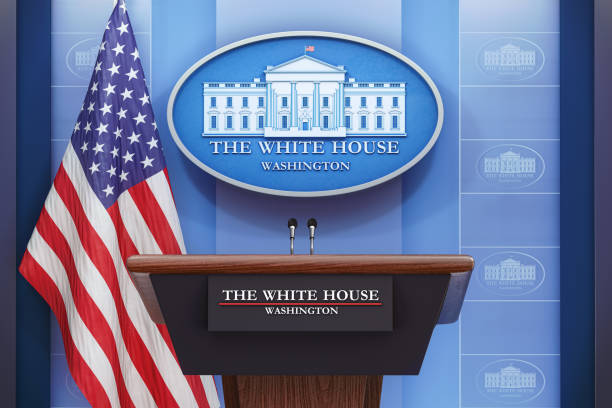
Trump Cites Declassified Files to Challenge 2020 Election Security Claim
Trump points to newly declassified documents showing federal agencies tracked voter-data breaches and foreign interference before the 2020 vote as he presses Congress to pass the SAVE America Act.

WASHINGTON D.C. — Donald J. Trump, the 47th U.S. president, said newly declassified documents undermine official claims that the 2020 election was the most secure in American history.
Here is the full post on truthsocial: “New evidence further undermines claim that 2020 election was “most secure” in history: https://justthenews.com/politics-policy/elections/new-evidence-further-undermines-claim-2020-election-was-most-secure” on August 7, 2026 at 7:34 AM ET.
This is Trump’s first message released today, and the last post was 9 hours ago, and it is not part of a thread. On average, Trump produces 18 posts per day since his inauguration on January 20, 2025. The move fits a broader pattern in Trump’s recent messaging, with 110 of his 437 posts over the last 30 days classified as Elections posts.
The post links to a report describing several batches of records the White House declassified this summer. The documents show that federal agencies held intelligence about security vulnerabilities, foreign data breaches and manipulation risks even as officials publicly assured the country the vote was safe, according to justthenews. Chris Krebs, then-director of the Cybersecurity and Infrastructure Security Agency, testified to the Senate that he approved an assessment calling the 2020 vote the most secure in U.S. history, according to justthenews.
Trump has used the material to press Congress to pass the SAVE America Act, which would require proof of citizenship to vote in federal elections, according to justthenews. None of the released evidence shows that votes were altered or proves widespread fraud, according to justthenews. The records instead raise questions about whether domestic or foreign actors could exploit voter data or interfere with election systems.
The stakes fall heavily on voters and on the officials who certified the vote. Supporters of the SAVE America Act argue tighter identity rules would protect ballots, while opponents warn proof-of-citizenship requirements could burden eligible voters. Election administrators in states such as Arizona would bear the cost of new verification systems.
The latest records show the FBI investigated a breach of voter registration data in Maricopa County, Arizona’s largest county, in the days before the vote, according to justthenews. A self-described hacker obtained 633,000 voter registration files, and the man admitted writing a script to exploit county systems, according to justthenews. The Justice Department and local prosecutors declined to bring charges even after a confession, according to justthenews. The scraped files included 930 records with sensitive information tied to domestic-violence victims, judges and law enforcement officers.
Foreign activity forms the other half of the disclosures. U.S. intelligence determined by 2023 that China had obtained 220 million individual voter files containing names, addresses, phone numbers and party preferences, according to justthenews. Spy agency chiefs said this month that China’s targeting of voter registration files likely meets the intelligence community’s definition of election interference, according to justthenews. The scale dwarfs the Maricopa breach and touches roughly two-thirds of the U.S. population.
Disputes over 2020 election security are not new to American politics. Trump contested the result after Democrat Joe Biden won, and dozens of lawsuits challenging the outcome failed in the months that followed. This round differs because the claims now rest on government records the administration itself released rather than on campaign allegations.
For the average reader, the practical question is whether voter data stays private and whether new rules change how they register or cast ballots. A proof-of-citizenship mandate could require millions of Americans to produce passports or birth certificates before voting in federal races.
Congress will make the next decision, and lawmakers must vote on the SAVE America Act for it to take effect. A date for a floor vote has not been announced.
Fights over the integrity of American elections have flared before. The disputed 1876 contest between Rutherford B. Hayes and Samuel J. Tilden left 20 electoral votes contested across three states, and Congress created a 15-member Electoral Commission to resolve it. The commission awarded every disputed vote to Hayes by an 8-7 margin, handing him the presidency by a single electoral vote. Tilden, who had won the popular vote, never held office and retired from politics soon after.
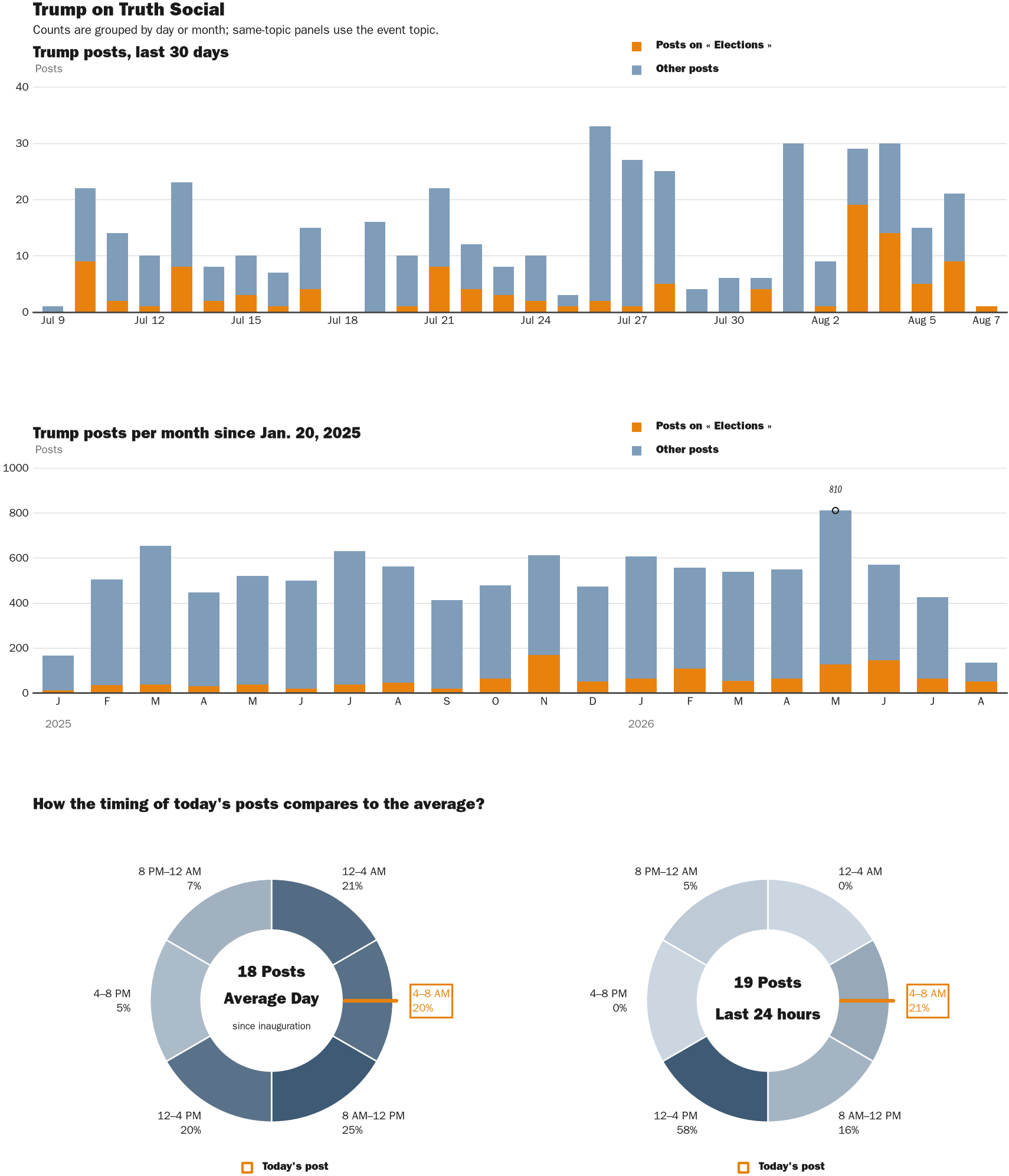

NewsFindr Chart Maker
Photo by Zenger real-time database of all Truth Social posts.
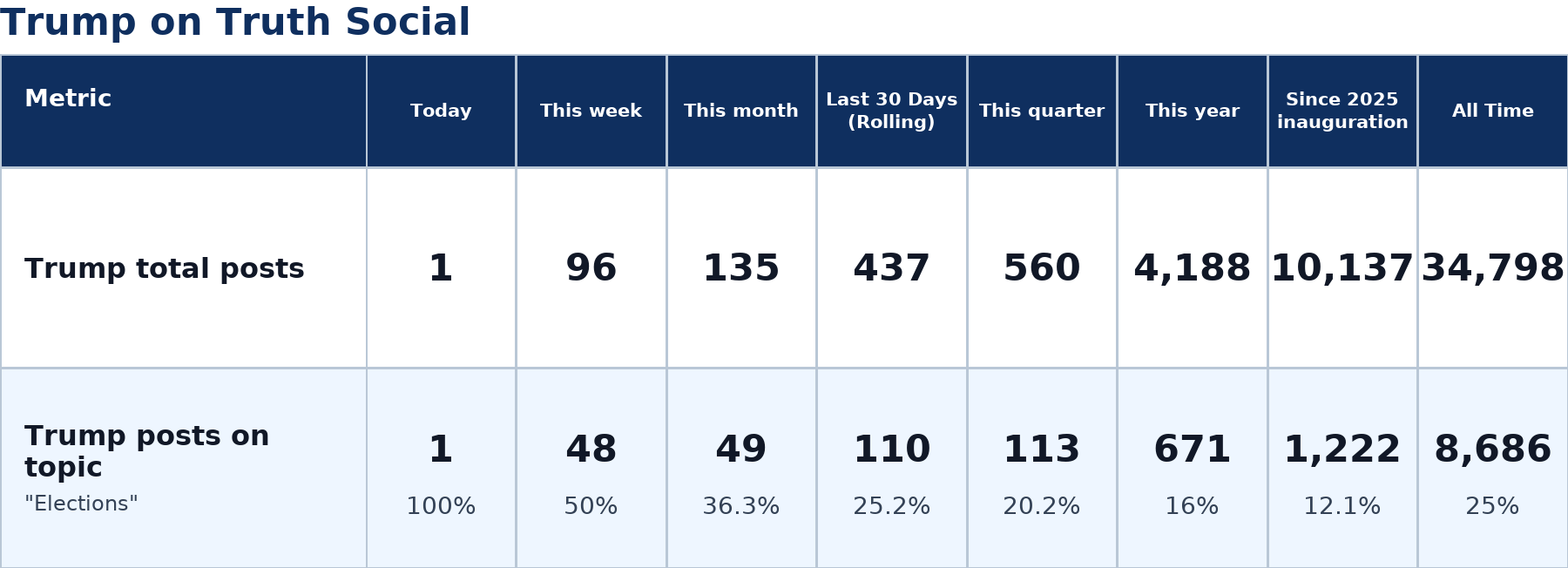
Zenger analysis
Photo by Zenger analysis
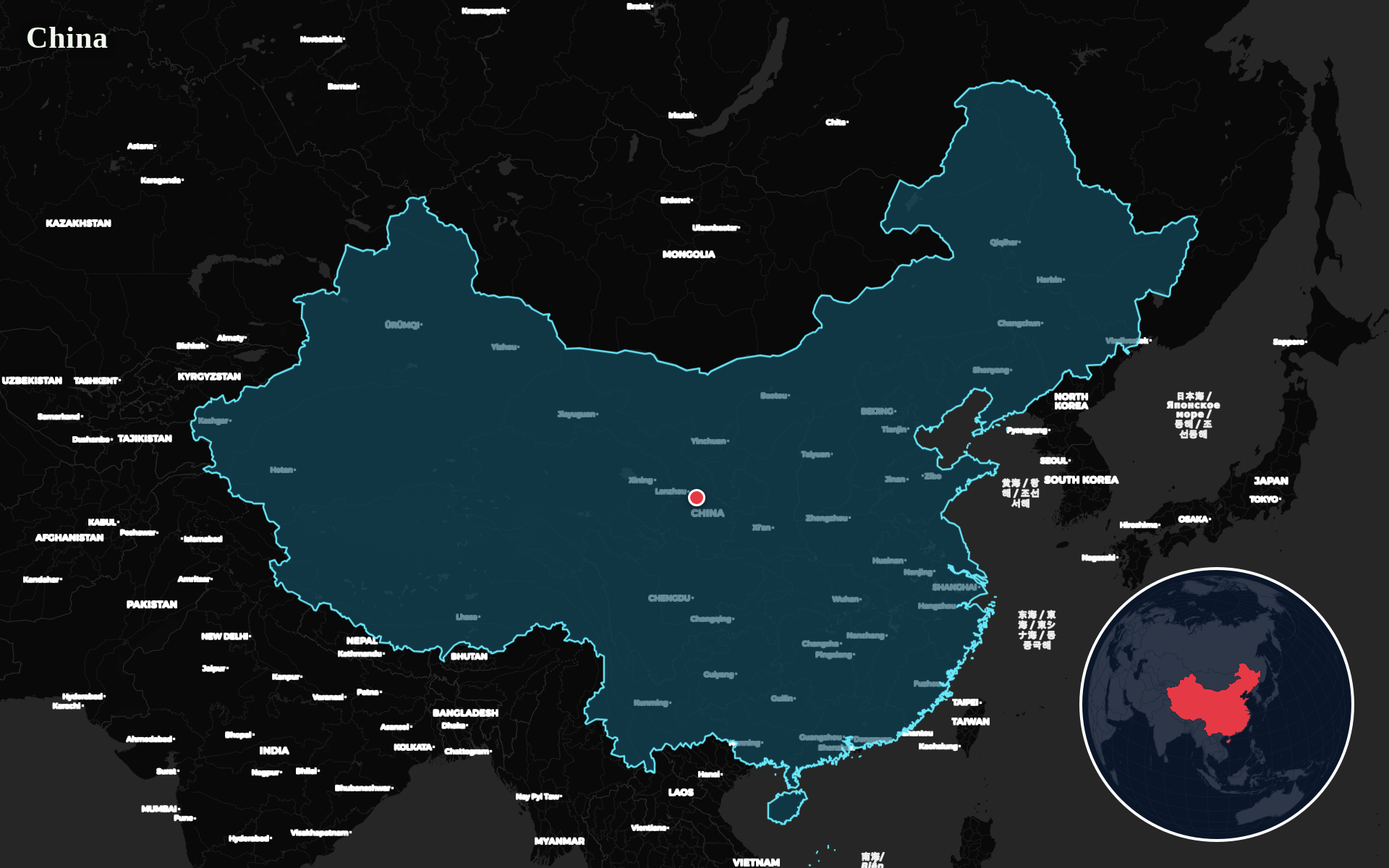
Protomaps / Natural Earth – China
Photo by Protomaps / Natural Earth – China